

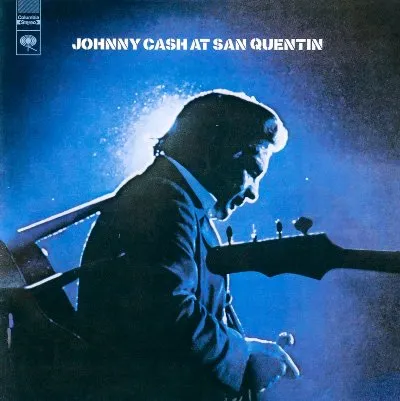
At San Quentin
Johnny Cash · 1969
59 min · 18 tracks · blues
A raw, powerful live recording that captures the spirit of rebellion with Cash's signature blend of country and rockabilly.
Top tracks — play these first
-
→
Big River Start here — establishes the sonic palette early
-
→
San Quentin — The title track serves as a bold indictment of the prison system, with Cash's passionate delivery resonating deeply with audiences and amplifying his persona as a voice for the marginalized.
-
→
A Boy Named Sue — This iconic narrative song showcases Cash's storytelling prowess, blending humor and pathos while engaging the audience with its catchy refrain and relatable themes of identity and familial struggle.
-
→
Folsom Prison Blues — Originally featured on his earlier album, this track is a poignant reflection on regret and confinement, cementing Cash's connection with prison culture and his advocacy for inmates.
Elevation
Our rating, out of 100 — and why.
AI-generated from five scored dimensions. An opinion, not a measurement.
Cash's live performance captures raw emotion and rebellion, making it distinct within the genre.
What we noticed
- The title track 'San Quentin' is performed twice, emphasizing its significance and allowing for a raw, emotional connection with the audience.
- The running time includes several extended instrumental breaks, particularly in tracks like 'A Boy Named Sue', which showcases the band’s musicianship.
- Composition 25% of the score
-
6/10
- Craft 20% of the score
-
8/10
- Durability 25% of the score
-
7/10
- Distinctiveness 18% of the score
-
8/10
- Sequencing 12% of the score
-
5/10
the writing — melody, harmony, structure, lyrics
production, performance, arrangement
whether it rewards returning to it
whether it sounds like itself
running order, pacing, length
Significant within its genre. Reported but not counted — how far a record travelled describes its reception rather than the record, and a newer release has had less time to travel than an older one.
Is this for you?
Good fit if you like
- raw energy from live performance
- dynamic storytelling with peaks
- cathartic release through nostalgia
- engaging sing-along moments
- reflective themes of confinement
Maybe skip if you
- prefer polished studio recordings
- seek instant gratification tracks
Where this album fits
- In the catalog
- Breakthrough — This album solidified Cash's reputation and showcased his bold political stance.
- Themes
- prison system critique· raw storytelling· redemption and regret
- Career context
- When 'At San Quentin' was released in June 1969, Johnny Cash was solidifying his status as a leading figure in country music. This album followed his critically acclaimed 'At Folsom Prison,' showcasing his commitment to addressing themes of incarceration and redemption through live performances in prisons.
- Stylistic neighbors
- Willie Nelson· Merle Haggard· Waylon Jennings
Moments worth listening for
Where the writing does something specific.
-
San Quentin
Cash directly confronts San Quentin prison itself, expressing anger and frustration over the treatment of inmates.
This direct address personifies the prison, transforming it into an antagonist in the narrative, which enhances the emotional weight of Cash’s critique of systemic injustice.
Tracklist
- 1 Big River Start here 1:56
- 2 I Still Miss Someone 1:51
- 3 Wreck of the Old 97 2:04
- 4 I Walk the Line 3:29
- 5 Darlin’ Companion 3:21
- 6 I Don’t Know Where I’m Bound 2:23
- 7 Starkville City Jail 6:14
- 8 San Quentin 4:06
- 9 San Quentin 3:13
- 10 Wanted Man 3:24
- 11 A Boy Named Sue 3:58
- 12 (There’ll Be) Peace in the Valley 2:30
- 13 Folsom Prison Blues 4:23
- 14 Ring of Fire 2:07
- 15 He Turned the Water Into Wine 4:01
- 16 Daddy Sang Bass 2:42
- 17 The Old Account Was Settled Long Ago 2:16
- 18 Closing Medley: Folsom Prison Blues / I Walk the Line / Ring of Fire / The Rebel–Johnny Yuma 5:08

If this landed
Records by other artists that run on the same instinct.


Reference: Wikipedia · MusicBrainz · Wikidata
Sync your library
Everything you track here works immediately — no account needed. Create one when you want to sync across devices.