

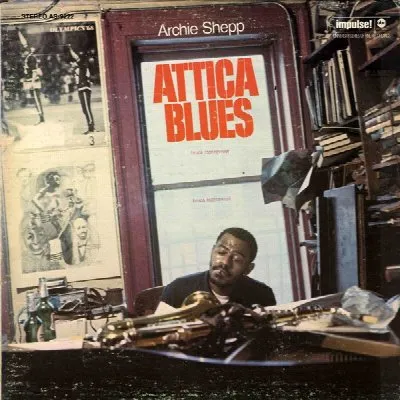
Attica Blues
Archie Shepp · 1972
37 min · 10 tracks · jazz
A powerful fusion of avant-garde jazz and blues, reflecting the tumultuous social landscape of the early 1970s.
Top tracks — play these first
-
→
Attica Blues — The title track serves as a poignant anthem for social justice, combining intricate melodies with a driving rhythm that embodies the spirit of rebellion.
-
→
Blues for Brother George Jackson — This track pays tribute to George Jackson, a prominent figure in the Black Panther movement, showcasing Shepp's ability to blend personal grief with broader societal commentary.
-
→
Good Bye Sweet Pops — An emotional farewell to the influential Louis Armstrong, this piece highlights Shepp's respect for jazz tradition while pushing its boundaries.
Elevation
Our rating, out of 100 — and why.
AI-generated from five scored dimensions. An opinion, not a measurement.
InstrumentalThe album blends complex structures with political themes, showcasing Shepp's distinctive voice in jazz.
What we noticed
- The album features a series of extended compositions, with several tracks exceeding six minutes, allowing for improvisation and exploration.
- Each track incorporates multiple sections that shift in tempo and mood, often transitioning from free jazz to blues motifs.
- The use of call-and-response techniques between instruments creates a dynamic interplay, particularly evident in the title track and 'Blues for Brother George Jackson.'
- Composition 25% of the score
-
8/10
- Craft 20% of the score
-
7/10
- Durability 25% of the score
-
6/10
- Distinctiveness 18% of the score
-
8/10
- Sequencing 12% of the score
-
6/10
the writing — melody, harmony, structure, lyrics
production, performance, arrangement
whether it rewards returning to it
whether it sounds like itself
running order, pacing, length
Significant within its genre. Reported but not counted — how far a record travelled describes its reception rather than the record, and a newer release has had less time to travel than an older one.
Is this for you?
Good fit if you like
- dynamic emotional journeys
- short immersive listening sessions
- reflective and contemplative moods
- gradual builds and payoffs
Where this album fits
- In the catalog
- Breakthrough — Marked a significant shift to politically charged music, gaining wider recognition.
- Career context
- Released in 1972, Attica Blues was Archie Shepp's fifth studio album and marked a significant moment in his career as he transitioned into more politically charged music. Following his earlier works that showcased a mix of free jazz and post-bop, this album represented Shepp's deepening commitment to addressing social issues, particularly the injustices faced by African Americans.
- Stylistic neighbors
- Albert Ayler· Pharoah Sanders· Ornette Coleman
Moments worth listening for
Where the writing does something specific.
-
Blues for Brother George Jackson
The narrative shifts from personal reflection to collective struggle, emphasizing the fight against systemic oppression faced by marginalized communities.
This transition not only enhances the emotional weight of the track but also broadens its significance from individual loss to communal resilience.
Tracklist
Best experienced from track one — press play and let it unfold.
- 1 Attica Blues 4:47
- 2 Invocation: Attica Blues 0:19
- 3 Steam, Part 1 5:07
- 4 Invocation to Mr. Parker 3:16
- 5 Steam, Part 2 5:10
- 6 Blues for Brother George Jackson 4:00
- 7 Invocation: Ballad for a Child 0:29
- 8 Ballad for a Child 3:36
- 9 Good Bye Sweet Pops 4:22
- 10 Quiet Dawn 6:12
Reference: Wikipedia · MusicBrainz · Wikidata
Sync your library
Everything you track here works immediately — no account needed. Create one when you want to sync across devices.