

Top tracks — play these first
-
→
John Wesley Harding Start here — This title track encapsulates the album's themes of redemption and morality through its haunting melody and storytelling style. It sets the tone for the entire record with its blend of folk and biblical allegory.
-
→
All Along the Watchtower — As perhaps Dylan's most famous song, this track features an enigmatic narrative that intertwines urgency with existential themes. Its influence extends beyond the album itself, having become a staple in popular music through countless covers.
-
→
I Dreamed I Saw St. Augustine — The song presents a poignant dream-like vision that reflects on guilt and redemption, showcasing Dylan's mastery of imagery and metaphor. Its reflective nature deepens the album's exploration of personal and spiritual themes.
Elevation
Our rating, out of 100 — and why.
AI-generated from five scored dimensions. An opinion, not a measurement.
Dylan's return to acoustic roots showcases strong storytelling and cohesive songwriting.
What we noticed
- The album features a consistent use of acoustic guitar and harmonica, creating a stripped-down sound that emphasizes storytelling.
- Each track typically follows a simple verse-chorus structure, allowing the lyrics to take center stage without complex arrangements.
- Several songs employ a narrative style, with characters and scenarios that unfold throughout the lyrics, enhancing the folk tradition.
- Composition 25% of the score
-
8/10
- Craft 20% of the score
-
7/10
- Durability 25% of the score
-
8/10
- Distinctiveness 18% of the score
-
7/10
- Sequencing 12% of the score
-
8/10
the writing — melody, harmony, structure, lyrics
production, performance, arrangement
whether it rewards returning to it
whether it sounds like itself
running order, pacing, length
Significant within its genre. Reported but not counted — how far a record travelled describes its reception rather than the record, and a newer release has had less time to travel than an older one.
Is this for you?
Good fit if you like
- haunting melodies with vivid storytelling
- short tracks for reflection
- intimate moments of quiet contemplation
- thoughtful narratives for solo listening
Maybe skip if you
- seeking high-energy anthems
- prefer longer, expansive compositions
Where this album fits
- In the catalog
- Breakthrough — Marked Dylan's return to acoustic music, influencing the Americana genre and solidifying his reputation.
- Themes
- mythic storytelling· post-1960s disillusionment· American folk revival
- Moods
- Melancholy· Introspective
- Career context
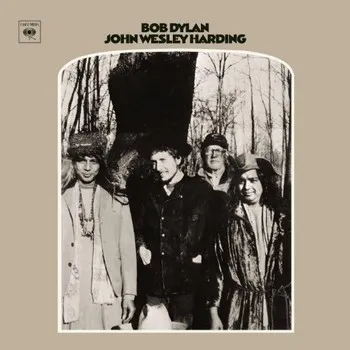
- By the time 'John Wesley Harding' was released in December 1967, Bob Dylan had undergone a significant transformation following the tumult of his previous album, 'Blonde on Blonde'. This album marked a departure from the electric sound that characterized his recent works, showcasing a return to acoustic roots amidst a politically charged era. It was Dylan's first release after his motorcycle accident in 1966, which had led to a period of reflection and reclusiveness.
- Stylistic neighbors
- Leonard Cohen· Neil Young· Johnny Cash
Tracklist
- 1 John Wesley Harding Start here 2:58
- 2 As I Went Out One Morning 2:49
- 3 I Dreamed I Saw St. Augustine 3:53
- 4 All Along the Watchtower 2:32
- 5 The Ballad of Frankie Lee and Judas Priest 5:36
- 6 Drifter's Escape 2:52
- 7 Dear Landlord 3:16
- 8 I Am a Lonesome Hobo 3:19
- 9 I Pity the Poor Immigrant 4:13
- 10 The Wicked Messenger 2:03
- 11 Down Along the Cove 2:24
- 12 I'll Be Your Baby Tonight 2:36


If this landed
Records by other artists that run on the same instinct.

Harvest
Neil Young
Shares a similar stripped-down folk sound and introspective storytelling amid personal and societal reflection.

Songs of Leonard Cohen
Leonard Cohen
Combines haunting melodies with rich narrative lyrics, echoing themes of disillusionment and myth.

For the Sake of the Song
Townes Van Zandt
Features stark, poetic storytelling and a raw acoustic sound that aligns with Dylan's narrative style.
Reference: Wikipedia · MusicBrainz · Wikidata
Sync your library
Everything you track here works immediately — no account needed. Create one when you want to sync across devices.