

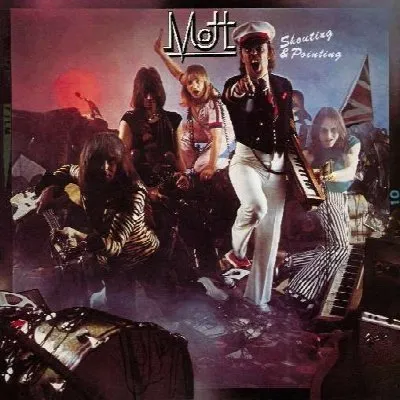
Released 50 years ago
Shouting and Pointing
Mott the Hoople · 1976
38 min · 9 tracks · glam rock
Hard-rock guitars and theatrical vocals turn glam-rock swagger into a tougher mid-seventies charge.
Top tracks — play these first
-
→
Shouting and Pointing Start here — The opening track announces the band’s rougher approach with a forceful vocal and a direct hard-rock attack.
-
→
Career (No Such Thing as Rock 'n' Roll) — Its music-business subject connects Mott’s theatrical rock writing to the practical pressures of keeping a band going.
-
→
Storm — At more than five minutes, it gives the band room to stretch beyond the album’s punchier rock songs.
-
→
Good Times — The closing cover of the Easybeats song ties the record’s hard-rock sound back to an earlier strain of British-influenced beat music.
Elevation
Our rating, out of 100 — and why.
AI-generated from five scored dimensions. An opinion, not a measurement.
The album blends energetic glam rock with introspective lyrics, creating a unique but uneven listening experience.
What we noticed
- The first track opens with a punchy guitar riff that sets a high-energy tone, which is maintained through the first half of the album.
- Several tracks feature abrupt tempo changes, such as 'Hold on, You're Crazy', which shifts from a slow build to an energetic chorus.
- The lyrics often reflect introspective themes, contrasting with the upbeat instrumentation, particularly in 'Career (No Such Thing as Rock 'n' Roll)'.
- The final track, 'Good Times', closes the album with a sing-along quality that invites listener participation.
- Composition 25% of the score
-
6/10
- Craft 20% of the score
-
6/10
- Durability 25% of the score
-
5/10
- Distinctiveness 18% of the score
-
5/10
- Sequencing 12% of the score
-
6/10
the writing — melody, harmony, structure, lyrics
production, performance, arrangement
whether it rewards returning to it
whether it sounds like itself
running order, pacing, length
Known within its scene. Reported but not counted — how far a record travelled describes its reception rather than the record, and a newer release has had less time to travel than an older one.
Is this for you?
Good fit if you like
- steady progression with emotional peaks
- vibrant energy for group listening
- introspective moments amid upbeat tracks
- for late-night drives
Maybe skip if you
- prefer instant gratification tracks
- dislike emotional lyrical depth
Where this album fits
- In the catalog
- Deep Cut — Solid entry that reflects a transitional phase in the artist's career.
- Career context
- Released in 1976, Shouting and Pointing was the second album by Mott, the band formed from Mott the Hoople after singer Ian Hunter and guitarist Mick Ronson departed. It followed Drive On, with Nigel Benjamin on vocals and Ray Major on guitar alongside Mott the Hoople veterans Overend Watts, Dale Griffin and Morgan Fisher.
- Stylistic neighbors
- Ian Hunter· Slade· David Bowie
Moments worth listening for
Where the writing does something specific.
-
Shouting and Pointing
The refrain repeatedly pairs two confrontational gestures rather than explaining the dispute behind them.
That compressed wording makes the hook work as a rhythmic slogan, leaving the verses to supply context.
Tracklist
- 1 Shouting and Pointing Start here 4:31
- 2 Collision Course 3:26
- 3 Storm 5:26
- 4 Career (No Such Thing as Rock 'n' Roll) 5:24
- 5 Hold on, You're Crazy 4:28
- 6 See You Again 4:19
- 7 Too Short Arms (I Don't Care) 3:57
- 8 Broadside Outcasts 3:18
- 9 Good Times 3:51
What to play next
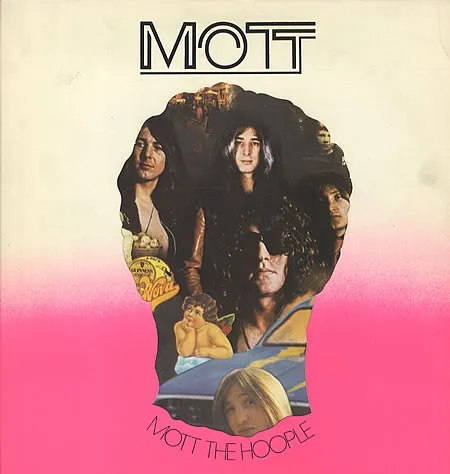
Mott
1973
Continues the glam rock vibe with strong emotional themes and dynamic arrangements.

Drive On
1975
Sets the stage for the theatricality and energy found in Shouting and Pointing.
Reference: Wikipedia · MusicBrainz · Wikidata
Sync your library
Everything you track here works immediately — no account needed. Create one when you want to sync across devices.