

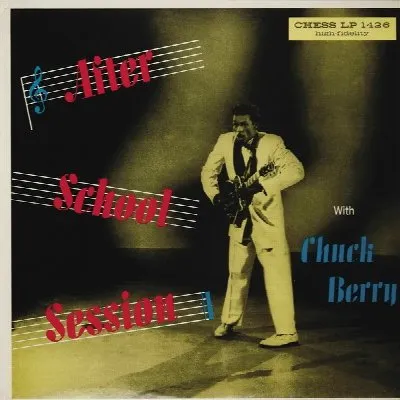
After School Session
Chuck Berry · 1957
33 min · 12 tracks · blues
Classroom bustle gives way to late-night blues as quick-witted storytelling rides a springy backbeat.
Top tracks — play these first
-
→
School Day Start here — Berry turns a school day into a compact story, releasing its classroom tension in the jukebox-driven excitement of the final section.
-
→
Too Much Monkey Business — A rush of complaints about work, salesmanship and military service shows Berry’s gift for fitting conversational detail into a tightly wound rhythm.
-
→
Wee Wee Hours — This slow blues, originally the flip side of “Maybellene,” reveals the late-night poise behind Berry’s more exuberant rock and roll.
-
→
Brown Eyed Handsome Man — A series of brisk character sketches moves from a courtroom to a baseball game, using humor and narrative compression to address race and attraction.
-
→
Havana Moon — A relaxed Caribbean-inflected rhythm supports a story that shifts from romantic anticipation to a missed departure.
Elevation
Our rating, out of 100 — and why.
AI-generated from five scored dimensions. An opinion, not a measurement.
Strong riffs, sharply shaped vocal songs and guitar-led instrumentals give the record a distinct voice; its sequence works as a set of contrasting pieces, not a sustained arc.
What we noticed
- The brisk, riff-led “School Day” gives way to “Deep Feeling,” an instrumental guitar feature, before “Too Much Monkey Business” returns to a fast vocal groove.
- “Wee Wee Hours” and “Havana Moon” slow the pace into bluesier moods, while “Berry Pickin’” gives the guitar another instrumental spotlight.
- The twelve tracks alternate vocal rockers, slow blues and instrumentals rather than building toward a single climax.
- Composition 25% of the score
-
7/10
- Craft 20% of the score
-
7/10
- Durability 25% of the score
-
7/10
- Distinctiveness 18% of the score
-
8/10
- Sequencing 12% of the score
-
7/10
the writing — melody, harmony, structure, lyrics
production, performance, arrangement
whether it rewards returning to it
whether it sounds like itself
running order, pacing, length
Significant within its genre. Reported but not counted — how far a record travelled describes its reception rather than the record, and a newer release has had less time to travel than an older one.
Is this for you?
Good fit if you like
- school-day bustle beside midnight reflection
- playful swagger with midnight detours
- brief tales of everyday trouble
- compact scenes with quick mood
Maybe skip if you
- want extended, slow-burning tracks
- expect one consistent mood
Where this album fits
- In the catalog
- Starting Point — A concise entry to Berry’s early rock-and-roll sound and foundational songs.
- Themes
- 1950s schoolroom· jukebox release· late-night blues· workday and military gripes
- Career context
- After School Session was Chuck Berry’s debut album, released by Chess Records in 1957 after he had already established himself with singles including 1955’s “Maybellene.” It gathered earlier recordings alongside newer material, balancing teenage rock and roll narratives with slow blues and instrumentals.
- Stylistic neighbors
- Little Richard· Buddy Holly· Bo Diddley
Tracklist
- 1 School Day Start here 2:42
- 2 Deep Feeling 2:19
- 3 Too Much Monkey Business 2:55
- 4 Wee Wee Hours 3:04
- 5 Roly Poly 2:50
- 6 No Money Down 2:58
- 7 Brown Eyed Handsome Man 2:17
- 8 Berry Pickin’ 2:31
- 9 Together (We’ll Always Be) 2:36
- 10 Havana Moon 3:07
- 11 Downbound Train 2:50
- 12 Drifting Heart 2:46
What to play next
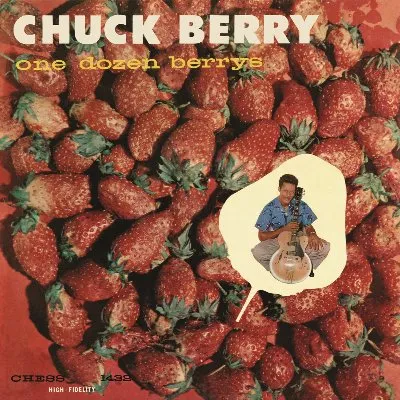
One Dozen Berrys
1958
It carries the debut’s guitar-driven rock and playful storytelling forward with a fuller set of Berry originals.
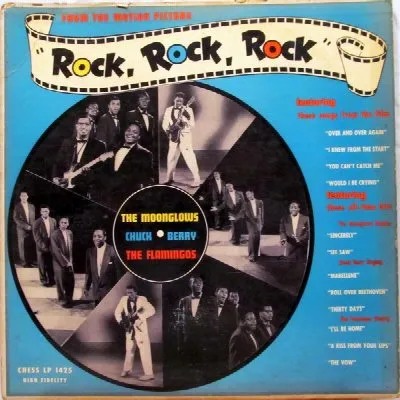
Rock, Rock, Rock
1956
If this landed
Records by other artists that run on the same instinct.
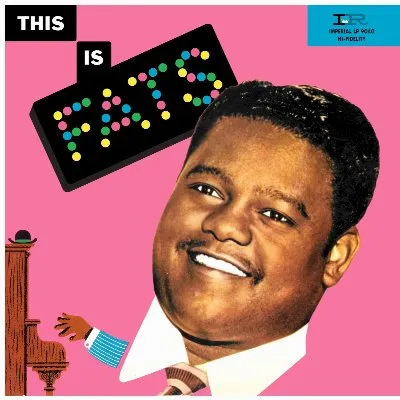
This Is Fats
Fats Domino
Pairs 1950s jukebox-ready storytelling with a buoyant backbeat and bluesy piano.
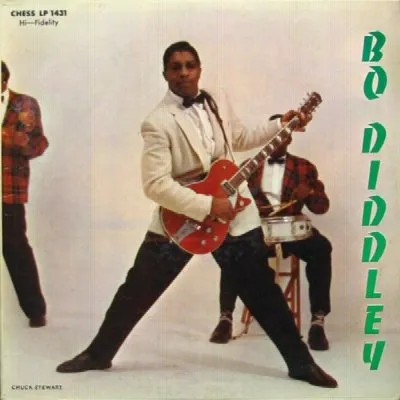
Bo Diddley
Bo Diddley
Shares the early rock-and-roll blend of blues phrasing, compact songs, and insistent rhythmic drive.
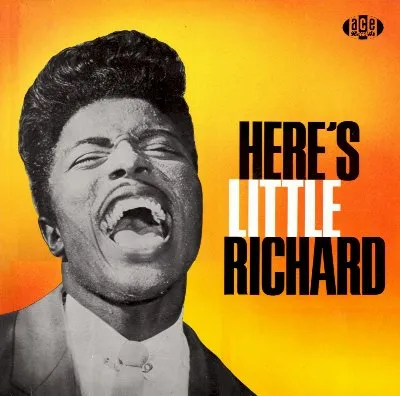
Here's Little Richard
Little Richard
Channels the same mid-1950s leap from blues into rock and roll, with piano-led momentum and youthful release.
Reference: Wikipedia · MusicBrainz · Wikidata
Sync your library
Everything you track here works immediately — no account needed. Create one when you want to sync across devices.