

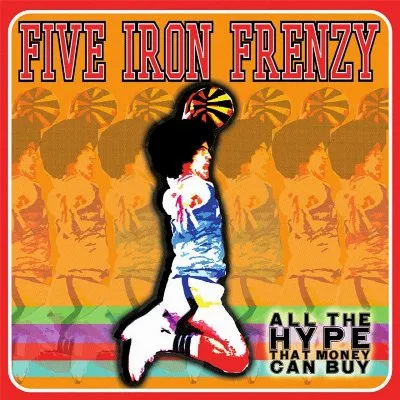
All the Hype That Money Can Buy
Five Iron Frenzy · 2000
45 min · 15 tracks · punk rock
Energetic ska rhythms collide with punk rock fervor, delivering sharp social commentary and infectious melodies.
Top tracks — play these first
-
→
The Greatest Story Ever Told — This opening track sets the tone with its infectious energy and powerful lyrics that critique societal norms through a spiritual lens.
-
→
Solidarity — A standout anthem for unity, this song combines upbeat ska instrumentation with poignant lyrics about standing together against adversity.
-
→
Ugly Day — With its catchy chorus and relatable themes of personal struggle, this track exemplifies the band's ability to blend humor with heartfelt messages.
-
→
You Probably Shouldn’t Move Here — This song cleverly critiques urban life and gentrification, showcasing the band's knack for storytelling wrapped in energetic ska-punk vibes.
-
→
A New Hope — Drawing on themes of redemption and optimism, this track highlights Five Iron Frenzy's signature blend of uplifting messages with engaging musicality.
Elevation
Our rating, out of 100 — and why.
AI-generated from five scored dimensions. An opinion, not a measurement.
The album blends energetic ska and punk with sharp lyrics, creating a distinctive sound that resonates within its genre.
What we noticed
- The first half of the album maintains a high-energy tempo with ska-influenced rhythms, while the second half introduces slower tracks that explore more introspective themes.
- Several tracks feature rapid shifts in dynamics, alternating between aggressive punk sections and melodic ska choruses.
- The lyrics often employ clever wordplay and social commentary, with multiple songs addressing contemporary issues in a humorous yet pointed manner.
- Composition 25% of the score
-
7/10
- Craft 20% of the score
-
6/10
- Durability 25% of the score
-
6/10
- Distinctiveness 18% of the score
-
7/10
- Sequencing 12% of the score
-
5/10
the writing — melody, harmony, structure, lyrics
production, performance, arrangement
whether it rewards returning to it
whether it sounds like itself
running order, pacing, length
Known within its scene. Reported but not counted — how far a record travelled describes its reception rather than the record, and a newer release has had less time to travel than an older one.
Is this for you?
Good fit if you like
- short bursts of youthful energy
- playful irreverence with sharp commentary
- upbeat anthems for group sing-alongs
- cathartic release through frenetic pacing
- late-night celebration with friends
Maybe skip if you
- prefer slower, more contemplative pieces
- want lengthy, immersive albums
Where this album fits
- In the catalog
- Fan Favorite — A defining mid-career release that showcases the band's ska-punk blend and appeals strongly to longtime listeners.
- Career context
- Released in 2000, All the Hype That Money Can Buy is Five Iron Frenzy's third studio album, marking a significant moment in their career as they solidified their unique blend of ska and punk. Following the success of their previous albums, this release showcased their continued evolution while addressing deeper thematic content within their music.
- Stylistic neighbors
- Reel Big Fish· Less Than Jake· The O.C. Supertones
Moments worth listening for
Where the writing does something specific.
-
Solidarity
The bridge shifts from collective despair to a rallying call for unity among marginalized communities without losing its rhythmic drive.
Tracklist
Best experienced from track one — press play and let it unfold.
- 1 The Greatest Story Ever Told 3:21
- 2 Me Oh My 2:18
- 3 Solidarity 3:33
- 4 The Phantom Mullet 3:01
- 5 Ugly Day 3:38
- 6 Fahrenheit 3:38
- 7 Four‐Fifty‐One 3:06
- 8 You Probably Shouldn’t Move Here 2:32
- 9 Hurricanes 3:49
- 10 Giants 4:15
- 11 I Still Like Larry 0:34
- 12 All the Hype 3:06
- 13 It’s Not Unusual 2:23
- 14 A New Hope 2:40
- 15 World Without End 3:45
What to play next
Five Iron Frenzy 2: Electric Boogaloo
2001
It carries the ska-punk drive and pointed humor forward while expanding the band's sound.
Upbeats and Beatdowns
1997
Its early blend of brisk ska and punk sets up the sharper, fuller sound of this album.
Reference: Wikipedia · MusicBrainz · Wikidata
Sync your library
Everything you track here works immediately — no account needed. Create one when you want to sync across devices.