

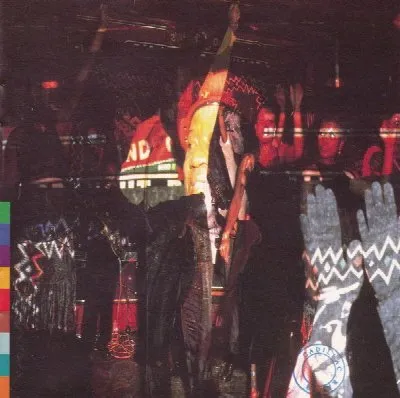
Babeti Soukous
Tabu Ley Rochereau · 1989
56 min · 13 tracks · soukous
An exuberant mix of vibrant guitar melodies and infectious rhythms that encapsulate the spirit of soukous music.
Top tracks — play these first
-
→
Kinshasa — This track serves as a vibrant homage to the capital city, showcasing the lively rhythms and intricate guitar work that define soukous.
-
→
Linga Ngai — With its rich harmonic textures and compelling vocal lines, this song exemplifies Rochereau's ability to blend traditional themes with contemporary sounds.
-
→
Amour Nala — This love ballad highlights Rochereau's emotive vocal delivery and lyrical depth, representing a softer side amidst the upbeat tracks on the album.
-
→
Sorozo — The rhythmic complexity and catchy chorus make Sorozo a standout track, embodying the celebratory essence of soukous music.
Elevation
Our rating, out of 100 — and why.
AI-generated from five scored dimensions. An opinion, not a measurement.
The album showcases vibrant guitar work and rhythmic complexity typical of soukous, making it engaging yet somewhat conventional.
What we noticed
- The album features a consistent use of layered guitar lines that intertwine throughout most tracks, creating a rich harmonic texture.
- Several tracks incorporate call-and-response vocal patterns, typical of soukous, enhancing the communal feel of the music.
- The tempo remains predominantly upbeat across the majority of the tracks, with only a couple slowing down towards the end.
- The running time is relatively long for a soukous album, with many tracks exceeding five minutes, allowing for extended instrumental sections.
- Composition 25% of the score
-
7/10
- Craft 20% of the score
-
8/10
- Durability 25% of the score
-
6/10
- Distinctiveness 18% of the score
-
7/10
- Sequencing 12% of the score
-
6/10
the writing — melody, harmony, structure, lyrics
production, performance, arrangement
whether it rewards returning to it
whether it sounds like itself
running order, pacing, length
Known within its scene. Reported but not counted — how far a record travelled describes its reception rather than the record, and a newer release has had less time to travel than an older one.
Is this for you?
Good fit if you like
- thirteen-track dancefloor stamina
- bright guitar-led movement
- city-hopping from kinshasa to nairobi
- a brief opening before the
Maybe skip if you
- want quiet, unhurried listening
- prefer compact albums with fewer
Where this album fits
- In the catalog
- Starting Point — Its lively, danceable soukous sound offers an accessible introduction to Rochereau’s established style.
- Career context
- Released in 1989, Babeti Soukous marked Tabu Ley Rochereau's continued evolution as a leading figure in Congolese music following his earlier successes. By this time, he was already celebrated for his contributions to the soukous genre and had significantly shaped the music scene during the 1970s and 1980s.
- Stylistic neighbors
- Zaïko Langa Langa· Luambo Makiadi· Papa Wemba
Tracklist
Best experienced from track one — press play and let it unfold.
- 1 Presentation 1:10
- 2 Kinshasa 4:05
- 3 Sorozo 3:48
- 4 Linga Ngai 6:05
- 5 Moto Akokufa 5:40
- 6 Nairobi 5:19
- 7 Seli Ja 3:06
- 8 I Need You 3:33
- 9 Amour Nala 5:40
- 10 Tu as dit que 4:20
- 11 Sentimenta 5:13
- 12 Pitié 4:44
- 13 Mosolo 3:55


Reference: Wikipedia · MusicBrainz · Wikidata
Sync your library
Everything you track here works immediately — no account needed. Create one when you want to sync across devices.