

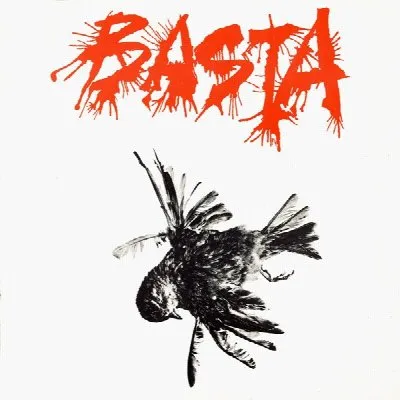
Basta
Quilapayún · 1969
53 min · 17 tracks · nueva canción chilena
Massed singing turns protest songs into communal declarations, with folk rhythms carrying them across national borders.
Top tracks — play these first
-
→
La muralla Start here — The ensemble turns Nicolás Guillén’s poem into a collective act of drawing a boundary between solidarity and oppression.
-
→
Plegaria a un labrador — Víctor Jara’s prayer-like address to a farmworker gives the album one of its clearest links between spiritual language and political action.
-
→
La carta — Violeta Parra’s account of a brother’s imprisonment brings state repression into the intimate form of news received from home.
-
→
Bella ciao — The Italian partisan song broadens the record’s field of solidarity beyond Latin America while fitting its collective manner of singing.
Elevation
Our rating, out of 100 — and why.
AI-generated from five scored dimensions. An opinion, not a measurement.
Basta blends traditional folk with political themes, showcasing strong compositions and distinctiveness within its genre.
What we noticed
- The album opens with a strong political statement in 'La muralla', featuring layered vocal harmonies and traditional instrumentation.
- Tracks often incorporate call-and-response patterns, engaging listeners and creating a communal atmosphere.
- Several songs feature shifts in tempo and dynamics, such as 'Plegaria a un labrador', which transitions from soft, reflective moments to powerful crescendos.
- Composition 25% of the score
-
8/10
- Craft 20% of the score
-
7/10
- Durability 25% of the score
-
6/10
- Distinctiveness 18% of the score
-
8/10
- Sequencing 12% of the score
-
5/10
the writing — melody, harmony, structure, lyrics
production, performance, arrangement
whether it rewards returning to it
whether it sounds like itself
running order, pacing, length
Significant within its genre. Reported but not counted — how far a record travelled describes its reception rather than the record, and a newer release has had less time to travel than an older one.
Is this for you?
Good fit if you like
- politically charged lyrical engagement
- dynamic journey experience
- reflective moments of solidarity
- wave-like pacing with peaks
- vibrant communal sing-alongs
Maybe skip if you
- seeking instant gratification
- prefer standalone tracks only
Where this album fits
- In the catalog
- Breakthrough — Its blend of folk and political song helped establish Quilapayún's public identity in the nueva canción movement.
- Themes
- Chilean state repression· Víctor Jara’s farmworker prayer· Italian partisan solidarity
- Career context
- Released in 1969, Basta followed Quilapayún’s 1968 album X Vietnam as the Chilean group increasingly tied its folk repertoire to political struggle. Víctor Jara, who had worked closely with the group, was also an important collaborator in this period.
- Stylistic neighbors
- Silvio Rodríguez· Mercedes Sosa· Pablo Milanés
Tracklist
- 1 La muralla Start here 4:15
- 2 Plegaria a un labrador 3:16
- 3 Carabina 30-30 3:20
- 4 La carta 2:51
- 5 Coplas de baguala 4:12
- 6 A la mina no voy 3:19
- 7 La bola 3:11
- 8 Canto a la pampa 5:47
- 9 El tururururu 2:26
- 10 Por qué los pobres no tienen 3:59
- 11 Bella ciao 2:47
- 12 Patrón 2:39
- 13 Que dirá el Santo Padre 2:46
- 14 Cueca de Joaquín Murieta 1:34
- 15 Los pueblos americanos 1:42
- 16 Milonga de andar lejos 2:40
- 17 ¡¡Basta ya!! 3:08
What to play next

Quilapayún No 4
1970
It carries Basta’s politically charged folk into a fuller 1970-era sound without losing the ensemble’s direct energy.
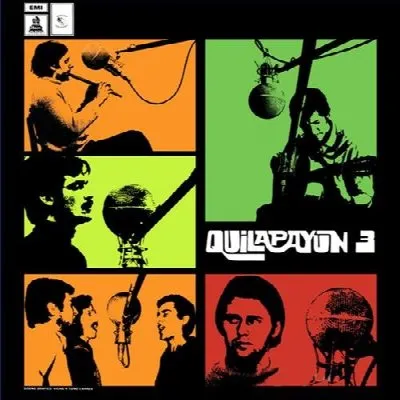
Quilapayún No 3
1969
Its earlier folk foundations lead naturally into Basta’s more forceful blend of tradition and revolutionary feeling.
Reference: Wikipedia · MusicBrainz · Wikidata
Sync your library
Everything you track here works immediately — no account needed. Create one when you want to sync across devices.