

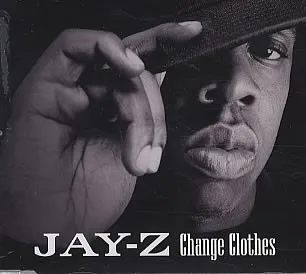
Change Clothes
Pharrell Williams · 2003
9 min · 2 tracks · contemporary R&B
A spare Neptunes groove gives Jay-Z’s clipped verses room to glide toward Pharrell’s silky hook.
Top tracks — play these first
-
→
Change Clothes — Pharrell’s smooth hook plays against Jay-Z’s conversational verses, while the Neptunes leave plenty of space around the beat.
-
→
What More Can I Say — The Black Album track offers a more forceful contrast: Jay-Z takes stock of his achievements over a dramatic, sample-driven production.
Elevation
Our rating, out of 100 — and why.
AI-generated from five scored dimensions. An opinion, not a measurement.
A finely controlled, spare lead single whose relaxed hook holds up, but the unrelated second track makes the release feel more like a pairing than a shaped whole.
What we noticed
- “Change Clothes” rides a restrained, clipped beat, with Pharrell’s light refrain breaking up Jay-Z’s measured verses.
- The second track, “What More Can I Say,” is a separate, more forceful Jay-Z song, so the two-track sequence shifts mood rather than developing one.
- The lead track stays at a relaxed mid-tempo and keeps its arrangement spare instead of building to a larger closing section.
- Composition 25% of the score
-
6/10
- Craft 20% of the score
-
8/10
- Durability 25% of the score
-
5/10
- Distinctiveness 18% of the score
-
5/10
- Sequencing 12% of the score
-
3/10
the writing — melody, harmony, structure, lyrics
production, performance, arrangement
whether it rewards returning to it
whether it sounds like itself
running order, pacing, length
Known within its scene. Reported but not counted — how far a record travelled describes its reception rather than the record, and a newer release has had less time to travel than an older one.
Where this album fits
- In the catalog
- Deep Cut — An early featured single that offers a snapshot of Pharrell's sound before his solo albums.
- Themes
- designer-label dressing· New York club dress codes· Jay-Z's rap legacy
- Career context
- Released in 2003, “Change Clothes” is a Jay-Z single featuring Pharrell Williams rather than a Pharrell solo album. It arrived as the lead single from Jay-Z’s The Black Album, during the period when Pharrell and Chad Hugo were among rap’s most prominent production teams as the Neptunes.
- Stylistic neighbors
- Justin Timberlake· Anderson .Paak· Khalid
Moments worth listening for
Where the writing does something specific.
-
Change Clothes
The hook turns an invitation to get dressed for an outing into a repeated instruction addressed directly to another person.
That direct address gives the song a small scene to return to between Jay-Z’s more expansive verses.
Tracklist
Best experienced from track one — press play and let it unfold.
- 1 Change Clothes 4:21
- 2 What More Can I Say 4:55
What to play next

In My Mind - The Prequel
2006
It extends Pharrell’s early solo sound into a fuller project, bridging his production work and emerging rap persona.

Belly Dancer
2003
If this landed
Records by other artists that run on the same instinct.
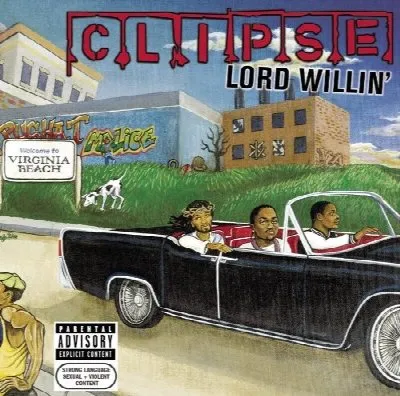
Lord Willin'
Clipse
Shares the Neptunes’ stripped-back, sharply syncopated production and the era’s sleek rap-and-hook balance.

Justified
Justin Timberlake
Pairs the Neptunes’ sparse, elastic grooves with polished R&B hooks from the same 2003 moment.
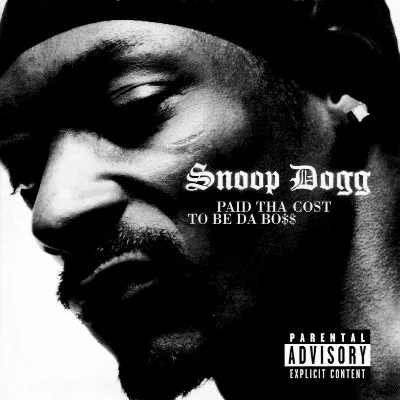
Paid tha Cost to Be da Boss
Snoop Dogg
Uses Neptunes minimalism for relaxed, club-facing rap with space around the vocal.
Reference: Wikipedia · MusicBrainz · Wikidata
Sync your library
Everything you track here works immediately — no account needed. Create one when you want to sync across devices.