

Elevation
Our rating, out of 100 — and why.
AI-generated from five scored dimensions. An opinion, not a measurement.
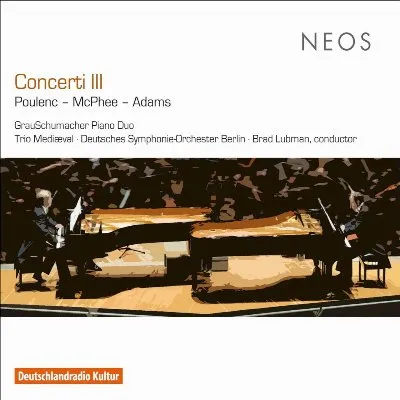
InstrumentalThree distinct concert works make the sequence compelling: the restrained middle of McPhee’s piece resets the pace before Adams’s accumulating piano-and-orchestra finale.
What we noticed
- Poulenc’s three-movement concerto moves from brisk outer movements into a slower, singing Larghetto before returning to a quick finale.
- McPhee’s three-part Tabuh-Tabuhan builds from repeating rhythmic figures, pauses for a restrained Nocturne, then closes with a quieter, more mysterious finale.
- The two-part Grand Pianola Music shifts to repeated piano patterns and accumulating orchestral layers, making the album’s final stretch denser and more insistent.
- Composition 25% of the score
-
7/10
- Craft 20% of the score
-
7/10
- Durability 25% of the score
-
7/10
- Distinctiveness 18% of the score
-
7/10
- Sequencing 12% of the score
-
7/10
the writing — melody, harmony, structure, lyrics
production, performance, arrangement
whether it rewards returning to it
whether it sounds like itself
running order, pacing, length
Little footprint beyond its audience. Reported but not counted — how far a record travelled describes its reception rather than the record, and a newer release has had less time to travel than an older one.
Tracklist
Best experienced from track one — press play and let it unfold.
- 1 Concerto en ré mineur: I. Allegro ma non troppo 8:06
- 2 Concerto en ré mineur: II. Larghetto 5:29
- 3 Concerto en ré mineur: III. Finale. Allegro molto 5:48
- 4 Tabuh-Tabuhan: I. Ostinatos 7:33
- 5 Tabuh-Tabuhan: II. Nocturne. Tranquillo 5:38
- 6 Tabuh-Tabuhan: III. Finale. Quieto e misterioso 5:38
- 7 Grand Pianola Music: Part I 24:14
- 8 Grand Pianola Music: Part II 8:15
Reference: MusicBrainz
Sync your library
Everything you track here works immediately — no account needed. Create one when you want to sync across devices.