

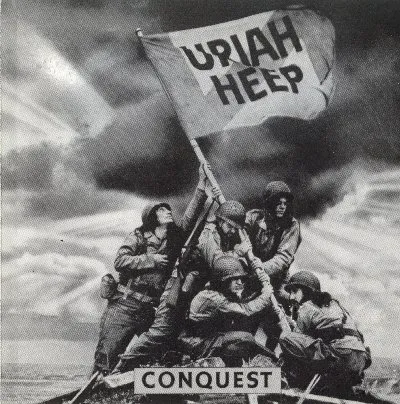
Conquest
Uriah Heep · 1980
42 min · 8 tracks · hard rock
Keyboards and hard-rock guitars sweep around John Sloman’s high-reaching vocals as Uriah Heep turns toward a more polished sound.
Top tracks — play these first
-
→
No Return Start here — The extended opener sets Sloman’s soaring voice against keyboards and a driving rhythm section, introducing the band’s revamped lineup on a suitably expansive scale.
-
→
Imagination — A strong melodic hook and polished keyboard textures show the more streamlined side of the album without abandoning the band’s taste for dramatic vocals.
-
→
Fools — Its forceful guitar work and insistent rhythm keep the album rooted in hard rock, while the arrangement leaves room for Sloman’s expressive phrasing.
-
→
Carry On — One of the shorter tracks, it compresses the album’s keyboard-and-guitar sound into a direct, song-oriented arrangement.
Elevation
Our rating, out of 100 — and why.
AI-generated from five scored dimensions. An opinion, not a measurement.
A steady, polished set with a brief pace change at “Carry On,” but its melodic hard-rock writing rarely rises above competent.
What we noticed
- The eight-track sequence opens with the keyboard-led “No Return” and “Imagination”; neither establishes a fast, heavy pace, and the middle of the album stays measured.
- “Carry On” is a shorter, brisker cut after the longer “Fools”; the next three tracks return to roughly five-minute songs.
- The guitars and keyboards share the foreground, while the arrangements lean toward polished, melodic hard rock rather than sustained heavy riffing.
- Composition 25% of the score
-
5/10
- Craft 20% of the score
-
6/10
- Durability 25% of the score
-
5/10
- Distinctiveness 18% of the score
-
5/10
- Sequencing 12% of the score
-
6/10
the writing — melody, harmony, structure, lyrics
production, performance, arrangement
whether it rewards returning to it
whether it sounds like itself
running order, pacing, length
Little footprint beyond its audience. Reported but not counted — how far a record travelled describes its reception rather than the record, and a newer release has had less time to travel than an older one.
Where this album fits
- In the catalog
- Experimental — A lineup change and more polished, keyboard-forward sound make it a departure from the band's earlier approach.
- Themes
- 1980 lineup upheaval· keyboard-led hard-rock drama
- Career context
- Conquest was Uriah Heep’s 13th studio album and their first with singer John Sloman and drummer Chris Slade. It was also the last Uriah Heep studio album to feature founding keyboardist and songwriter Ken Hensley, who left the band later in 1980.
- Stylistic neighbors
- Deep Purple· Rainbow· Black Sabbath
Moments worth listening for
Where the writing does something specific.
-
Imagination
The chorus returns to the possibility that what feels real may be a product of the mind.
That recurring uncertainty gives the hook a questioning center rather than resolving the song’s tension.
Tracklist
- 1 No Return Start here 6:00
- 2 Imagination 5:48
- 3 Feelings 5:24
- 4 Fools 5:02
- 5 Carry On 3:58
- 6 Won't Have to Wait Too Long 4:53
- 7 Out on the Street 5:54
- 8 It Ain't Easy 5:42
What to play next
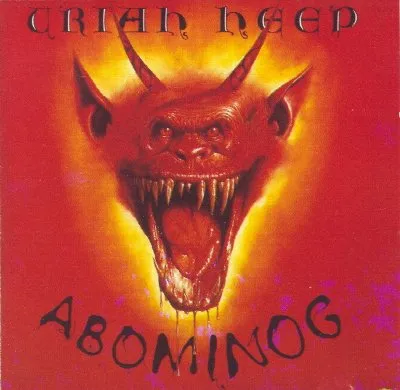
Abominog
1982
It carries Conquest’s sharper, more modern hard-rock direction forward with a punchier, more focused sound.
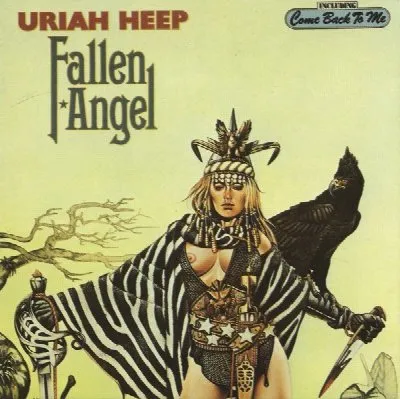
Fallen Angel
1978
Its late-70s hard-rock approach provides a useful contrast to the lineup and stylistic shift on Conquest.
If this landed
Records by other artists that run on the same instinct.

Down to Earth
Rainbow
Shares polished late-'70s hard rock, sweeping keyboards, and high-reaching vocals.
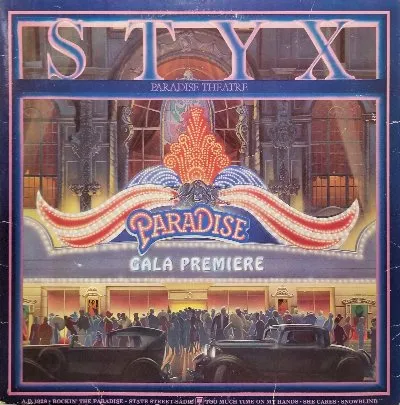
Paradise Theater
Styx
Pairs keyboard-led rock drama with hard guitars and a similarly polished early-'80s sound.
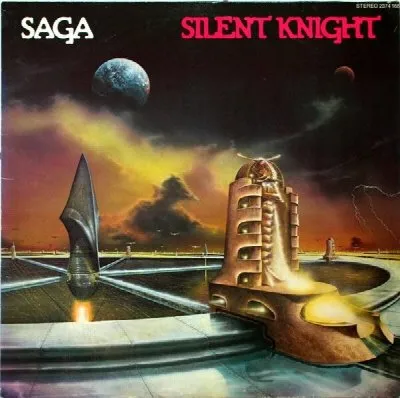
Silent Knight
Saga
Blends progressive-rock arrangements, prominent keyboards, and bright high vocals in the same era.
Reference: Wikipedia · MusicBrainz · Wikidata
Sync your library
Everything you track here works immediately — no account needed. Create one when you want to sync across devices.