

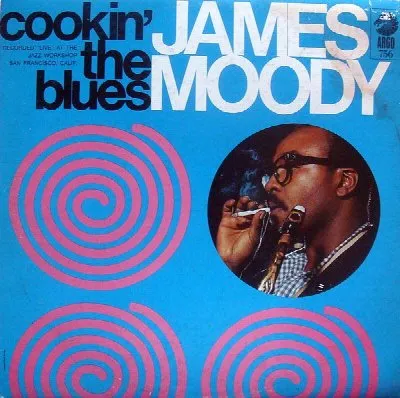
Cookin' the Blues
James Moody · 1964
42 min · 9 tracks · jazz
A vibrant fusion of jazz and big band elements, showcasing intricate melodies and lively rhythms throughout each track.
Top tracks — play these first
-
→
The Jazz Twist Start here — establishes the sonic palette early
-
→
One for Nat — This track pays tribute to Nat Adderley with an engaging arrangement that highlights Moody's expressive saxophone work and improvisational skills.
-
→
Sister Sadie — Moody's rendition of this Horace Silver classic offers a fresh take with its infectious groove, showcasing tight ensemble playing and spontaneous solos.
-
→
It Might as Well Be Spring — This interpretation brings a unique jazz flair to the well-known standard, blending smooth melodies with dynamic rhythms that highlight Moody's vocal style.
Elevation
Our rating, out of 100 — and why.
AI-generated from five scored dimensions. An opinion, not a measurement.
InstrumentalCookin' the Blues showcases intricate melodies and lively rhythms, solidifying Moody's place in jazz during a pivotal era.
What we noticed
- The album features a consistent use of brass and woodwind instruments, creating a rich texture across all tracks.
- Each track maintains a lively tempo, with intricate melodies that often intertwine between the saxophone and trumpet.
- Composition 25% of the score
-
7/10
- Craft 20% of the score
-
8/10
- Durability 25% of the score
-
6/10
- Distinctiveness 18% of the score
-
6/10
- Sequencing 12% of the score
-
7/10
the writing — melody, harmony, structure, lyrics
production, performance, arrangement
whether it rewards returning to it
whether it sounds like itself
running order, pacing, length
Known within its scene. Reported but not counted — how far a record travelled describes its reception rather than the record, and a newer release has had less time to travel than an older one.
Is this for you?
Good fit if you like
- lively improvisations for gatherings
- steady flow for background energy
- peaks of rhythm and groove
- short bursts of playful delight
Maybe skip if you
- seeking instant gratification tracks
- prefer single, standalone songs
Where this album fits
- In the catalog
- Breakthrough — Helped establish Moody's reputation during a pivotal time in jazz history.
- Themes
- jazz improvisation· 1960s big band revival· tribute to Nat Adderley
- Career context
- Released in 1964, Cookin' the Blues marked James Moody's return to recording after a brief hiatus. This album followed his successful career in the late 1950s and early 1960s, during which he gained recognition as a versatile jazz musician. The record demonstrates Moody's growth as a composer and performer, solidifying his place in the evolving jazz landscape.
- Stylistic neighbors
- Stan Getz· Dexter Gordon· Sonny Rollins
Moments worth listening for
Where the writing does something specific.
-
It Might as Well Be Spring
The shift from contemplative verses to a more buoyant chorus captures a sense of optimism amidst uncertainty.
This contrast not only emphasizes the emotional depth of the song but also showcases Moody's ability to navigate complex musical themes.
Tracklist
- 1 The Jazz Twist Start here 6:36
- 2 One for Nat 5:52
- 3 Bunny Boo 5:30
- 4 Moody Flooty 4:12
- 5 It Might as Well Be Spring 5:45
- 6 Disappointed 2:06
- 7 Sister Sadie 2:42
- 8 Little Buck 3:15
- 9 Home Fries 6:12
Reference: Wikipedia · MusicBrainz · Wikidata
Sync your library
Everything you track here works immediately — no account needed. Create one when you want to sync across devices.