

Elevation
Our rating, out of 100 — and why.
AI-generated from five scored dimensions. An opinion, not a measurement.
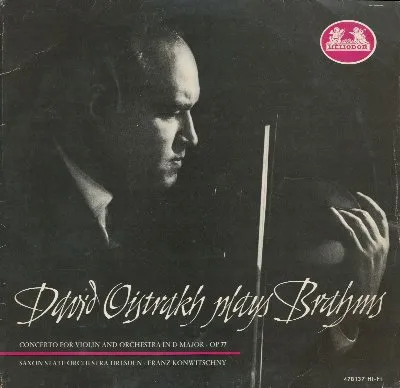
InstrumentalThe concerto’s sharply differentiated movements and Oistrakh’s sustained command reward repeated listening, while its identity remains rooted in Brahms’s established concerto form.
What we noticed
- The first movement gives the orchestra an extended opening statement before Oistrakh enters, then alternates solo display with broad orchestral returns.
- The Adagio opens with an oboe melody before the violin takes it up; the finale pivots to brisk, dance-like figures and recurring returns.
- The three tracks are the concerto’s complete movements, moving from a long opening argument through a slow centre to a compact, quick finale.
- Composition 25% of the score
-
9/10
- Craft 20% of the score
-
9/10
- Durability 25% of the score
-
9/10
- Distinctiveness 18% of the score
-
7/10
- Sequencing 12% of the score
-
8/10
the writing — melody, harmony, structure, lyrics
production, performance, arrangement
whether it rewards returning to it
whether it sounds like itself
running order, pacing, length
Known within its scene. Reported but not counted — how far a record travelled describes its reception rather than the record, and a newer release has had less time to travel than an older one.
Tracklist
Best experienced from track one — press play and let it unfold.
- 1 Konzert für Violine und Orchester D-Dur Op. 77: I, Allegro non troppo 21:54
- 2 Konzert für Violine und Orchester D-Dur Op. 77: II, Adagio 9:27
- 3 Konzert für Violine und Orchester D-Dur Op. 77: III, Allegro giocoso, ma non troppo vivace 7:47
Reference: MusicBrainz
Sync your library
Everything you track here works immediately — no account needed. Create one when you want to sync across devices.