

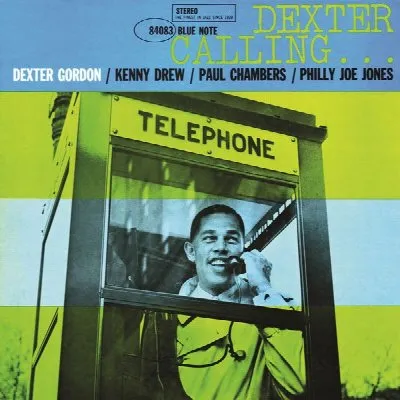
Dexter Calling...
Dexter Gordon · 1962
43 min · 8 tracks · jazz
Dexter Gordon’s expansive tenor stretches hard bop into relaxed conversation with a nimble piano trio.
Top tracks — play these first
-
→
Soul Sister Start here — The opening Gordon original gives his broad tenor sound room to unfold, with the rhythm section maintaining a buoyant swing beneath his long phrases.
-
→
Modal Mood — Its modal framework gives Gordon and Drew space to develop ideas without the rapid chord changes associated with bebop.
-
→
Ernie’s Tune — This ballad foregrounds Gordon’s unhurried phrasing and the warmth of his tenor tone, offering a quieter counterweight to the faster quartet pieces.
-
→
Smile — Gordon’s reading of the familiar standard brings the session to an intimate scale, putting his treatment of melody at the center.
Elevation
Our rating, out of 100 — and why.
AI-generated from five scored dimensions. An opinion, not a measurement.
InstrumentalDexter Calling... showcases strong compositions and vibrant interplay, marking a notable entry in the hard bop genre.
What we noticed
- The album features extended improvisational sections where the tenor saxophone takes center stage, often engaging in call-and-response with the piano and rhythm section.
- Each track maintains a distinct mood, with 'Soul Sister' opening energetically while 'End of a Love Affair' introduces a more contemplative tone.
- The arrangements incorporate complex harmonies and varied tempos, particularly evident in tracks like 'Modal Mood' which shifts between faster and slower passages.
- Composition 25% of the score
-
8/10
- Craft 20% of the score
-
7/10
- Durability 25% of the score
-
8/10
- Distinctiveness 18% of the score
-
7/10
- Sequencing 12% of the score
-
6/10
the writing — melody, harmony, structure, lyrics
production, performance, arrangement
whether it rewards returning to it
whether it sounds like itself
running order, pacing, length
Significant within its genre. Reported but not counted — how far a record travelled describes its reception rather than the record, and a newer release has had less time to travel than an older one.
Is this for you?
Good fit if you like
- steady pacing with warm grooves
- rich harmonies for focused listening
- fluid saxophone lines to savor
- consistent progression through tracks
Maybe skip if you
- seeking abrupt tempo changes
- prefer standalone hit singles
Where this album fits
- In the catalog
- Breakthrough — Marked Dexter Gordon's return and first album with Blue Note, gaining wider recognition.
- Themes
- Blue Note homecoming· tenor-sax ballads· 1962 hard-bop grooves
- Career context
- Recorded in 1961 and released in 1962, Dexter Calling... followed Doin’ Allright as Gordon’s second album for Blue Note. It captured the tenor saxophonist’s return to sustained recording activity before his move to Europe in 1962.
- Stylistic neighbors
- Sonny Rollins· Hank Mobley· Gene Ammons
Tracklist
- 1 Soul Sister Start here 7:45
- 2 Modal Mood 5:24
- 3 I Want More 5:19
- 4 End of a Love Affair 6:54
- 5 Clear the Dex 4:54
- 6 Ernie’s Tune 4:16
- 7 Smile 3:23
- 8 Landslide 5:14
What to play next
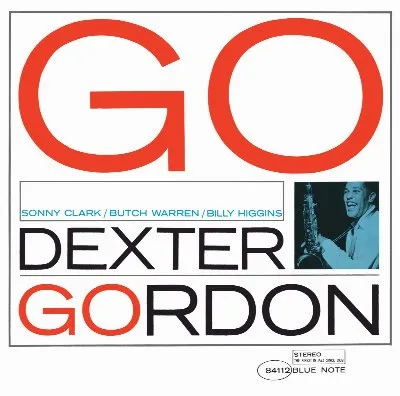
Go
1962
Continues the vibrant hard bop style with rich arrangements and engaging saxophone work.
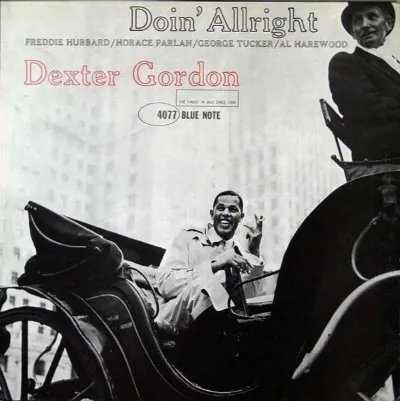
Doin' Allright
1961
Sets a solid foundation with similar themes and energy leading into Dexter Calling...
Reference: Wikipedia · MusicBrainz · Wikidata
Sync your library
Everything you track here works immediately — no account needed. Create one when you want to sync across devices.