

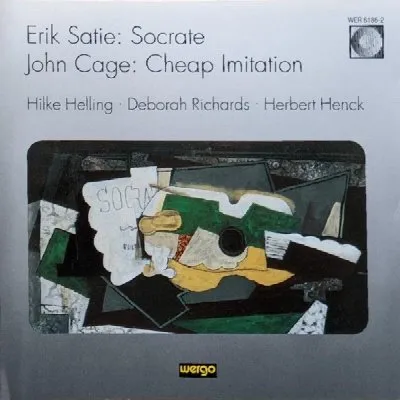
Eric Satie: Socrate / John Cage: Cheap Imitation
John Cage · 1991
61 min · 6 tracks · classical music
Elevation
Our rating, out of 100 — and why.
AI-generated from five scored dimensions. An opinion, not a measurement.
The source-and-reworking sequence gives the album a clear shape, while Cage’s spare transformation is compelling but deliberately narrow in its musical vocabulary.
What we noticed
- The three movements of Satie’s Socrate are followed by three movements of Cage’s Cheap Imitation, placing the source work before its reworking.
- Cheap Imitation’s first two movements are marked ♩ = 60; the third rises to ♩ = 72, giving its closing section a modest increase in pace.
- Socrate uses voice, while Cheap Imitation is instrumental, so the album shifts from sung text to a wordless reworking.
- Composition 25% of the score
-
7/10
- Craft 20% of the score
-
7/10
- Durability 25% of the score
-
7/10
- Distinctiveness 18% of the score
-
7/10
- Sequencing 12% of the score
-
8/10
the writing — melody, harmony, structure, lyrics
production, performance, arrangement
whether it rewards returning to it
whether it sounds like itself
running order, pacing, length
Known within its scene. Reported but not counted — how far a record travelled describes its reception rather than the record, and a newer release has had less time to travel than an older one.
Tracklist
Best experienced from track one — press play and let it unfold.
- 1 Socrate: I. Portrait de socrate 5:47
- 2 Socrate: II. Bords de l'ilissus 7:05
- 3 Socrate: III. Mort de socrate 17:19
- 4 Cheap Imitation: I. ♩ = 60 6:46
- 5 Cheap Imitation: II. ♩ = 60 7:18
- 6 Cheap Imitation: III. ♩ = 72 17:00
Reference: MusicBrainz
Sync your library
Everything you track here works immediately — no account needed. Create one when you want to sync across devices.