

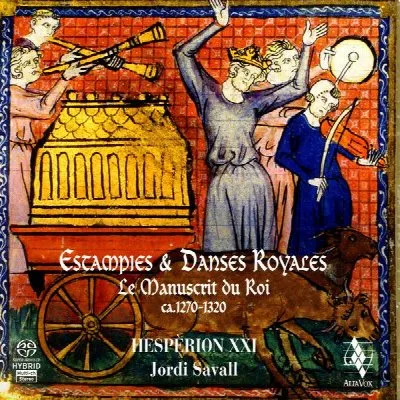
Elevation
Our rating, out of 100 — and why.
AI-generated from five scored dimensions. An opinion, not a measurement.
InstrumentalThe recurring estampie forms give the program a clear frame, while the vocal interruptions and older dances keep its repeated dance structures from feeling uniform.
What we noticed
- The royal estampies form the spine: the first six are broken up by a dance, an older estampie and a song before the sequence resumes.
- The second half places two older estampies and a second dance before the final royal dances, with a sung planctus interrupting the run.
- Most tracks are instrumental dances; the two named vocal pieces punctuate rather than replace the repeated estampie forms.
- Composition 25% of the score
-
7/10
- Craft 20% of the score
-
8/10
- Durability 25% of the score
-
7/10
- Distinctiveness 18% of the score
-
7/10
- Sequencing 12% of the score
-
7/10
the writing — melody, harmony, structure, lyrics
production, performance, arrangement
whether it rewards returning to it
whether it sounds like itself
running order, pacing, length
Known within its scene. Reported but not counted — how far a record travelled describes its reception rather than the record, and a newer release has had less time to travel than an older one.
Tracklist
Best experienced from track one — press play and let it unfold.
- 1 Danse (I) 4:03
- 2 La Prime Estampie royal 4:46
- 3 Estampie ancienne : Kalenda Maya 2:56
- 4 La Seconde Estampie royal 4:17
- 5 La Tierche Estampie royal 4:52
- 6 Chanson "No puesc sofrir c’a la dolor" 4:46
- 7 La Quarte Estampie royal 4:46
- 8 La Quinte Estampie royal 5:25
- 9 Estampie ancienne : No m'agrad'iverns 5:49
- 10 Danse (II) 5:00
- 11 La Sexte Estampie real 3:36
- 12 La Septime Estampie real 6:18
- 13 Planctus "Pax! in nomini Domini!" 6:31
- 14 La Uitime Estampie real 4:24
- 15 Dansse real 4:34
Reference: MusicBrainz
Sync your library
Everything you track here works immediately — no account needed. Create one when you want to sync across devices.