

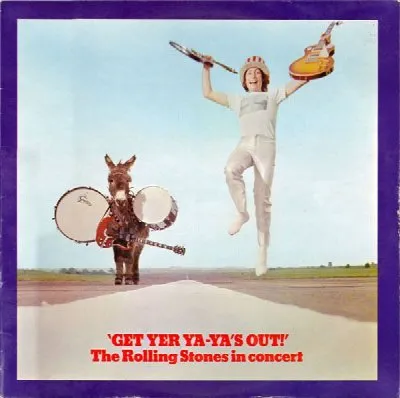
Get Yer Ya-Ya's Out! The Rolling Stones in Concert
The Rolling Stones · 1970
47 min · 10 tracks · blues
The Stones turn a concert stage into a place where blues drag against hard rock and guitars snap around Jagger’s prowling voice.
Top tracks — play these first
-
→
Jumpin’ Jack Flash Start here — The opening riff announces the band at full tilt, with Keith Richards’s guitar driving the song while the live performance leaves room for Jagger’s theatrical phrasing.
-
→
Love in Vain — The Robert Johnson song slows the set down, giving Mick Taylor’s lead guitar space to answer Jagger’s vocal with long, mournful phrases.
-
→
Midnight Rambler — The extended performance stretches its blues framework through sudden pauses and changes in pace, turning the song into a tense piece of stage drama.
-
→
Sympathy for the Devil — Its live arrangement trades the studio recording’s layered percussion for a guitar-led attack, with Richards and Taylor taking distinct solos.
-
→
Little Queenie — The Chuck Berry cover puts the band’s rock-and-roll roots in the foreground, with a clipped riff and conversational vocal that keep the performance moving.
Elevation
Our rating, out of 100 — and why.
AI-generated from five scored dimensions. An opinion, not a measurement.
The set turns familiar songs into sharply paced performances, with “Midnight Rambler” supplying a long, dynamic centerpiece rather than letting the energy run flat.
What we noticed
- The opening run moves from the hard riff of “Jumpin’ Jack Flash” through two Chuck Berry covers before “Love in Vain” pulls the pace back.
- “Love in Vain” gives way to a slow-building, extended “Midnight Rambler,” whose shifts between restraint and attack become the album’s central dramatic stretch.
- The second half alternates swaggering rockers with looser blues-rock performances, then closes on the sharper, more urgent “Street Fighting Man.”
- Composition 25% of the score
-
8/10
- Craft 20% of the score
-
9/10
- Durability 25% of the score
-
9/10
- Distinctiveness 18% of the score
-
8/10
- Sequencing 12% of the score
-
8/10
the writing — melody, harmony, structure, lyrics
production, performance, arrangement
whether it rewards returning to it
whether it sounds like itself
running order, pacing, length
Defined its genre or moment. Reported but not counted — how far a record travelled describes its reception rather than the record, and a newer release has had less time to travel than an older one.
Is this for you?
Good fit if you like
- rowdy live-set momentum
- extended midnight rambler tension
- stage banter-free concert flow
- familiar songs in rough-edged form
Maybe skip if you
- want polished studio restraint
- prefer every song equally brief
Where this album fits
- In the catalog
- Critical Peak — A defining live document of the band's late-1960s stage sound and a landmark in their core catalog.
- Themes
- 1969 American tour· Mississippi Delta blues· guitar-led stage drama
- Career context
- Released in 1970, the album documents the Rolling Stones’ 1969 American tour, their first US tour with guitarist Mick Taylor. It arrived after Let It Bleed and before Sticky Fingers, as Taylor’s lead playing became part of the band’s sound.
- Stylistic neighbors
- The Who· Led Zeppelin· The Doors
Moments worth listening for
Where the writing does something specific.
-
Sympathy for the Devil
A first-person speaker moves through episodes of historical violence before asking listeners to identify him.
The delayed identification turns a catalog of atrocities into a dramatic challenge addressed to the audience.
Tracklist
- 1 Jumpin’ Jack Flash Start here 4:02
- 2 Carol 3:45
- 3 Stray Cat Blues 3:48
- 4 Love in Vain 5:15
- 5 Midnight Rambler 9:10
- 6 Sympathy for the Devil 6:39
- 7 Live With Me 3:06
- 8 Little Queenie 4:31
- 9 Honky Tonk Women 3:28
- 10 Street Fighting Man 4:07
What to play next
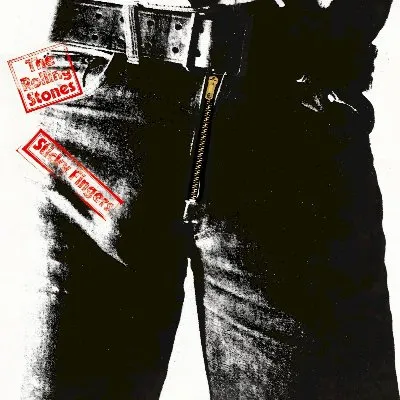
Sticky Fingers
1971
Carry the live set’s blues-rock drive into a studio sound with richer textures and a broader emotional range.
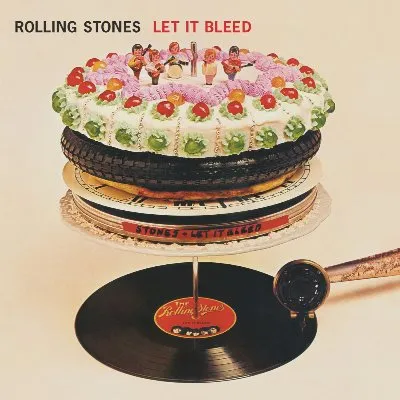
Let It Bleed
1969
Its raw blues-rock songs and late-’60s lineup set the stage for the concert’s energized performances.
Reference: Wikipedia · MusicBrainz · Wikidata
Sync your library
Everything you track here works immediately — no account needed. Create one when you want to sync across devices.