

Elevation
Our rating, out of 100 — and why.
AI-generated from five scored dimensions. An opinion, not a measurement.
InstrumentalIts recurring viola and finale's return to earlier material give the four scenes a connected dramatic arc; the specific performance cannot be judged from the supplied details.
What we noticed
- The viola returns as a recurring presence across four titled scenes, more a wandering observer than a conventional concerto soloist.
- The second movement's measured pilgrims' march gives way to the third movement's rustic serenade, before the finale turns into a brigands' bacchanal.
- In the finale, earlier musical material resurfaces amid the orchestral tumult, tying the closing scene back to the preceding movements.
- Composition 25% of the score
-
8/10
- Craft 20% of the score
-
6/10
- Durability 25% of the score
-
8/10
- Distinctiveness 18% of the score
-
8/10
- Sequencing 12% of the score
-
8/10
the writing — melody, harmony, structure, lyrics
production, performance, arrangement
whether it rewards returning to it
whether it sounds like itself
running order, pacing, length
Significant within its genre. Reported but not counted — how far a record travelled describes its reception rather than the record, and a newer release has had less time to travel than an older one.
Tracklist
Best experienced from track one — press play and let it unfold.
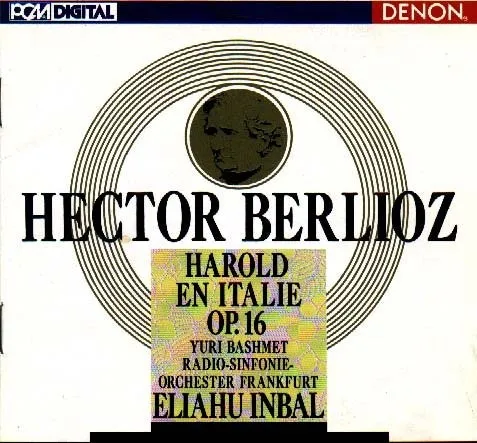
- 1 Harold en Italie, op. 16: I. Harold aux montagnes. Sènes de mélancolie, de bonheur, et de joie 15:13
- 2 Harold en Italie, op. 16: II. Marche de pélerins chantant la prière du soir 6:47
- 3 Harold en Italie, op. 16: III. Sérénade d’un montagnard des Abruzzes à sa maîtresse 5:57
- 4 Harold en Italie, op. 16: IV. Orgie des brigands. Souvenirs des scènes précédentes 12:34
Reference: MusicBrainz
Sync your library
Everything you track here works immediately — no account needed. Create one when you want to sync across devices.