

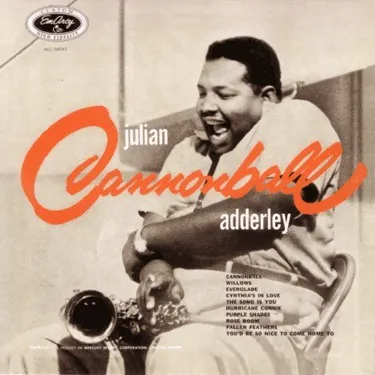
Julian "Cannonball" Adderley
Cannonball Adderley · 1955
41 min · 10 tracks · jazz
Alto saxophone darts through lean hard-bop arrangements with a bright tone and an unhurried sense of swing.
Top tracks — play these first
-
→
Cannonball Start here — The opening track introduces the alto saxophonist’s brisk attack and buoyant phrasing in a compact small-group setting.
-
→
Willows — Its longer span gives the improvisation room to develop, making it a useful listen for the way Adderley builds momentum across a solo.
-
→
The Song Is You — The familiar Jerome Kern standard places Adderley’s nimble melodic approach against a tune with deep roots in the jazz repertoire.
-
→
Rose Room — At nearly six minutes, this older jazz standard offers one of the album’s more spacious encounters between improvisation and a familiar song form.
Elevation
Our rating, out of 100 — and why.
AI-generated from five scored dimensions. An opinion, not a measurement.
InstrumentalA sturdy hard-bop debut, lifted by the two-horn front line and strong solo playing, though the standards-led sequence feels more like a set than a unified statement.
What we noticed
- Cannonball Adderley’s alto and Nat Adderley’s trumpet share the front line, with piano, bass and drums supporting the small-combo arrangements.
- Originals such as “Cannonball” and “Hurricane Connie” sit among standards including “The Song Is You” and “You’d Be So Nice to Come Home To.”
- The sequence opens with the title tune and closes on a standard, giving the set a clear bookend without a strong narrative arc.
- Composition 25% of the score
-
7/10
- Craft 20% of the score
-
7/10
- Durability 25% of the score
-
7/10
- Distinctiveness 18% of the score
-
6/10
- Sequencing 12% of the score
-
6/10
the writing — melody, harmony, structure, lyrics
production, performance, arrangement
whether it rewards returning to it
whether it sounds like itself
running order, pacing, length
Known within its scene. Reported but not counted — how far a record travelled describes its reception rather than the record, and a newer release has had less time to travel than an older one.
Where this album fits
- In the catalog
- Deep Cut — An early hard-bop album that adds context to Adderley's formative period but is not a defining entry point.
- Themes
- 1955 New York jazz scene· Tin Pan Alley standards· alto-saxophone improvisation
- Career context
- This early session captures Cannonball Adderley shortly after his arrival on the New York jazz scene in 1955. He would join Miles Davis’s group in 1957, before recording landmark sessions including Kind of Blue.
- Stylistic neighbors
- John Coltrane· Wayne Shorter· Miles Davis
Tracklist
- 1 Cannonball Start here 4:17
- 2 Willows 4:59
- 3 Everglade 3:44
- 4 Cynthia's in Love 3:07
- 5 The Song Is You 4:16
- 6 Hurricane Connie 4:18
- 7 Purple Shades 3:34
- 8 Rose Room 5:49
- 9 Fallen Feathers 3:48
- 10 You'd Be So Nice to Come Home To 3:36
What to play next
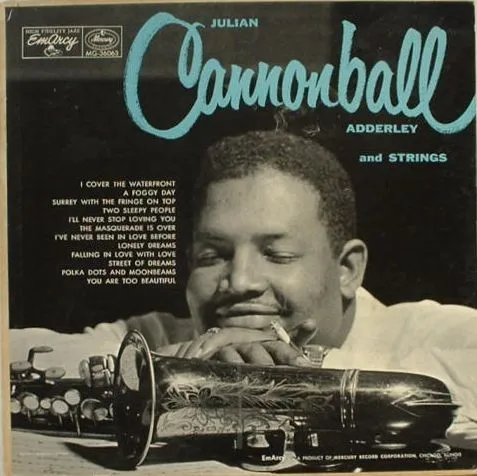
Julian Cannonball Adderley and Strings
1955
It keeps the early-period sound in view while adding string arrangements for a fresh change in texture.

Presenting Cannonball
1955
It offers an earlier entry into his 1955 sound before this self-titled session.
If this landed
Records by other artists that run on the same instinct.
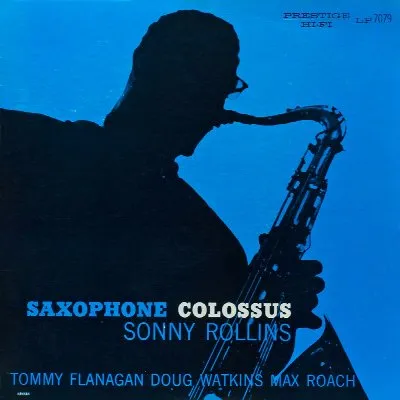
Saxophone Colossus
Sonny Rollins
Shares mid-’50s hard-bop swing, standards-based improvisation, and a spacious, conversational sax-led sound.
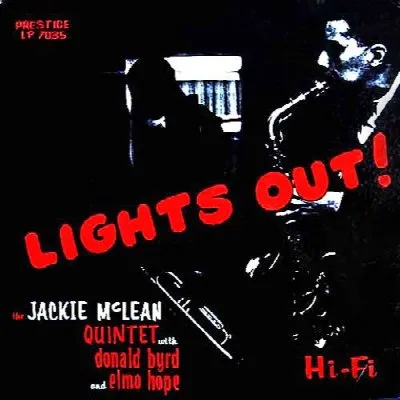
Lights Out!
Jackie McLean
Pairs bright, agile alto with lean New York hard-bop arrangements and an easy-moving rhythm section.
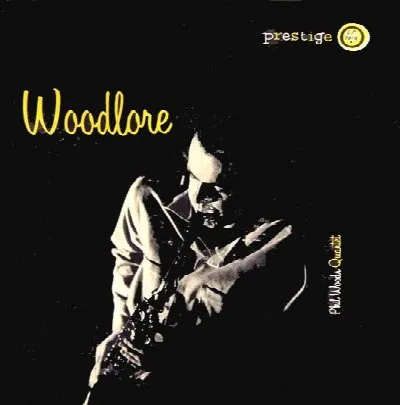
Woodlore
Phil Woods
A fellow 1950s alto-led session, with nimble bebop lines, familiar standards, and buoyant small-group swing.
Reference: Wikipedia · MusicBrainz · Wikidata
Sync your library
Everything you track here works immediately — no account needed. Create one when you want to sync across devices.