

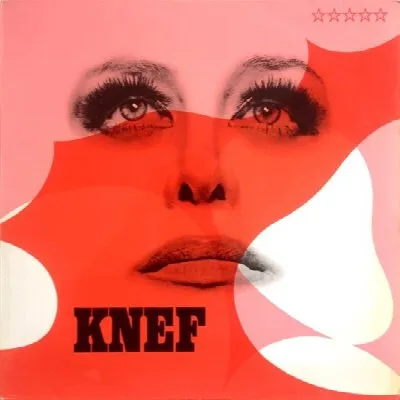
Knef
Hildegard Knef · 1970
39 min · 12 tracks
Knef’s grainy voice moves through sharply orchestrated German chanson with theatrical poise and a restless urban pulse.
Top tracks — play these first
-
→
Wieviel Menschen waren glücklich, daß Du gelebt? Start here — natural starting point at the album's opening
-
→
Ich brauch' Tapetenwechsel — A buoyant arrangement carries an eccentric plea for a change of scenery, balancing Knef’s dry delivery with a playful conceit.
-
→
Friedenskampf und Schadenfreude — At over six minutes, the song gives Knef room to develop her pointed social observations beyond the compact scale of the surrounding tracks.
-
→
Die Herren dieser Welt — Knef’s commanding vocal presence lends weight to a song that turns its attention toward those who hold power.
-
→
Eisblumen — The closing track draws on the image of frost flowers, leaving the album with a more intimate and wintry mood.
Elevation
Our rating, out of 100 — and why.
AI-generated from five scored dimensions. An opinion, not a measurement.
Knef’s conversational chanson delivery and the movement from private reflection to social commentary give the set a coherent character, though its album-specific reach is limited.
What we noticed
- The twelve-song sequence opens with a reflective title, then moves into the more pointedly titled “Schwertfisch” and “Ich brauch' Tapetenwechsel” before returning to inward-looking titles such as “In…
- Knef’s low, conversational delivery keeps the songs close to chanson even when the arrangements place her against orchestral backing.
- The later titles shift toward broader social subjects—“Friedenskampf und Schadenfreude” and “Die Herren dieser Welt”—before closing with “Eisblumen.”
- Composition 25% of the score
-
7/10
- Craft 20% of the score
-
7/10
- Durability 25% of the score
-
7/10
- Distinctiveness 18% of the score
-
7/10
- Sequencing 12% of the score
-
7/10
the writing — melody, harmony, structure, lyrics
production, performance, arrangement
whether it rewards returning to it
whether it sounds like itself
running order, pacing, length
Known within its scene. Reported but not counted — how far a record travelled describes its reception rather than the record, and a newer release has had less time to travel than an older one.
Is this for you?
Good fit if you like
- wry, reflective song-title vignettes
- compact tracks with one long
- adult melancholy edged with irony
- a varied forty-minute listening hour
Maybe skip if you
- want uniformly brief songs
- prefer uncomplicated cheerful moods
Where this album fits
- In the catalog
- Critical Peak — A central 1970s statement that brings her chanson writing and distinctive vocal delivery into sharp focus.
- Themes
- German power politics· frost-window imagery· Knef's self-portrait· change-of-scenery daydreams
- Career context
- By the time Knef appeared in 1970, Hildegard Knef had already built international careers as a film actress and Broadway performer before establishing herself as a German-language singer. The album arrived in the same year as her autobiography Der geschenkte Gaul, placing her songwriting alongside another unusually direct form of self-portraiture.
- Stylistic neighbors
- Nina Simone· Lotte Lenya· Frida Boccara
Tracklist
- 1 Wieviel Menschen waren glücklich, daß Du gelebt? Start here 3:14
- 2 Schwertfisch 2:24
- 3 Ich brauch' Tapetenwechsel 2:28
- 4 Insel meiner Angst 2:45
- 5 Elvira O. 2:15
- 6 Friedenskampf und Schadenfreude 6:06
- 7 Liebe auf den hundertsten Blick 3:00
- 8 Mein Zeitbegriff 2:51
- 9 Der Tag holt Luft 3:26
- 10 Im 80. Stockwerk 3:18
- 11 Die Herren dieser Welt 3:59
- 12 Eisblumen 3:37
What to play next
If this landed
Records by other artists that run on the same instinct.
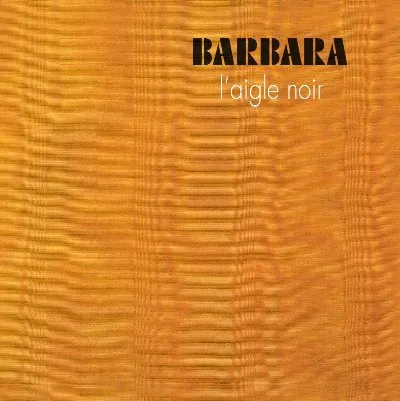
L'Aigle noir
Barbara
Pairs theatrical French chanson and piano-led orchestration with intimate, self-revealing writing.

Scott 4
Scott Walker
Shares cinematic orchestral arrangements, a commanding baritone, and lyrics that turn inward while surveying politics.
J'arrive
Jacques Brel
Brings the same dramatic chanson delivery and restless city-facing perspective to themes of change and self-scrutiny.
Reference: Wikipedia · MusicBrainz · Wikidata
Sync your library
Everything you track here works immediately — no account needed. Create one when you want to sync across devices.