

Elevation
Our rating, out of 100 — and why.
AI-generated from five scored dimensions. An opinion, not a measurement.
Its chronological narration gives a broad, carefully assembled survey a clear shape, though the short, source-specific pieces function more as a historical panorama than a unified…
What we noticed
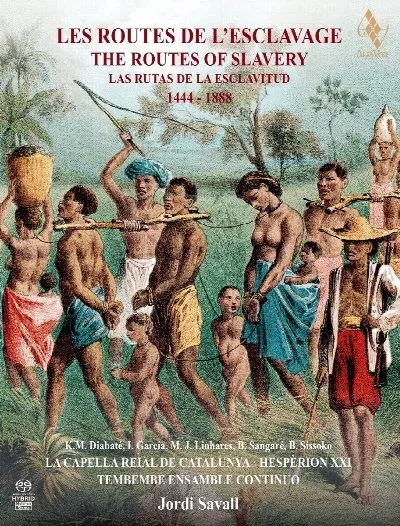
- Dated spoken passages recur between the musical pieces, moving from the 15th-century arrival of enslaved Africans in Portugal toward abolition.
- The program sets African griot songs beside forms identified with the Americas, including jongo, son jarocho, ciranda and maracatu.
- Several tracks are brief instrumental or vocal pieces, while the recurring narration supplies historical context rather than connecting the music through a continuous suite.
- Composition 25% of the score
-
7/10
- Craft 20% of the score
-
8/10
- Durability 25% of the score
-
7/10
- Distinctiveness 18% of the score
-
7/10
- Sequencing 12% of the score
-
8/10
the writing — melody, harmony, structure, lyrics
production, performance, arrangement
whether it rewards returning to it
whether it sounds like itself
running order, pacing, length
Known within its scene. Reported but not counted — how far a record travelled describes its reception rather than the record, and a newer release has had less time to travel than an older one.
Tracklist
Best experienced from track one — press play and let it unfold.
Disc 1
- 1 Récit : 400. (av. J.C. Aristote) L’humanité est divisée en deux : Les maîtres et les esclaves 1:11
- 2 Récit : 1444. La première cargaison africaine, avec 235 esclaves, arrive à l’Algarve 4:12
- 3 Djonya (introduction) (Kassé Mady Diabaté, voix) 1:23
- 4 La negrina / Gugurumbé (M. Flecha, l’ancien) / Los negritos (son jarocho) 5:03
- 5 Vida ao Jongo (jongo da serrinha) 2:31
- 6 Récit : 1505. Le roi Ferdinand le Catholique écrit une lettre à Nicolas de Ovando 1:30
- 7 Tambalagumbá (negrilla à 6 v. et bc.) 5:09
- 8 Velo qué bonito (ou San Antonio) 2:45
- 9 Manden Mandinkadenou (chant griote) 4:41
- 10 Récit : 1620. Les premiers esclaves africains arrivent dans les colonies anglaises 3:10
- 11 Canto de guerreiro (caboclinho paraibano) 3:51
- 12 Kouroukanfouga (instrumental) 5:15
- 13 Récit : 1657. Les musiques des esclaves (R. Ligon) / Histoire…de l’Île de la Barbade 2:09
- 14 Mariquita, María (son de la tirana) 2:54
- 15 Antoniya, Flaciquia, Gasipà (negro à 5) 7:22
- 16 Récit : 1661. Les Châtiments des esclaves (Hans Sloane) / A Voyage to the Islands 3:20
- 17 Sinanon Saran (chant griote) (Kassé Mady Diabaté, voix) 3:43
Disc 2
- 1 Récit : 1685. Le « Code Noir » promulgué par Louis XIV s’est imposé jusqu’à 1848 2:32
- 2 Los indios : ¡Fuera, fuera! ¡Háganles lugar! 5:50
- 3 Saí da casa (ciranda) 4:32
- 4 Récit : 1748. Montesquieu De l’Esprit des lois. XV, 5 : « De l’esclavage des nègres » 1:11
- 5 Véro (instrumental) 8:36
- 6 El torbellino 3:08
- 7 Gulumbé : Los coflades de la estleya 5:02
- 8 Récit : 1782. Requête de l’esclave Belinda, devant le Congrès du Massachusetts 3:49
- 9 Simbo (chant griote) (Kassé Mady Diabaté, voix) 5:26
- 10 La iguana (son jarocho) 4:02
- 11 Récit : 1848. Décret sur abolition de l’esclavage, dans toutes les colonies françaises 2:11
- 12 A la mar me llevan (tonada El Congo) 3:48
- 13 Bom de Briga (maracatu e samba) 3:10
- 14 Récit : 1963. Martin Luther‐King « Pourquoi nous ne pouvons pas attendre » 2:33
- 15 Touramakan (chant griote) (Kassé Mady Diabaté, voix) 5:20
- 16 Ay que me abraso (guaracha) 5:51
Reference: MusicBrainz
Sync your library
Everything you track here works immediately — no account needed. Create one when you want to sync across devices.