

Elevation
Our rating, out of 100 — and why.
AI-generated from five scored dimensions. An opinion, not a measurement.
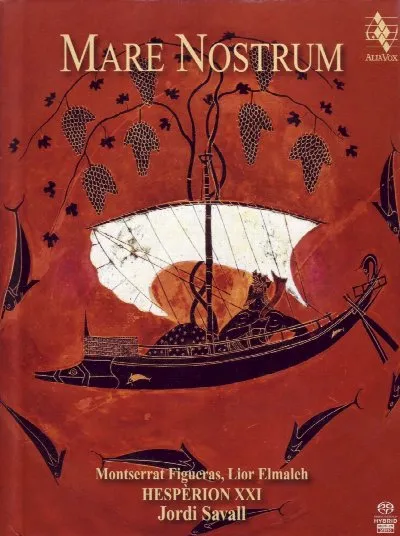
Carefully performed songs and improvisations make the Mediterranean itinerary vivid, though the succession of short pieces is more episodic than dramatically developed.
What we noticed
- The opening moves from a Sephardic romance to Alfonso X’s saltarello, then a Hebrew improvisation and Turkish dance, establishing a route across traditions rather than one period.
- Instrumental taksims recur at tracks 10, 12, 17 and 25, punctuating the vocal songs with improvised passages.
- Lullabies from Amazigh, Hebrew, Andalusian and Greek traditions appear at different points; the final track is a named improvisation rather than another traditional song.
- Composition 25% of the score
-
7/10
- Craft 20% of the score
-
8/10
- Durability 25% of the score
-
7/10
- Distinctiveness 18% of the score
-
7/10
- Sequencing 12% of the score
-
7/10
the writing — melody, harmony, structure, lyrics
production, performance, arrangement
whether it rewards returning to it
whether it sounds like itself
running order, pacing, length
Known within its scene. Reported but not counted — how far a record travelled describes its reception rather than the record, and a newer release has had less time to travel than an older one.
Tracklist
Best experienced from track one — press play and let it unfold.
Disc 1
- 1 La Guirnalda de rosas : Una matica de ruda. Romance Sépharade (Espagne XVe s./Rhodes) 7:21
- 2 Saltarello. Alfonso X El Sabio [Mss. CSM 77-119]. (Espagne) 4:41
- 3 Kamti Beivshan Layla (improvisation sur le Cantique des Cantiques). Chant Hébreu (Israël) 6:10
- 4 Gagauski. Danse turque (Balkans) 3:46
- 5 Berceuse Amazigh. Tradition Berbère (Agadir, Maroc) 5:13
- 6 A la una yo nací (instr.). Sépharade (Sarajevo) 4:10
- 7 Üsküdar. Chant traditionnel (Turquie) 6:00
- 8 Las Estrellas de los cielos (improvisation instr.). Sépharade (Alexandrie) 7:42
- 9 LaMoledet shuvi roni. Asher Mizrahi (1890-1967) (Jérusalem) 4:37
- 10 Taksim & Makam Kurdi Pesrev (instr.). Angeli. (Grèce ca. 1680) 5:22
- 11 Les Trois Principes Alef, mem shin. Texte kabbalistique du livre de la Création Sépharade (Occitanie IXe s./Turquie) 6:55
- 12 Taksim - Pesendîde « Saz Semârsi » (instr.) Selim III. Istanbul (1800) 4:09
- 13 Noumi noumi yaldati. Berceuse Hébraïque (Israël) 6:05
- 14 La Armada Turca (instr.). Mélodie Sépharade (Istanbul) 3:56
Disc 2
- 1 En la Santa Helena (instr.). Sépharade (Sophie) 4:26
- 2 Shaar petach Dodi. Salomon Ibn Gabirol. Chant Hébreu (Israël) 3:40
- 3 Taksim Kanun (improvisation). Hakan Güngör (Istanbul) 2:30
- 4 Nana andaluza : Duerme mi niña. Traditionnel (Espagne) 8:43
- 5 El Rey que tanto madruga (instr.). Sépharade (Maroc) 4:21
- 6 Ana Av Rajman. Rabbin David Buzalo. Chant Hébreu (Maroc) 7:03
- 7 Chominciamento di gioia (Istanpitta). Mss. Trecento (Italie ca. 1300) 3:08
- 8 Berceuse Κοιμησου Χαiδεμενο Μου. Chant traditionnel (Grèce) 3:18
- 9 El cant dels Aucells (instr.). Chant traditionnel (Catalogne) 7:21
- 10 Hon Tahon. Chant Hébreu (Israël) 4:03
- 11 Taksim & Makam « Rast Murass’a » Mss. D. Cantemir n. 214 (Istanbul, 1690) 7:29
- 12 Adonenu Elohenu. Sépharade (Tunisie) 10:45
- 13 Taksim & Danse Bulgare. Traditionnel (Bulgarie) 4:59
- 14 Mireu el nostre mar (Improvisation), M. Forcano (paroles), F. Savall (mus.) 7:48
Reference: MusicBrainz
Sync your library
Everything you track here works immediately — no account needed. Create one when you want to sync across devices.