

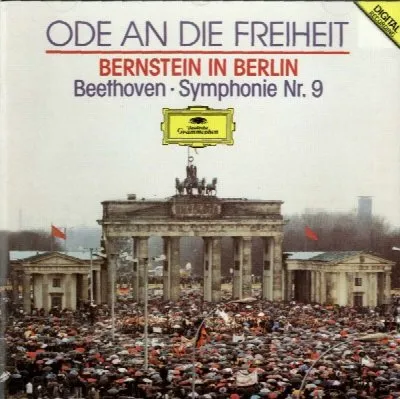
Ode to Freedom: Bernstein in Berlin: Beethoven Symphony no. 9
Leonard Bernstein · 1990
78 min · 4 tracks · classical music
Elevation
Our rating, out of 100 — and why.
AI-generated from five scored dimensions. An opinion, not a measurement.
Beethoven’s tightly connected four-movement design is given a sharply specific historical frame by the finale’s change from “Freude” to “Freiheit.”
What we noticed
- The first three movements are orchestral; the finale begins with low strings recalling earlier themes before soloists and chorus enter.
- In the finale, the chorus sings “Freiheit” in place of Beethoven’s “Freude,” making the text change audible at the work’s central refrain.
- The four-movement sequence moves from a long, unsettled opening through scherzo and slow movement to the finale’s vocal entrance and extended choral close.
- Composition 25% of the score
-
10/10
- Craft 20% of the score
-
8/10
- Durability 25% of the score
-
8/10
- Distinctiveness 18% of the score
-
8/10
- Sequencing 12% of the score
-
9/10
the writing — melody, harmony, structure, lyrics
production, performance, arrangement
whether it rewards returning to it
whether it sounds like itself
running order, pacing, length
Defined its genre or moment. Reported but not counted — how far a record travelled describes its reception rather than the record, and a newer release has had less time to travel than an older one.
Tracklist
Best experienced from track one — press play and let it unfold.
- 1 Symphony no. 9 in D minor, op. 125: I. Allegro ma non troppo, un poco maestoso 18:04
- 2 Symphony no. 9 in D minor, op. 125: II. Molto vivace 10:43
- 3 Symphony no. 9 in D minor, op. 125: III. Adagio molto e cantabile 20:15
- 4 Symphony no. 9 in D minor, op. 125: IV. Presto - Allegro assai 28:58
Reference: MusicBrainz
Sync your library
Everything you track here works immediately — no account needed. Create one when you want to sync across devices.