

Elevation
Our rating, out of 100 — and why.
AI-generated from five scored dimensions. An opinion, not a measurement.
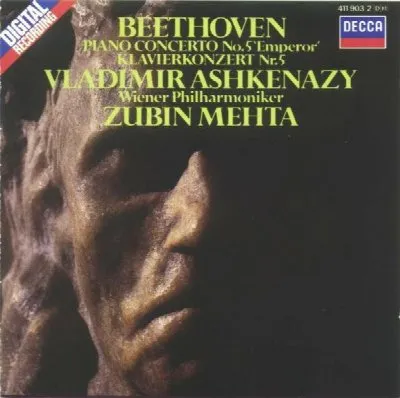
InstrumentalBeethoven’s concerto sustains a strong three-movement arc, and Ashkenazy’s playing gives its demanding solo writing a clear, assured shape.
What we noticed
- The first movement opens with piano flourishes between orchestral statements, then gives the soloist room to answer and develop the themes rather than simply doubling the orchestra.
- The slow movement keeps the piano in a restrained, singing role; its final phrase leads directly into the finale without a full stop.
- The finale turns a compact rondo theme into a recurring point of return, with orchestral passages separating the piano’s increasingly animated runs.
- Composition 25% of the score
-
9/10
- Craft 20% of the score
-
8/10
- Durability 25% of the score
-
8/10
- Distinctiveness 18% of the score
-
7/10
- Sequencing 12% of the score
-
8/10
the writing — melody, harmony, structure, lyrics
production, performance, arrangement
whether it rewards returning to it
whether it sounds like itself
running order, pacing, length
Little footprint beyond its audience. Reported but not counted — how far a record travelled describes its reception rather than the record, and a newer release has had less time to travel than an older one.
Tracklist
Best experienced from track one — press play and let it unfold.
- 1 Piano Concerto no. 5 in E-flat major, Op.73 'Emperor': I. Allegro 20:42
- 2 Piano Concerto no. 5 in E-flat major, Op.73 'Emperor': II. Adagio un poco mosso 8:07
- 3 Piano Concerto no. 5 in E-flat major, Op.73 'Emperor': III. Rondo (Allegro) 10:57
Reference: MusicBrainz
Sync your library
Everything you track here works immediately — no account needed. Create one when you want to sync across devices.