

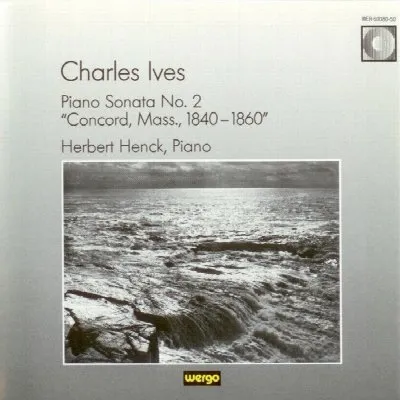
Elevation
Our rating, out of 100 — and why.
AI-generated from five scored dimensions. An opinion, not a measurement.
InstrumentalIts four-part literary design and collisions of hymn-like fragments with dense modernist piano writing make it unusually distinctive; the specific recording’s execution is less ce…
What we noticed
- The four movements follow the named sequence: a broad, densely layered Emerson gives way to Hawthorne’s more volatile writing, then to the hymn-like Alcotts and the quieter Thoreau.
- The piano writing shifts between recognizable tonal or hymn-like fragments and passages of dense dissonance, so familiar material emerges and recedes rather than holding the piece in one harmonic wor…
- The final movement narrows toward a quiet close, making the sequence move from the sonata’s more expansive opening toward a private ending.
- Composition 25% of the score
-
9/10
- Craft 20% of the score
-
7/10
- Durability 25% of the score
-
8/10
- Distinctiveness 18% of the score
-
9/10
- Sequencing 12% of the score
-
8/10
the writing — melody, harmony, structure, lyrics
production, performance, arrangement
whether it rewards returning to it
whether it sounds like itself
running order, pacing, length
Defined its genre or moment. Reported but not counted — how far a record travelled describes its reception rather than the record, and a newer release has had less time to travel than an older one.
Tracklist
Best experienced from track one — press play and let it unfold.
- 1 Piano Sonata no. 2 "Concord, Mass., 1840-1860": I. Emerson 17:34
- 2 Piano Sonata no. 2 "Concord, Mass., 1840-1860": II. Hawthorne 12:03
- 3 Piano Sonata no. 2 "Concord, Mass., 1840-1860": III. The Alcotts 5:25
- 4 Piano Sonata no. 2 "Concord, Mass., 1840-1860": IV. Thoreau 14:00
Reference: MusicBrainz
Sync your library
Everything you track here works immediately — no account needed. Create one when you want to sync across devices.