

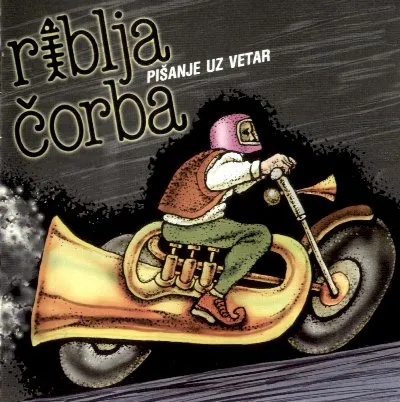
Released 25 years ago this November
Pišanje uz vetar
Riblja čorba · 2001
54 min · 14 tracks · rock music
Guitar-driven Serbian rock moves from blunt satire to weary reflection, with a reprise bringing the album back to its opening.
Top tracks — play these first
-
→
Crno beli svet Start here — The opening track establishes a stark division in its central image; its shorter reprise at the end gives the album a circular shape.
-
→
Srbin je lud — Its provocative generalization puts national identity at the forefront, making it a direct entry point into the album’s satirical side.
-
→
Duša nije na prodaju — At six minutes, it gives the album room for a more extended declaration of personal principle than its brisker songs.
-
→
Nebeski narod — Its treatment of a charged phrase associated with Serbian national identity places the record’s social commentary in a distinctly local context.
Elevation
Our rating, out of 100 — and why.
AI-generated from five scored dimensions. An opinion, not a measurement.
The album combines sharp social commentary with engaging rock and folk elements, maintaining a cohesive flow throughout.
What we noticed
- The album opens with a strong, driving rhythm that persists through the first half, creating a sense of urgency.
- Several tracks feature call-and-response vocals, emphasizing the communal aspect of the lyrics and engaging the listener.
- The final track is a reprise of the opening song, which creates a circular structure that reinforces its themes.
- Composition 25% of the score
-
7/10
- Craft 20% of the score
-
6/10
- Durability 25% of the score
-
6/10
- Distinctiveness 18% of the score
-
7/10
- Sequencing 12% of the score
-
8/10
the writing — melody, harmony, structure, lyrics
production, performance, arrangement
whether it rewards returning to it
whether it sounds like itself
running order, pacing, length
Significant within its genre. Reported but not counted — how far a record travelled describes its reception rather than the record, and a newer release has had less time to travel than an older one.
Is this for you?
Good fit if you like
- reflective moments amidst energy
- wave-like pacing with dynamics
- social commentary through anthems
- poignant lyrics for contemplation
Maybe skip if you
- seeking instant gratification
- prefer standalone hit tracks
Where this album fits
- In the catalog
- Critical Peak — The album features sharp social commentary, marking a high point in their cultural relevance.
- Themes
- Serbian social divisions· postwar national identity· Balkan political satire· wasted lives
- Career context
- Released in 2001, Pišanje uz vetar followed Riblja čorba’s 1999 studio album Nojeva barka. By then, the Belgrade band had been recording for more than two decades, with frontman Bora Đorđević remaining its principal lyrical voice.
- Stylistic neighbors
- Bajaga i Instruktori· Električni Orgazam· Partibrejkers
Moments worth listening for
Where the writing does something specific.
-
Srbin je lud
The refrain repeatedly applies a sweeping judgment to Serbian people as a group.
Repetition turns an intentionally blunt generalization into the song’s organizing device rather than a passing observation.
Tracklist
- 1 Crno beli svet Start here 3:58
- 2 Srbin je lud 2:59
- 3 Ljubav ovde više ne stanuje 4:27
- 4 Duša nije na prodaju 6:01
- 5 Čiviluk 3:35
- 6 Po livadi rosnoj 2:36
- 7 Hoću, majko, hoću 2:58
- 8 Daj mi lovu 3:02
- 9 Neka me ubije grom 4:23
- 10 Čekajući čoveka 5:23
- 11 Prokockan život 3:03
- 12 Zasto sam otišao bluz 5:06
- 13 Nebeski narod 4:58
- 14 Crno beli svet (i opet) 1:55
What to play next
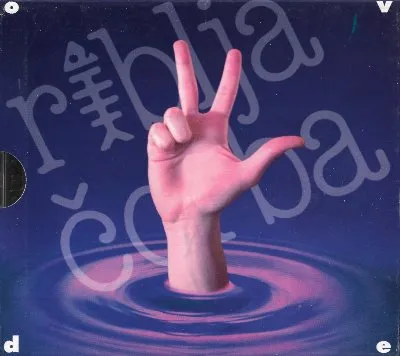
Ovde
2003
Continues the blend of rock and folk with sharp commentary and humor.

Nojeva barka
1999
Sets the stage with similar themes and musical style, leading into 'Pišanje uz vetar'.
If this landed
Records by other artists that run on the same instinct.
Reference: Wikipedia · MusicBrainz · Wikidata
Sync your library
Everything you track here works immediately — no account needed. Create one when you want to sync across devices.