

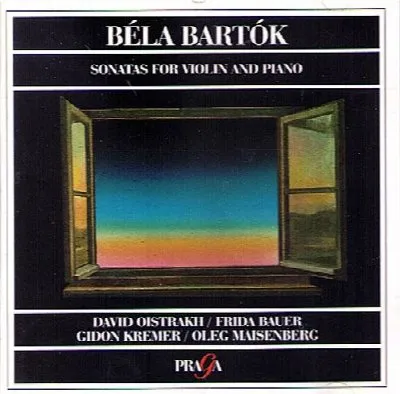
Elevation
Our rating, out of 100 — and why.
AI-generated from five scored dimensions. An opinion, not a measurement.
InstrumentalBartók’s sharply contrasted sonatas and folk-song miniatures make a coherent, demanding program; its influence belongs mainly to the repertoire, not this recording.
What we noticed
- The three movements of Sonata No. 1 come first, followed by three Hungarian folk-song pieces, then the two movements of Sonata No. 2.
- The tempo labels alternate between fast and slow in the first sonata; the folk-song group begins with an Allegro and ends with two Andantes.
- The second sonata closes the program with a Molto moderato followed by an Allegretto, rather than returning to the faster opening-sonata pattern.
- Composition 25% of the score
-
8/10
- Craft 20% of the score
-
8/10
- Durability 25% of the score
-
7/10
- Distinctiveness 18% of the score
-
7/10
- Sequencing 12% of the score
-
7/10
the writing — melody, harmony, structure, lyrics
production, performance, arrangement
whether it rewards returning to it
whether it sounds like itself
running order, pacing, length
Known within its scene. Reported but not counted — how far a record travelled describes its reception rather than the record, and a newer release has had less time to travel than an older one.
Tracklist
Best experienced from track one — press play and let it unfold.
- 1 Sonate pour violon et piano no. 1 : I. Allegro appassionato 12:15
- 2 Sonate pour violon et piano no. 1 : II. Adagio 10:15
- 3 Sonate pour violon et piano no. 1 : III. Allegro 10:00
- 4 Chansons populaires hongroises, no. 6 : Allegro 4:00
- 5 Chansons populaires hongroises, no. 13 : Andante 1:42
- 6 Chansons populaires hongroises, no. 18 : Andante non molto 1:00
- 7 Sonate pour violon et piano no. 2 : I. Molto moderato 8:51
- 8 Sonate pour violon et piano no. 2 : II. Allegretto 12:16

Reference: MusicBrainz
Sync your library
Everything you track here works immediately — no account needed. Create one when you want to sync across devices.