

Elevation
Our rating, out of 100 — and why.
AI-generated from five scored dimensions. An opinion, not a measurement.
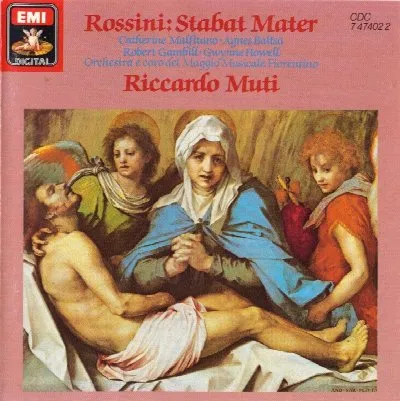
Rossini’s contrasts between solo display, ensemble writing, and choral weight give the work a compelling arc; its bel canto language remains rooted in a familiar style.
What we noticed
- The ten movements alternate choruses, solo arias, and ensembles rather than sustaining one continuous choral texture.
- The tenor aria in movement II puts the solo line in the foreground; movement VIII answers with a forceful choral-orchestral surge.
- The finale begins more sparsely, then gathers into a fugue, giving the sequence a clear build toward its close.
- Composition 25% of the score
-
8/10
- Craft 20% of the score
-
8/10
- Durability 25% of the score
-
8/10
- Distinctiveness 18% of the score
-
6/10
- Sequencing 12% of the score
-
8/10
the writing — melody, harmony, structure, lyrics
production, performance, arrangement
whether it rewards returning to it
whether it sounds like itself
running order, pacing, length
Known within its scene. Reported but not counted — how far a record travelled describes its reception rather than the record, and a newer release has had less time to travel than an older one.
Tracklist
Best experienced from track one — press play and let it unfold.
- 1 Stabat Mater: I. Stabat mater dolorosa 9:52
- 2 Stabat Mater: II. Cujus animam gementem 6:58
- 3 Stabat Mater: III. Quis est homo 6:45
- 4 Stabat Mater: IV. Pro peccatis 5:16
- 5 Stabat Mater: V. Eja, mater, fons amoris 5:01
- 6 Stabat Mater: VI. Sancta mater 7:47
- 7 Stabat Mater: VII. Fac ut portem 4:43
- 8 Stabat Mater: VIII. Inflammatus et accensus 4:19
- 9 Stabat Mater: IX. Quando corpus morietur 4:33
- 10 Stabat Mater: X. In sempiterna saecula 5:58

Reference: MusicBrainz
Sync your library
Everything you track here works immediately — no account needed. Create one when you want to sync across devices.