

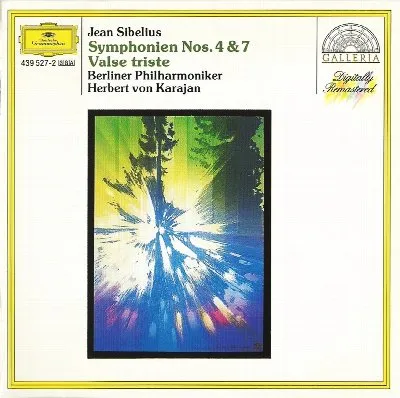
Elevation
Our rating, out of 100 — and why.
AI-generated from five scored dimensions. An opinion, not a measurement.
InstrumentalSibelius’s compressed symphonic forms and the Seventh’s single-span arc give the program strong musical shape; the closing waltz works as a quiet coda.
What we noticed
- The Fourth moves through four sharply contrasted movements, from a slow, weighty opening to a fast finale.
- The Seventh’s four catalogued sections are parts of one continuous movement, building toward emphatic brass chords.
- The brief Valse triste follows the two symphonies, ending the program with a return to a slower, more intimate scale.
- Composition 25% of the score
-
8/10
- Craft 20% of the score
-
8/10
- Durability 25% of the score
-
7/10
- Distinctiveness 18% of the score
-
7/10
- Sequencing 12% of the score
-
7/10
the writing — melody, harmony, structure, lyrics
production, performance, arrangement
whether it rewards returning to it
whether it sounds like itself
running order, pacing, length
Known within its scene. Reported but not counted — how far a record travelled describes its reception rather than the record, and a newer release has had less time to travel than an older one.
Tracklist
Best experienced from track one — press play and let it unfold.
- 1 Symphony no. 4 in A minor, op. 63: 1. Tempo molto moderato, quasi adagio 9:58
- 2 Symphony no. 4 in A minor, op. 63: 2. Allegro molto vivace 4:46
- 3 Symphony no. 4 in A minor, op. 63: 3. Il tempo largo 12:00
- 4 Symphony no. 4 in A minor, op. 63: 4. Allegro 9:33
- 5 Symphony no. 7 in C major, op. 105: Adagio 8:14
- 6 Symphony no. 7 in C major, op. 105: (Un pochett.) meno adagio 3:03
- 7 Symphony no. 7 in C major, op. 105: 5 bars before: Poco rallentando al Adagio 7:08
- 8 Symphony no. 7 in C major, op. 105: Presto - Poco a poco rallentando al Adagio 5:07
- 9 Valse triste, op. 44: Lento 6:05
Reference: MusicBrainz
Sync your library
Everything you track here works immediately — no account needed. Create one when you want to sync across devices.