

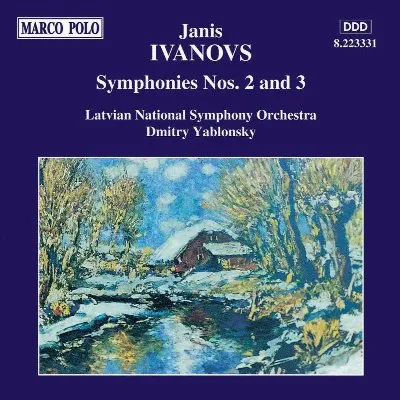
Elevation
Our rating, out of 100 — and why.
AI-generated from five scored dimensions. An opinion, not a measurement.
The paired choral finales give the program a clear shape, while the early symphonies' episodic writing is less sustained than Shostakovich's later work.
What we noticed
- Symphony No. 2 begins with a diffuse orchestral span and builds toward a final choral section rather than following a conventional multi-movement arc.
- No. 3 also reserves its chorus for the close; its earlier sections move through contrasting orchestral episodes before the final vocal entry.
- The two compact works share that orchestral-to-choral design, but No. 2's more fragmented opening gives way to No. 3's clearer sequence of contrasting sections.
- Composition 25% of the score
-
7/10
- Craft 20% of the score
-
6/10
- Durability 25% of the score
-
6/10
- Distinctiveness 18% of the score
-
7/10
- Sequencing 12% of the score
-
7/10
the writing — melody, harmony, structure, lyrics
production, performance, arrangement
whether it rewards returning to it
whether it sounds like itself
running order, pacing, length
Known within its scene. Reported but not counted — how far a record travelled describes its reception rather than the record, and a newer release has had less time to travel than an older one.
Tracklist
Best experienced from track one — press play and let it unfold.
- 1 Symphony no. 2 in D minor: I. Adagio 8:16
- 2 Symphony no. 2 in D minor: II. Andante 12:20
- 3 Symphony no. 2 in D minor: III. Andante (maestoso) 9:17
- 4 Symphony no. 3 in F minor: I. Adagio – Allegro moderato 9:40
- 5 Symphony no. 3 in F minor: II. Andante 10:11
- 6 Symphony no. 3 in F minor: III. Allegro 3:56
- 7 Symphony no. 3 in F minor: IV. Moderato 7:52
Reference: MusicBrainz
Sync your library
Everything you track here works immediately — no account needed. Create one when you want to sync across devices.