

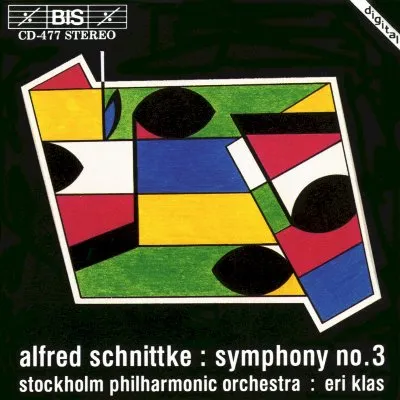
Elevation
Our rating, out of 100 — and why.
AI-generated from five scored dimensions. An opinion, not a measurement.
InstrumentalIts collision of dense modernist writing with historical tonal gestures gives the symphony a distinctive voice, though its scale and density make it less immediately rewarding.
What we noticed
- The four movements move from an expansive Moderato to an Allegro, a lighter Allegretto, then a closing Adagio; the finale returns the work to a slow, weighty pace.
- Dense, dissonant orchestral writing repeatedly gives way to recognisable tonal and historical styles, so the contrasts are built into the musical material rather than added as decoration.
- The symphony’s large-scale movements ask for sustained attention: its changes of style and orchestral density matter more than a sequence of short, self-contained themes.
- Composition 25% of the score
-
8/10
- Craft 20% of the score
-
8/10
- Durability 25% of the score
-
7/10
- Distinctiveness 18% of the score
-
9/10
- Sequencing 12% of the score
-
7/10
the writing — melody, harmony, structure, lyrics
production, performance, arrangement
whether it rewards returning to it
whether it sounds like itself
running order, pacing, length
Significant within its genre. Reported but not counted — how far a record travelled describes its reception rather than the record, and a newer release has had less time to travel than an older one.
Tracklist
Best experienced from track one — press play and let it unfold.
- 1 Symphony no. 3: I. (Moderato) 11:57
- 2 Symphony no. 3: II. Allegro 12:32
- 3 Symphony no. 3: III. Allegretto 7:15
- 4 Symphony no. 3: IV. Adagio 17:38
What to play next
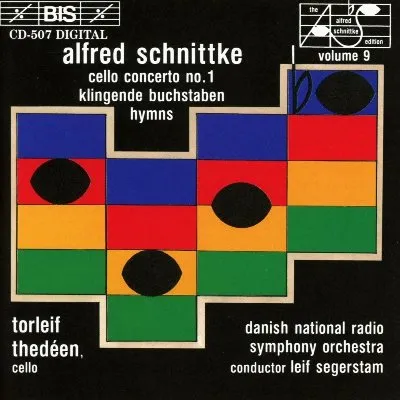
The Alfred Schnittke Edition, Volume 9: Cello Concerto no. 1 / Klingende Buchstaben / Hymns
1990
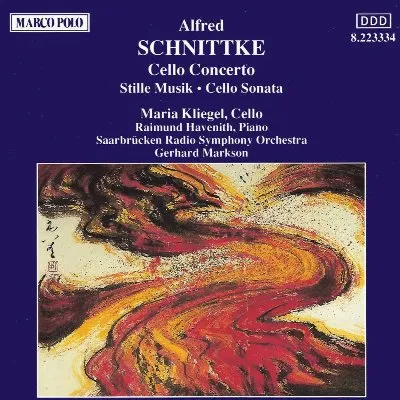
Cello Concerto / Stille musik / Cello Sonata
1990
Reference: MusicBrainz
Sync your library
Everything you track here works immediately — no account needed. Create one when you want to sync across devices.