

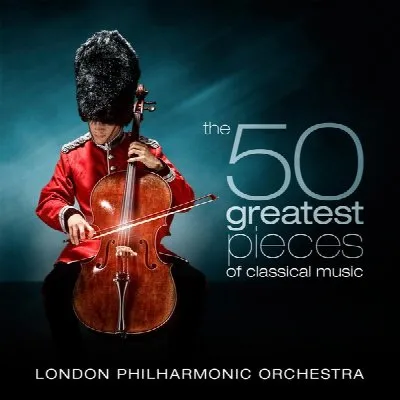
The 50 Greatest Pieces of Classical Music
London Philharmonic Orchestra · 2009
262 min · 50 tracks · classical music
Choral thunder gives way to piano intimacy as familiar melodies travel from Baroque courts to twentieth-century concert halls.
Top tracks — play these first
-
→
Carmina Burana: O Fortuna Start here — Orff’s massed voices and pounding rhythms make an immediately theatrical opening, setting the collection’s grandest choral sound against the quieter pieces that follow.
-
→
Orchestral Suite no. 3: Air — Bach’s sustained string melody unfolds over a steadily moving bass, offering a calm contrast to the opening chorus.
-
→
Adagio for Strings — Barber builds a long, taut arc from a restrained opening to an anguished climax, showing how much drama a string ensemble can create without a chorus.
-
→
Má Vlast: Vltava — Smetana’s tone poem follows the course of a river through changing musical scenes, making it one of the collection’s most expansive journeys.
Elevation
Our rating, out of 100 — and why.
AI-generated from five scored dimensions. An opinion, not a measurement.
InstrumentalThis compilation showcases a wide array of classical pieces but lacks a cohesive narrative or thematic flow.
What we noticed
- The album features 50 tracks, each representing a distinct classical piece, with no single composer dominating the selection.
- Tracks vary significantly in tempo and mood, ranging from the dramatic intensity of 'O Fortuna' to the serene beauty of 'Clair de lune'.
- The arrangement includes both well-known orchestral works and popular melodies, providing a broad overview of classical music's emotional range.
- Each piece is presented in its original orchestration, allowing listeners to experience the full depth of the compositions.
- Composition 25% of the score
-
8/10
- Craft 20% of the score
-
7/10
- Durability 25% of the score
-
6/10
- Distinctiveness 18% of the score
-
5/10
- Sequencing 12% of the score
-
4/10
the writing — melody, harmony, structure, lyrics
production, performance, arrangement
whether it rewards returning to it
whether it sounds like itself
running order, pacing, length
Significant within its genre. Reported but not counted — how far a record travelled describes its reception rather than the record, and a newer release has had less time to travel than an older one.
Is this for you?
Good fit if you like
- orchestral grandeur for focus
- dynamic shifts in emotion
- for reflective afternoons
- epic moments for celebration
- timeless classics for deep listening
Maybe skip if you
- prefer short, standalone tracks
- seek instant gratification
Where this album fits
- In the catalog
- Starting Point — A comprehensive introduction to classical music, accessible for new listeners.
- Themes
- orchestral grandeur· cinematic emotionality· cultural touchstones
- Career context
- Released in 2009, this collection arrived more than seven decades after the London Philharmonic Orchestra was founded in 1932. Conducted by David Parry, it presented the ensemble in a survey of classical favorites rather than a single-composer program.
- Stylistic neighbors
- Jaroslav Krček· musicAeterna· Wojciech Kilar
Moments worth listening for
Where the writing does something specific.
-
Carmina Burana: O Fortuna
The opening addresses Fortune directly and compares her changing state to the moon before turning to the image of her wheel.
The shift from celestial cycle to mechanical rotation gives the Latin text two linked images of instability before its account of human reversals.
Tracklist
Disc 1
- 1 Carmina Burana: O Fortuna Start here 2:42
- 2 Orchestral Suite no. 3: Air 4:14
- 3 Peer Gynt: Morning Mood 3:44
- 4 Symphony no. 5: Allegro con brio 7:28
- 5 Nocturne no. 2 4:53
- 6 Canon 3:30
- 7 Adagio for Strings 8:22
- 8 The Four Seasons, “Spring”: Allegro 3:12
- 9 Ride of the Valkyries 5:11
- 10 Clair de lune 5:13
- 11 Chorus of the Hebrew Slaves 4:59
- 12 The Planets: Jupiter 7:45
- 13 Symphony no. 9 “From the New World”: Largo 12:49
Disc 2
- 1 Brandenburg Concerto no. 3: Allegro 5:44
- 2 Piano Concerto no. 21: Andante 7:18
- 3 Hungarian Dance no. 5 2:38
- 4 Thaïs: Meditation 5:01
- 5 Pomp and Circumstance: March no. 1 5:45
- 6 Requiem Mass: Lacrimosa 2:49
- 7 The Beautiful Blue Danube 5:51
- 8 Für Elise 3:16
- 9 Carmen Suite: Habanera 2:12
- 10 Swan Lake Suite: Scene 3:01
- 11 Gymnopedie no. 1 3:40
- 12 Symphony no. 9 “Choral”: Ode to Joy 2:32
Disc 3
- 1 The Barber of Seville: Overture 6:58
- 2 Ave Maria (after J.S. Bach) 2:34
- 3 Peer Gynt: In the Hall of the Mountain King 2:43
- 4 Moonlight Sonata: Adagio sostenuto 5:36
- 5 Eine Kleine Nachtmusik: Allegro 5:51
- 6 Adagio in G minor, Albinoni’s Adagio 8:32
- 7 Finlandia 8:01
- 8 String Quintet: Minuet 3:48
- 9 Symphony no. 40: Allegro molto 7:02
- 10 Cavatina 3:59
- 11 Slavonic Dance no. 2 5:35
- 12 Messa de Requiem: Dies irae – Tuba mirum 3:54
- 13 Symphony no. 5: Adagietto 10:49
Disc 4
- 1 Má Vlast: Vltava 11:26
- 2 Pavane 5:07
- 3 Double Violin Concerto: Vivace 3:38
- 4 The Tales of Hoffman: Barcarolle 3:33
- 5 The Magic Flute: Overture 6:24
- 6 Piano Sonata no. 11: Rondo Alla Turca 3:25
- 7 L’arlesienne Suite no. 1: Prelude 6:53
- 8 Christmas Concerto: Allegro 2:27
- 9 Radetzky March 3:05
- 10 Vocalise 5:50
- 11 Egmont Overture 7:57
- 12 Messiah: Hallelujah Chorus 3:32
If this landed
Records by other artists that run on the same instinct.
Sleep
Max Richter
Shares a cinematic emotionality with orchestral arrangements that evoke deep introspection.
Re:member
Ólafur Arnalds
Combines classical instrumentation with modern production, creating a lush, atmospheric sound.
Divenire
Ludovico Einaudi
Features minimalist piano and orchestral elements that resonate with emotional depth and grandeur.
Reference: Wikipedia · MusicBrainz · Wikidata
Sync your library
Everything you track here works immediately — no account needed. Create one when you want to sync across devices.