

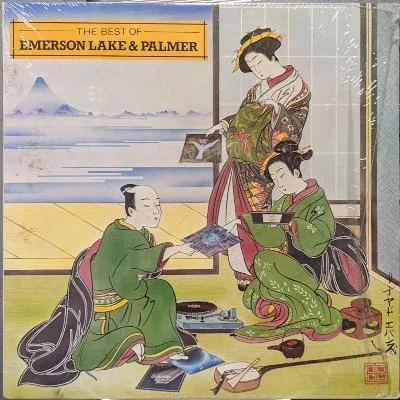
The Best of Emerson Lake & Palmer
Emerson, Lake & Palmer · 1980
38 min · 9 tracks · progressive rock
Keyboard-driven rock swings from pastoral balladry to orchestral grandeur with the snap of a hard-hitting power trio.
Top tracks — play these first
-
→
Hoedown Start here — The trio turns Copland’s rodeo music into a brisk keyboard-and-drums chase, making its classical borrowing feel as physical as rock.
-
→
Lucky Man — Greg Lake’s acoustic ballad ends with Keith Emerson’s prominent Moog solo, a striking collision of folk storytelling and electronic color.
-
→
Karn Evil 9: 1st Impression, Part 2 — A carnival-barker vocal introduces a futuristic spectacle, while the trio packs the scale and rhythmic drive of its longer works into a concise section.
-
→
Fanfare for the Common Man — Emerson’s synthesizer gives Copland’s ceremonial theme a new edge, and this single-length edit distills the band’s orchestral ambitions into a few minutes.
-
→
Trilogy — An intimate piano-and-voice opening gives way to an elaborate ensemble passage, showing how the band could turn a ballad into a multi-part arrangement.
Elevation
Our rating, out of 100 — and why.
AI-generated from five scored dimensions. An opinion, not a measurement.
Strong writing and performances make the selections hold up, but the shifts between excerpts, songs, and instrumentals give this collection little sequencing arc of its own.
What we noticed
- The opening moves from the brisk instrumental "Hoedown" to the compact ballad "Lucky Man," then to an excerpt from the much longer "Karn Evil 9."
- The sequence alternates full songs with pieces drawn from larger works; after "Peter Gunn" and "Fanfare for the Common Man," it ends with the extended "Trilogy."
- Vocals drop out on "Hoedown," "Peter Gunn," and "Fanfare for the Common Man," breaking up the sung tracks without forming a sustained instrumental section.
- Composition 25% of the score
-
7/10
- Craft 20% of the score
-
8/10
- Durability 25% of the score
-
6/10
- Distinctiveness 18% of the score
-
2/10
- Sequencing 12% of the score
-
4/10
the writing — melody, harmony, structure, lyrics
production, performance, arrangement
whether it rewards returning to it
whether it sounds like itself
running order, pacing, length
Little footprint beyond its audience. Reported but not counted — how far a record travelled describes its reception rather than the record, and a newer release has had less time to travel than an older one.
Is this for you?
Good fit if you like
- quick shifts from ballads to
- grand finales in compact doses
- a sampler of contrasting moods
- one patient eight-minute centerpiece
Maybe skip if you
- want a single continuous mood
- prefer every track equally brief
Where this album fits
- In the catalog
- Starting Point — A concise sampler of the band's first decade, offering newcomers a broad introduction to its sound and signature mate...
- Career context
- Released in 1980, this compilation gathered highlights from Emerson, Lake & Palmer’s first decade, after the trio had split in 1979. It ranges from their 1970 debut through material recorded as their sound expanded toward orchestral projects and shorter rock songs.
- Stylistic neighbors
- Yes· Genesis· King Crimson
Tracklist
- 1 Hoedown Start here 3:44
- 2 Lucky Man 4:36
- 3 Karn Evil 9: 1st Impression, Part 2 4:45
- 4 Jerusalem 2:42
- 5 Peter Gunn 3:30
- 6 Fanfare for the Common Man 2:56
- 7 Still… You Turn Me On 2:51
- 8 Tiger in a Spotlight 4:34
- 9 Trilogy 8:54
What to play next
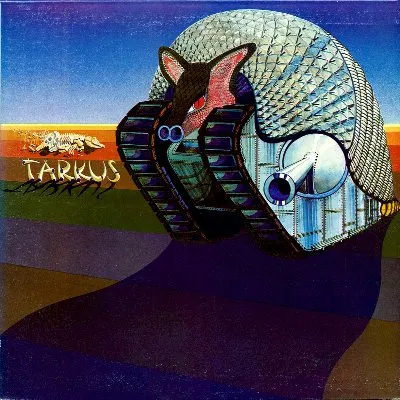
Tarkus
1971
Its extended suite expands the compilation’s keyboard-led rock into a more immersive, tightly connected journey.
In Concert
1979
Reference: Wikipedia · MusicBrainz · Wikidata
Sync your library
Everything you track here works immediately — no account needed. Create one when you want to sync across devices.