

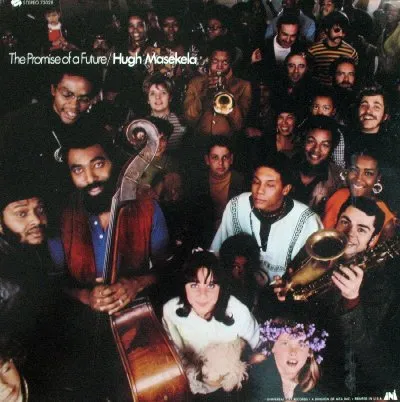
The Promise of a Future
Hugh Masekela · 1968
30 min · 9 tracks · jazz
A vibrant fusion of jazz and African rhythms, filled with rich melodies and spirited brass arrangements.
Top tracks — play these first
-
→
Grazing in the Grass — This track exemplifies Masekela's ability to blend infectious grooves with intricate horn arrangements, making it a defining piece of his catalog.
-
→
Bajabula Bonke (The Healing Song) — As a longer composition, this song reflects Masekela's roots and commitment to social change, merging traditional song structures with contemporary jazz influences.
-
→
Ain't No Mountain High Enough — Masekela’s interpretation infuses the classic tune with an African jazz sensibility, showcasing his unique style and vocal delivery alongside vibrant instrumentation.
Elevation
Our rating, out of 100 — and why.
AI-generated from five scored dimensions. An opinion, not a measurement.
InstrumentalMasekela's blend of jazz and African rhythms creates a distinctive sound that remains engaging over time.
What we noticed
- The album features a strong emphasis on brass instrumentation, with layered horn sections that create a rich, vibrant sound.
- Tracks like 'Grazing in the Grass' incorporate traditional African rhythms, blending them seamlessly with jazz elements.
- The arrangement of each piece often includes call-and-response patterns, typical of African music, enhancing the communal feel.
- Composition 25% of the score
-
8/10
- Craft 20% of the score
-
7/10
- Durability 25% of the score
-
6/10
- Distinctiveness 18% of the score
-
7/10
- Sequencing 12% of the score
-
8/10
the writing — melody, harmony, structure, lyrics
production, performance, arrangement
whether it rewards returning to it
whether it sounds like itself
running order, pacing, length
Significant within its genre. Reported but not counted — how far a record travelled describes its reception rather than the record, and a newer release has had less time to travel than an older one.
Is this for you?
Good fit if you like
- uplifting energy for gatherings
- short bursts of vibrant joy
- head-nodding groove throughout
- brisk pacing for quick listens
- hopeful spirit in melodies
Maybe skip if you
- seeking lengthy, immersive pieces
- prefer darker, introspective themes
Where this album fits
- Career context
- By 1968, Hugh Masekela was establishing himself as a prominent figure in the South African music scene after his debut album in 1963. 'The Promise of a Future' marked a significant evolution in his sound, showcasing more complex arrangements and deeper thematic content as he began to address socio-political issues through music.
- Stylistic neighbors
- Abdullah Ibrahim· Miriam Makeba· Oliver Mtukudzi
Moments worth listening for
Where the writing does something specific.
-
Bajabula Bonke (The Healing Song)
The verses weave together a narrative that speaks directly to healing and unity among people amidst hardship.
The choice to focus on collective healing through communal lyrics elevates the song beyond personal sentiment, positioning it as an anthem for resilience.
Tracklist
Best experienced from track one — press play and let it unfold.
- 1 Ain't No Mountain High Enough 1:59
- 2 Madonna 3:16
- 3 No Face, No Name, No Number 3:31
- 4 Almost Seedless 3:41
- 5 Stop 2:37
- 6 Grazing in the Grass 2:41
- 7 Vuca 3:43
- 8 Bajabula Bonke (The Healing Song) 6:32
- 9 There Are Seeds to Sow 2:31

Reference: Wikipedia · MusicBrainz · Wikidata
Sync your library
Everything you track here works immediately — no account needed. Create one when you want to sync across devices.