

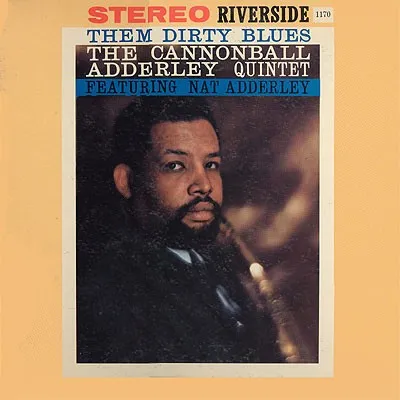
Them Dirty Blues
1960 51 min 9 tracks jazz
Elevation 84 /100 SummitGospel-inflected piano and earthy horns give hard bop the loose-limbed drive of a Sunday gathering.
Is this for you?
Good fit if you like
- side-by-side alternate-take comparisons
- pick-any track browsing
- patience for longer late tracks
- returning to two repeated themes
Maybe skip if you
- need every track to be
- want quick track turnover
Recommended tracks
Top tracks — play these first
-
Dat Dere (take 5) — Timmons's church-rooted melody gives the quintet a playful theme to pass between piano and horns, making the connection between hard bop and gospel audible.
-
Work Song (take 3) — Nat Adderley's work-song-inspired theme has a weighty rhythmic pull, while the horn improvisations turn its compact melody into a spacious conversation.
-
Jeannine — Duke Pearson's composition gives the group a nimble, blues-inflected framework for extended soloing, with the rhythm section keeping its momentum buoyant.
-
Easy Living — The standard offers a quieter contrast to the album's driving themes, foregrounding Cannonball's warm alto tone and unhurried ballad phrasing.
Elevation
Our rating, out of 100 — and why.
AI-generated from five scored dimensions. An opinion, not a measurement. How Elevation works
InstrumentalStrong, memorable themes and sharply defined solo voices carry the record; repeated takes in the catalogued sequence slightly blur its pacing.
What we noticed
- The catalogued sequence gives Dat Dere two takes and later gives Work Song two takes, letting the same themes recur with different improvisational passages.
- Work Song is built around a recurring bass figure beneath the horns; Dat Dere instead turns on Bobby Timmons’s buoyant, piano-led theme.
- After the repeated-take material, the program moves through standards and originals, ending with the title blues.
- Composition 25% of the score
-
8/10
- Craft 20% of the score
-
8/10
- Durability 25% of the score
-
8/10
- Distinctiveness 18% of the score
-
7/10
- Sequencing 12% of the score
-
7/10
the writing — melody, harmony, structure, lyrics
production, performance, arrangement
whether it rewards returning to it
whether it sounds like itself
running order, pacing, length
The score is the weighted average of these five, then scaled to spread the range — the scaling never changes which of two albums scores higher.
Significant within its genre. Reported but not counted — how far a record travelled describes its reception rather than the record, and a newer release has had less time to travel than an older one.
Tracklist
Best experienced from track one — press play and let it unfold.
- 1 Dat Dere (take 5) (recommended) 5:30
- 2 Dat Dere (take 3) 5:30
- 3 Del Sasser 4:41
- 4 Soon 5:35
- 5 Work Song (take 3) (recommended) 5:52
- 6 Work Song (take 4) 5:06
- 7 Jeannine (recommended) 7:16
- 8 Easy Living (recommended) 4:21
- 9 Them Dirty Blues 7:11
Where this album fits
- In the catalog
- Starting Point — Its concise, blues-rooted quintet sound offers an accessible introduction to Adderley's signature soul-jazz style.
- Themes
- church-rooted gospel· work-song labor rhythms· blues-inflected horn exchanges
- Career context
- Them Dirty Blues followed Cannonball Adderley's 1959 breakthrough live album The Cannonball Adderley Quintet in San Francisco. With his brother Nat on cornet and Bobby Timmons at the piano, Cannonball was establishing the quintet as a leading voice in soul jazz.
- Stylistic neighbors
- John Coltrane· Wayne Shorter· Miles Davis
Keep listening
What to play next
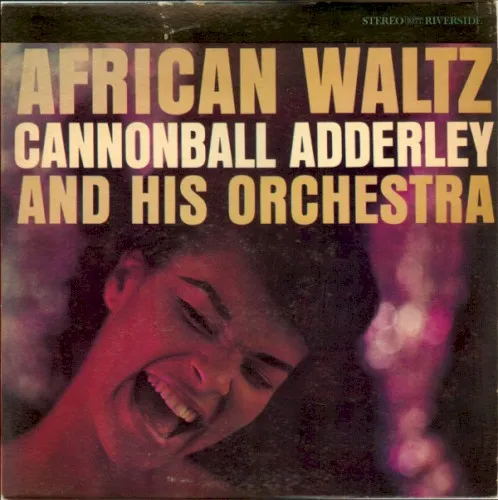
African Waltz
1961
Carries the lively hard-bop momentum forward while opening the sound toward broader, more arranged textures.
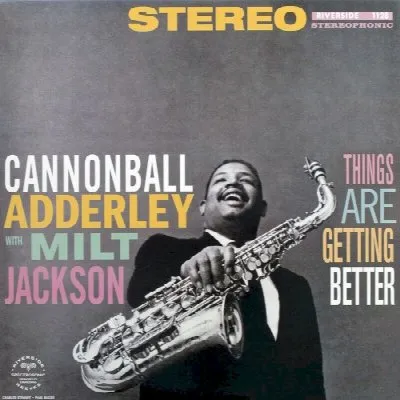
Things Are Getting Better
1959
Its buoyant, blues-rooted quintet sound leads naturally into the earthy groove of Them Dirty Blues.
Related records
If this landed
Records by other artists that run on the same instinct.
Own the record
Some of these are affiliate links: a purchase may earn Northsound a small commission, at no cost to you. It never decides what we recommend or how we score.
Sources
The Weekly Dispatch
One record worth your time, every week — picked the way this page is.
One short email. Free, unsubscribe anytime. Read this week's.
Sync your library
Everything you track here works immediately — no account needed. Create one when you want to sync across devices.