

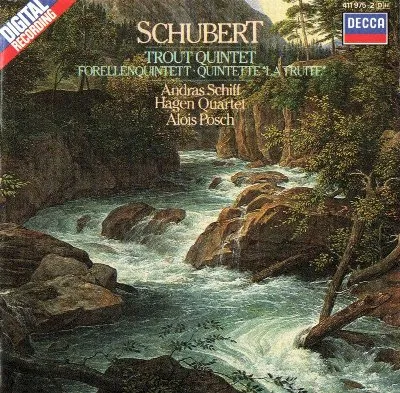
Elevation
Our rating, out of 100 — and why.
AI-generated from five scored dimensions. An opinion, not a measurement.
InstrumentalSchubert’s tightly shaped five-movement design and variation writing reward return visits; the unusual double-bass scoring gives the familiar chamber format its own character.
What we noticed
- The five movements move from a buoyant opening through a measured Andante and scherzo to a theme-and-variations movement before the quick finale.
- The fourth movement takes its theme from Schubert’s song “Die Forelle”; the piano and strings recast it in successive variations.
- The piano quintet adds double bass to the usual piano-and-string-quartet lineup, giving the lower line a distinct role in the ensemble.
- Composition 25% of the score
-
9/10
- Craft 20% of the score
-
8/10
- Durability 25% of the score
-
8/10
- Distinctiveness 18% of the score
-
7/10
- Sequencing 12% of the score
-
9/10
the writing — melody, harmony, structure, lyrics
production, performance, arrangement
whether it rewards returning to it
whether it sounds like itself
running order, pacing, length
Known within its scene. Reported but not counted — how far a record travelled describes its reception rather than the record, and a newer release has had less time to travel than an older one.
Tracklist
Best experienced from track one — press play and let it unfold.
- 1 Piano Quintet in A major, op. 114, D 667, ‘The Trout’: I. Allegro vivace 14:08
- 2 Piano Quintet in A major, op. 114, D 667, ‘The Trout’: II. Andante 6:53
- 3 Piano Quintet in A major, op. 114, D 667, ‘The Trout’: III. Scherzo 4:33
- 4 Piano Quintet in A major, op. 114, D 667, ‘The Trout’: IV. Theme and Variations 8:13
- 5 Piano Quintet in A major, op. 114, D 667, ‘The Trout’: V. Finale: Allegro giusto 10:10
Reference: MusicBrainz
Sync your library
Everything you track here works immediately — no account needed. Create one when you want to sync across devices.