

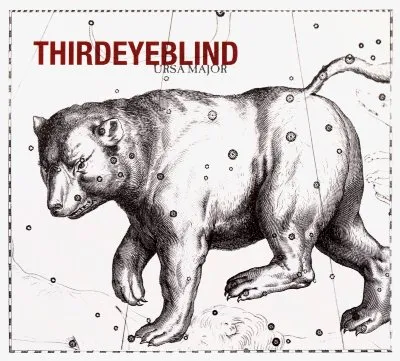
Ursa Major
Third Eye Blind · 2010
47 min · 12 tracks · alternative rock
Bright guitar hooks push against restless rhythms as Stephan Jenkins turns unease into arena-sized alternative rock.
Top tracks — play these first
-
→
Can You Take Me Start here — The opener throws the listener into driving guitars and an urgent vocal, establishing the tension between vulnerability and big rock momentum.
-
→
Bonfire — Its expansive chorus and surging arrangement show how the band could still build a sweeping hook around Jenkins’s restless delivery.
-
→
Summer Town — A more reflective pace gives the melody room to unfold, offering a contrast to the album’s harder-charging opening stretch.
-
→
Water Landing — An extended arrangement lets the guitars and vocal build toward a dramatic release, showing the album’s appetite for scale beyond concise singles.
Elevation
Our rating, out of 100 — and why.
AI-generated from five scored dimensions. An opinion, not a measurement.
InstrumentalThe album showcases solid songwriting and production but lacks standout moments that elevate it significantly.
What we noticed
- The first half of the album features tracks that maintain a consistent mid-tempo pace, while the second half introduces more varied tempos and dynamics.
- Several songs incorporate layered vocal harmonies that build on the emotional weight of the lyrics, particularly in tracks like 'About to Break' and 'Water Landing'.
- The album closes with an instrumental track, 'Carnival Barker', which provides a contrasting shift in mood and allows for reflection after the preceding lyrical content.
- Composition 25% of the score
-
6/10
- Craft 20% of the score
-
7/10
- Durability 25% of the score
-
5/10
- Distinctiveness 18% of the score
-
5/10
- Sequencing 12% of the score
-
6/10
the writing — melody, harmony, structure, lyrics
production, performance, arrangement
whether it rewards returning to it
whether it sounds like itself
running order, pacing, length
Known within its scene. Reported but not counted — how far a record travelled describes its reception rather than the record, and a newer release has had less time to travel than an older one.
Is this for you?
Good fit if you like
- steady, consistent energy levels
- reflective late-night listening
- gradual builds and payoffs
- introspective mood exploration
Where this album fits
- In the catalog
- Late Career Highlight — Marks a return to commercial viability after a long hiatus, showcasing thoughtful songwriting.
- Themes
- driving-guitar urgency· arena-rock unease· post-hiatus restlessness
- Career context
- Ursa Major is Third Eye Blind’s fourth studio album and their first since 2003’s Out of the Vein. Originally released in 2009 before this 2010 edition, it arrived after a lengthy recording gap and was issued on the band’s own Mega Collider label.
- Stylistic neighbors
- Eve 6· Matchbox Twenty· Vertical Horizon
Moments worth listening for
Where the writing does something specific.
-
Don’t Believe a Word
The refrain repeats an instruction to distrust what is being said.
That self-undermining command makes the chorus both an appeal for attention and a warning against accepting it at face value.
Tracklist
- 1 Can You Take Me Start here 3:20
- 2 Don’t Believe a Word 4:00
- 3 Bonfire 4:07
- 4 Sharp Knife 4:26
- 5 One in Ten 2:49
- 6 About to Break 3:55
- 7 Summer Town 4:51
- 8 Why Can’t You Be 5:24
- 9 Water Landing 4:29
- 10 Dao of St. Paul 4:04
- 11 Carnival Barker (instrumental) 1:23
- 12 Monotov’s Private Opera 4:18
What to play next
Dopamine
2015
Continues the reflective themes with a fresh sonic approach and emotional depth.

Out of the Vein
2003
Sets a similar emotional tone and lyrical introspection that leads into Ursa Major.
Reference: Wikipedia · MusicBrainz · Wikidata
Sync your library
Everything you track here works immediately — no account needed. Create one when you want to sync across devices.