

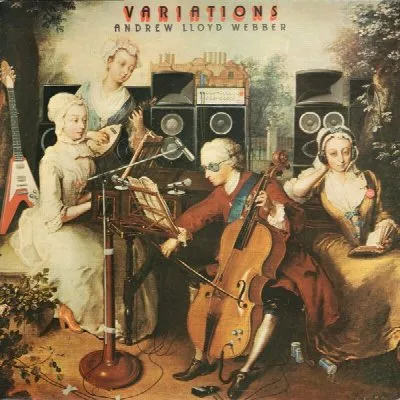
Released 48 years ago this November
Variations
1978 34 min 15 tracks rock opera
Elevation 71 /100 TreelineJulian Lloyd Webber’s cello races through Paganini’s theme as a rock band bends classical variation into electric motion.
Is this for you?
Good fit if you like
- intricate variations that surprise
- short bursts of musical creativity
- dynamic shifts in emotional tone
- engaging for attentive listeners
Maybe skip if you
- prefer longer, cohesive pieces
- seek straightforward melodic lines
Recommended tracks
Top tracks — play these first
-
Theme (Paganini Caprice in A minor no. 24) and Variations 1–4 Start here — Paganini’s recognizable theme provides the springboard for the album’s rock setting, with Julian Lloyd Webber’s cello carrying the virtuoso line into the first variations.
-
Variations 5 and 6 — This pairing continues the conversation between solo cello and amplified ensemble, showing how the project treats Paganini’s material as a source for contrasting textures.
-
Variations 11–15 (including the Tributes) — The grouped variations give the album room to move through several musical ideas in quick succession, making its collage-like approach especially clear.
-
Variations 19, 20, and 5 varied — The return to an earlier variation helps tie the sequence together, turning a familiar idea into material for another transformation.
Elevation
Our rating, out of 100 — and why.
AI-generated from five scored dimensions. An opinion, not a measurement. How Elevation works
InstrumentalThe album showcases strong compositional ideas and orchestral craft but lacks the cohesive flow of a traditional album.
What we noticed
- The album consists of a series of variations on a classical theme, with each track presenting a distinct interpretation that builds on the previous one.
- Several tracks incorporate shifts in tempo and mood, with some variations introducing new motifs while others develop existing themes.
- Composition 25% of the score
-
7/10
- Craft 20% of the score
-
8/10
- Durability 25% of the score
-
6/10
- Distinctiveness 18% of the score
-
7/10
- Sequencing 12% of the score
-
5/10
the writing — melody, harmony, structure, lyrics
production, performance, arrangement
whether it rewards returning to it
whether it sounds like itself
running order, pacing, length
The score is the weighted average of these five, then scaled to spread the range — the scaling never changes which of two albums scores higher.
Known within its scene. Reported but not counted — how far a record travelled describes its reception rather than the record, and a newer release has had less time to travel than an older one.
Tracklist
- 1 Introduction 1:12
- 2 Theme (Paganini Caprice in A minor no. 24) and Variations 1–4 Start here 3:05
- 3 Variations 5 and 6 (recommended) 3:14
- 4 Variation 7 1:50
- 5 Variation 8 1:07
- 6 Variation 9 1:42
- 7 Variation 10 2:21
- 8 Variations 11–15 (including the Tributes) (recommended) 3:51
- 9 Variation 16 2:28
- 10 Variations 14-15 varied 1:54
- 11 Variation 17 1:09
- 12 Variation 18 2:58
- 13 Variations 19, 20, and 5 varied (recommended) 3:04
- 14 Variations 21 and 22 1:59
- 15 Variation 23 2:39
Where this album fits
- In the catalog
- Breakthrough — Established Lloyd Webber's reputation in instrumental music, blending classical and rock.
- Themes
- Paganini's A-minor caprice· 1970s progressive-rock orchestration
- Career context
- Released in 1978, Variations followed Andrew Lloyd Webber’s stage successes Jesus Christ Superstar and Evita. Written for his brother, cellist Julian Lloyd Webber, it moved away from sung musical drama toward an instrumental meeting of classical virtuosity and rock.
- Stylistic neighbors
- Claude-Michel Schönberg· Jim Steinman· Stephen Schwartz
Keep listening
What to play next
Excerpts From Evita
1979
Continues the orchestral style with strong melodies, enhancing the symphonic experience.
Jesus Christ Superstar
1973
Related records
If this landed
Records by other artists that run on the same instinct.
Tubular Bells
Mike Oldfield
A long-form instrumental suite that moves between classical motifs and layered 1970s progressive-rock arrangements.
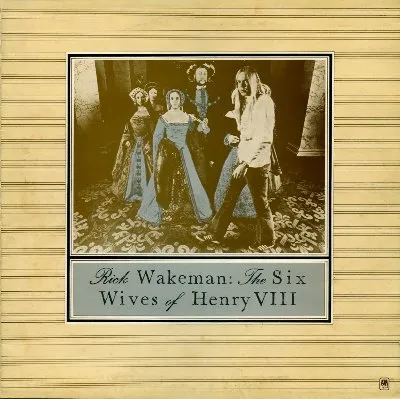
The Six Wives of Henry VIII
Rick Wakeman
Pairs classical keyboard flourishes with rock-band textures in a sequence of instrumental portraits.
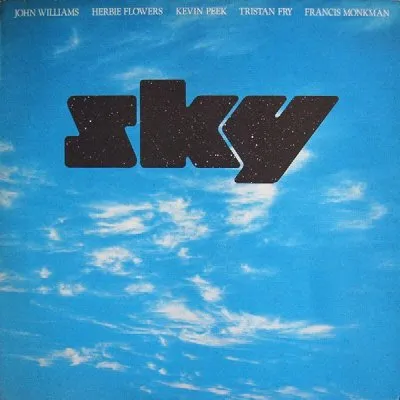
Sky
Sky
Blends classical repertoire and original themes with electric guitar, keyboards, and a polished progressive-rock ensemble sound.
Own the record
Some of these are affiliate links: a purchase may earn Northsound a small commission, at no cost to you. It never decides what we recommend or how we score.
Sources
The Weekly Dispatch
One record worth your time, every week — picked the way this page is.
One short email. Free, unsubscribe anytime. Read this week's.
Sync your library
Everything you track here works immediately — no account needed. Create one when you want to sync across devices.