


Photo: Wikimedia Commons · Public domain

The Northsound field guide
Where to start with Alexander Scriabin
Start at the piano, where expressive melodies give way to stranger harmonies.
Scriabin’s piano music begins with recognizable Romantic melodies, then bends them through increasingly restless harmonies and shifting moods. Start with a focused set of sonatas to hear that change in close-up before moving to his larger orchestral works.
- What they sound like
- Expect expressive piano lines, rich harmonies, and dramatic contrasts in pace and volume. Across his career, Scriabin’s writing moves from Romantic lyricism toward more elusive, tension-filled music.
- You'll like this if
- You’ll connect with Scriabin if you like piano music that pairs singing melodies with strong emotional shifts. His later music may appeal if you enjoy harmony that feels unsettled rather than neatly resolved.
01 · Your first stop
Start here.
New to Alexander Scriabin? You don’t need to hear everything. Start with this.
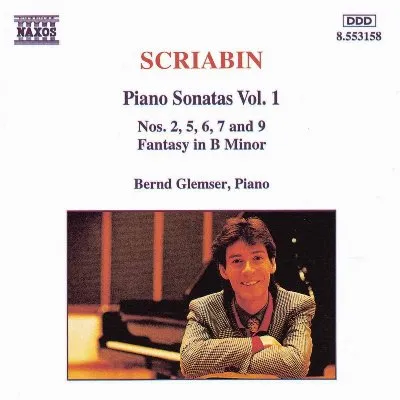
Your first album
Piano Sonatas, Volume 1
1996 ·Strong starting point
This focused sonata collection lets you hear Scriabin shape melody and tension through piano writing alone. It is a clearer first step than beginning with the larger orchestral works, and it sets up a natural move to his later sonatas.
Only have a few minutes?
“Piano Sonata No. 1”
Its sonata form and expressive piano writing give you a direct listen to Scriabin before exploring the more harmonically adventurous works.
Not the album for you? Try one of these instead.
-
Mazurkas (Complete) (1999) Choose the complete Mazurkas if you want shorter piano pieces with a clear dance pulse before exploring the sonatas.
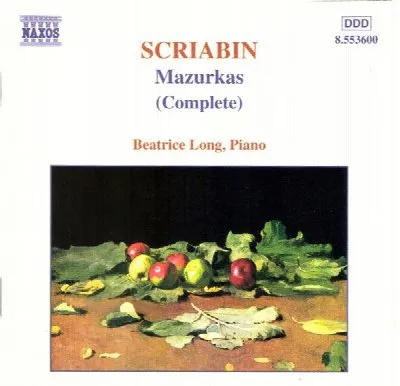
-
Poem of Ecstasy / Symphony no. 2 (2003) Start here if you prefer full orchestral sound and want to hear the contrast between the expansive Poem of Ecstasy and the Symphony no. 2.
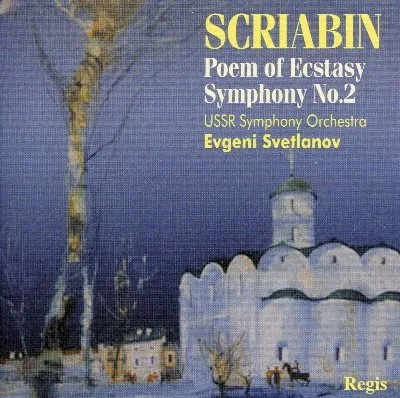
-
Preludes, Volume 1: 24 Preludes, op. 11 / Five Preludes, op. 15 / Prelude for the Left Hand, op. 9 no. 1 (2000) Choose this collection if you want brief preludes that introduce Scriabin’s piano language in small, varied doses.
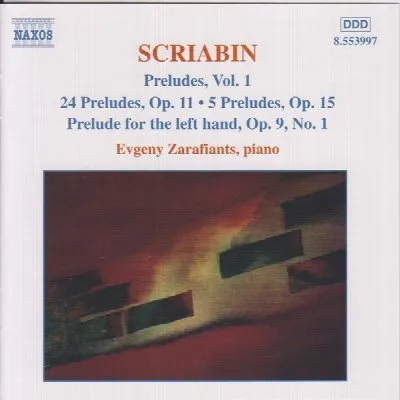
02 · The trail ahead
Listening paths
Pick a route through Alexander Scriabin's catalog.
Trace Scriabin’s transformation from lyrical pianist to visionary orchestral composer.
-
1The Early Scriabin (2001) Begin with the Romantic roots behind his evolving musical language.

-
2Piano Sonatas nos. 2, 3, 5, 9 (2001) Hear the sonatas chart a path from lyricism to concentrated intensity.

-
3The Poem of Ecstasy (1998) Move from intimate piano writing into his expansive orchestral vision.

-
4Prometheus / Piano Concerto / Fantasy for piano and orchestra (1999) End with his boldest orchestral colors and mystical ambitions.

Start with memorable piano miniatures, then gradually explore bigger, stranger works.
-
1Mazurkas (Complete) (1999) Open with concise, dance-shaped pieces and clear melodic appeal.
-
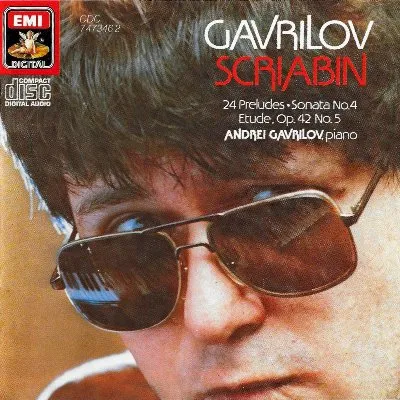
224 Preludes / Sonata no. 4 / Étude, op. 42 no. 5 (1984) Short preludes offer variety before a more expansive sonata.
-
3Piano Concerto in F-sharp minor, op. 20 / Symphony no. 3 in C minor, op. 43 «Le Divin Poème» (1990) The concerto provides a familiar bridge to grander orchestral writing.

-
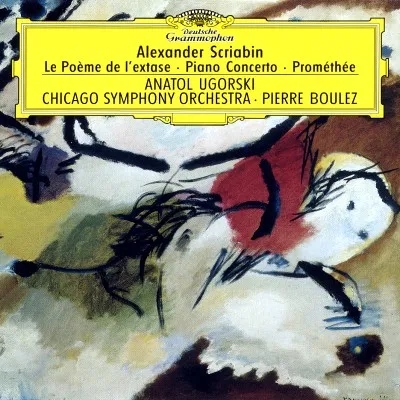
4Le Poème de l’extase / Piano Concerto / Prométhée (1999) Finish with the dense, radiant sound of Scriabin’s late orchestral world.
Follow Scriabin toward increasingly radical harmony, color, and ecstatic scale.
-
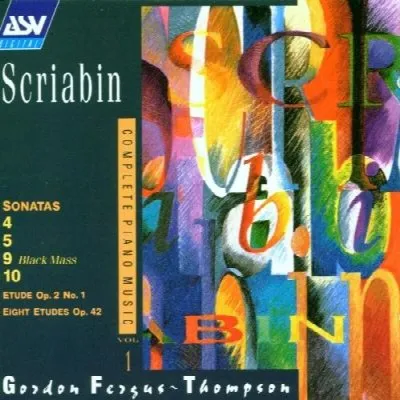
1Complete Piano Music, Vol. 1 (1991) Establish the piano language before its most adventurous turns.
-
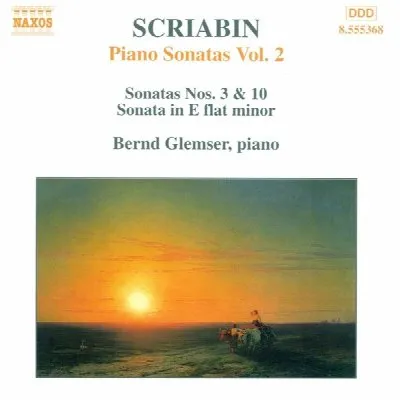
2Piano Sonatas, Volume 2 (2001) Explore the sonatas’ intensifying harmonies and compressed forms.
-
3Late Piano Works (2000) Hear late pieces push piano writing toward elusive, suspended sound.
-
4Prometheus / Piano Concerto / Fantasy for piano and orchestra (1999) Expand that experimentation into visionary orchestral color.
-
5Towards the Flame (2021) Close with a concentrated encounter with Scriabin’s late mysticism.

03 · Beyond this guide
Where to go next
-
Nikolai Medtner Explore Medtner for densely woven piano writing, restless chromatic harmony, and dramatic shifts that recall Scriabin’s more Romantic works. Start with Forgotten Melodies I, II (2006)

-
Sergei Rachmaninoff His expansive piano textures and charged harmonic climaxes offer a more lyrical but similarly intense counterpart to Scriabin. Start with Piano Concerto no. 2 / Rhapsody on a Theme of Paganini (1985)

-
Franz Liszt Liszt’s virtuosic piano writing, bold harmonic turns, and grand emotional arcs make a natural match for Scriabin’s most theatrical works. Start with Klavierkonzerte nos. 1 & 2 / Totentanz (1988)

04 · Keep exploring
The Weekly Dispatch
Every Tuesday, a few more places to start listening.
One short email. Free, unsubscribe anytime. Read this week's.
Common questions
Where should I start with Alexander Scriabin?
Start with Piano Sonatas, Volume 1 (1996). This focused sonata collection lets you hear Scriabin shape melody and tension through piano writing alone. It is a clearer first step than beginning with the larger orchestral works, and it sets up a natural move to his later sonatas.
What does Alexander Scriabin sound like?
Expect expressive piano lines, rich harmonies, and dramatic contrasts in pace and volume. Across his career, Scriabin’s writing moves from Romantic lyricism toward more elusive, tension-filled music.
In what order should I listen to Alexander Scriabin's albums?
In release order: "Les Trois Cahiers d'études pour piano" (1994), "Piano Sonatas, Volume 1" (1996), "The Complete Piano Sonatas" (1996), "Études (Complete)" (1997), "Mazurkas (Complete)" (1999), "Preludes, Volume 2: Opp. 22, 27, 31, 33, 35, 37, 39, 45, 48, 67, 74 / Four Preludes by Julian Scriabin" (2000), "Preludes, Volume 1: 24 Preludes, op. 11 / Five Preludes, op. 15 / Prelude for the Left Hand, op. 9 no. 1" (2000), "Piano Sonatas, Volume 2" (2001), "BBC Music, Volume 10, Number 10: Poem of Ecstasy / Symphony no. 2" (2002) and "Poem of Ecstasy / Symphony no. 2" (2003). New listeners can start with "Piano Sonatas, Volume 1" and work outward in either direction.
Which artists should I listen to after Alexander Scriabin?
Try Nikolai Medtner (start with "Forgotten Melodies I, II"), Sergei Rachmaninoff (start with "Piano Concerto no. 2 / Rhapsody on a Theme of Paganini") and Franz Liszt (start with "Klavierkonzerte nos. 1 & 2 / Totentanz").