


Photo: Bernardo Strozzi · Public domain

The Northsound field guide
Where to start with Claudio Monteverdi
Expressive voices, shifting harmonies, and drama shaped around the words.
Start with L'Orfeo to hear Monteverdi use changing vocal lines and instrumental passages to make a story feel immediate. If its early-opera style draws you in, move next to Poppea for a later, more psychologically intricate drama.
- What they sound like
- Monteverdi pairs expressive solo voices with instrumental passages and changing harmonies, making the delivery of the words central to the drama. His music ranges from intimate madrigals to opera and large-scale sacred works.
- You'll like this if
- You'll connect with Monteverdi if you like vocal music where shifts in mood and phrasing carry the story. L'Orfeo is a good fit if you are curious about opera but want a clear dramatic thread to follow.
01 · Your first stop
Start here.
New to Claudio Monteverdi? You don’t need to hear everything. Start with this.
Your first album
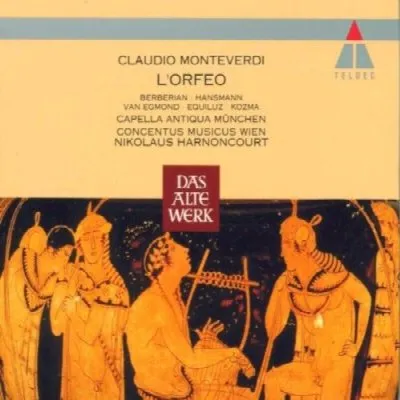
L'Orfeo
1992 ·Best starting point
L'Orfeo brings Monteverdi's close attention to text into a dramatic form with a beginning, development, and resolution. Its alternation of vocal storytelling and instrumental passages makes it easier to follow than beginning with a collection of madrigals or sacred music.
Only have a few minutes?
“Possente spirto”
This extended appeal lets you hear how a solo voice and instrumental responses shape the opera's drama through changing musical phrases.
Not the album for you? Try one of these instead.
-
L'Incoronatione di Poppea (2000) Choose L'Incoronatione di Poppea if you want a later opera centered on human ambition and intimate character drama.

-
Il Ritorno d'Ulisse in Patria (1986) Choose Il Ritorno d'Ulisse in Patria if you want another substantial opera and are ready to follow a different mythic story.

-
Vespro della Beata Vergine (1984) Choose Vespro della Beata Vergine if choral and sacred music interests you more than staged drama.

02 · The trail ahead
Listening paths
Pick a route through Claudio Monteverdi's catalog.
Trace Monteverdi’s path from expressive madrigal to landmark opera and sacred masterwork.
-
1L'Orfeo (1992) Begin with the opera that helped reshape musical storytelling.
-
2Quinto Libro de' Madrigali Hear the madrigal style grow more dramatic and harmonically daring.

-
3Vespers of 1610 (1997) Experience his sacred music at its most expansive and vivid.

-
4L’incoronazione di Poppea (1990) Close with a psychologically rich late opera and a new dramatic world.

Start with a concise operatic sampler, then explore larger dramatic and sacred works.
-
1L'Orfeo Highlights (1996) A compact introduction to his vivid operatic style.

-
2Lamento d'Arianna (1995) Focus on direct, emotionally immediate vocal expression.

-
3L’incoronazione di Poppea (1990) Move into a full-length opera with compelling human drama.
-
4Vespers of 1610 (1997) Take the next step into richly varied sacred music.
Follow bold contrasts in madrigal drama, sacred writing, and operatic form.
-
1Combattimento di Tancredi e Clorinda (2007) Start with a sharply theatrical clash of narration and music.
-
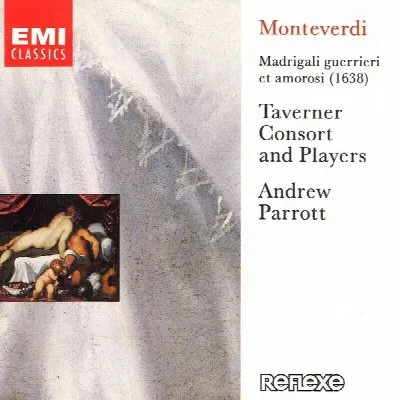
2Madrigali guerrieri et amorosi (1992) Explore contrasting emotional worlds and daring madrigal gestures.
-
3Selva morale e spirituale (1984) Hear sacred music shift between intimate and ceremonial textures.

-
4Il Ritorno d'Ulisse in Patria (1986) End with an expansive opera balancing lyricism and dramatic variety.
03 · Beyond this guide
Where to go next
-
Francesco Cavalli Try Cavalli for Venetian opera that carries Monteverdi’s expressive vocal declamation into fluid melodies, vivid contrasts, and dramatic harmonic turns. Start with La Calisto (Concerto Vocale feat. conductor: René Jacobs) (2003)

-
Heinrich Schütz Schütz brings Italianate vocal expressiveness to German sacred music, with rhetorical phrasing and striking contrasts between voices and instruments. Start with Psalmen Davids (1998)

-
Jean-Baptiste Lully Lully’s French stage works offer tightly shaped theatrical declamation and contrasting dance and orchestral textures, though with a more formal style. Start with Ballet Music for the Sun King (1998)

04 · Keep exploring
The Weekly Dispatch
Every Tuesday, a few more places to start listening.
One short email. Free, unsubscribe anytime. Read this week's.
Common questions
Where should I start with Claudio Monteverdi?
Start with L'Orfeo (1992). L'Orfeo brings Monteverdi's close attention to text into a dramatic form with a beginning, development, and resolution. Its alternation of vocal storytelling and instrumental passages makes it easier to follow than beginning with a collection of madrigals or sacred music.
What does Claudio Monteverdi sound like?
Monteverdi pairs expressive solo voices with instrumental passages and changing harmonies, making the delivery of the words central to the drama. His music ranges from intimate madrigals to opera and large-scale sacred works. Rooted in opera and Baroque music.
In what order should I listen to Claudio Monteverdi's albums?
In release order: "Vespro della Beata Vergine" (1984), "Selva morale e spirituale" (1984), "Il Ritorno d'Ulisse in Patria" (1986), "L'Orfeo" (1992), "Lamenti barocchi, vol. 1" (1995), "Ballo delle ingrate / Combattimento di Tancredi e Clorinda" (1996), "Vespro della beata Vergine" (1996), "L’Orfeo" (2000), "L'Incoronatione di Poppea" (2000) and "Madrigali guerrieri ed amorosi" (2002). New listeners can start with "L'Orfeo" and work outward in either direction.
Which artists should I listen to after Claudio Monteverdi?
Try Francesco Cavalli (start with "La Calisto (Concerto Vocale feat. conductor: René Jacobs)"), Heinrich Schütz (start with "Psalmen Davids") and Jean-Baptiste Lully (start with "Ballet Music for the Sun King").