


Photo: Wikimedia Commons · Public domain

The Northsound field guide
Where to start with Max Bruch
Bruch’s catalog can be difficult to navigate if you’re looking for a clear starting point. This guide begins with Concerto No. 1 / Scottish Fantasy, pairing sweeping violin writing with orchestral scale, then gives you a path to explore further.
01 · Your first stop
Start here.
New to Max Bruch? You don’t need to hear everything. Start with this.

Your first album
Concerto no. 1 / Scottish Fantasy
1997 ·Best starting point
Pairs Bruch’s sweeping violin writing with two accessible, orchestral works for a focused introduction to his signature sound.
Only have a few minutes?
“Kol Nidrei, Op. 47” from Kol Nidrei / Romance / 8 Pieces, op. 83 / 6 Piano Pieces (2002)
Its expressive cello melody offers an immediate, self-contained introduction to Bruch’s lyrical style.
02 · The trail ahead
The records, in order
Every Max Bruch studio album, from the first. Once the first stop lands, keep going in either direction.
-
Violinkonzerte 1978 Not yet reviewed
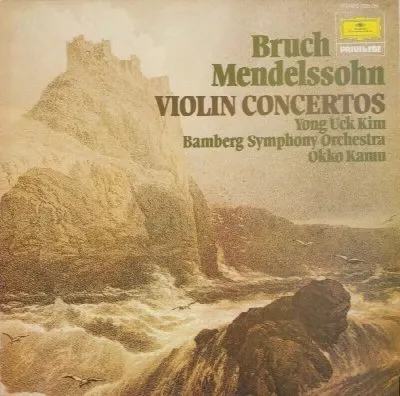
-
Violin Concertos 1988 Not yet reviewed
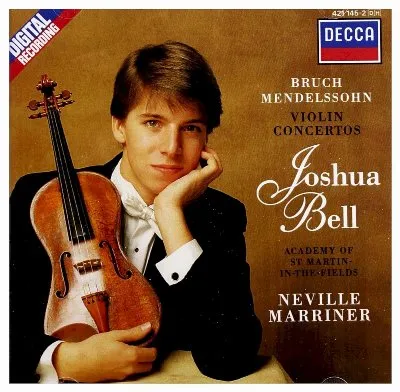
-
Double Concertos 1989 Not yet reviewed
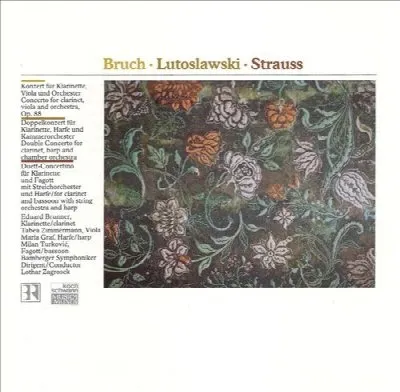
-
Concerto no. 1 / Scottish Fantasy 1997 Your first stop Not yet reviewed
-
String Octet / String Quintet / Piano Quintet 1999 Not yet reviewed

-
Concertos 1 & 3 2001 Not yet reviewed

-
Werke für Klarinette und Viola 2001 Not yet reviewed

-
The Perlman Edition: Violin Concerto no. 2 / Scottish Fantasy 2003 Not yet reviewed

-
Violin Concertos 2004 Not yet reviewed

-
Violin Concertos 2009 Not yet reviewed

03 · Beyond this guide
Where to go next
-
Felix Mendelssohn Try Mendelssohn for the same poised German Romantic orchestral writing, with long, singing violin lines and elegant formal structure. Start with Symphony no. 3 "Scottish / Symphony no. 4 "Italian" (1993)

-
Johannes Brahms Brahms pairs warm, expansive melodies with carefully balanced orchestration and the sturdy symphonic architecture that suits Bruch’s more grandly expressive works. Start with Symphony no. 1 in C minor, op. 68 (1988)

-
Antonín Dvořák Dvořák offers similarly sweeping Romantic themes and richly colored orchestral writing, often shaped by a distinctive folk-inflected lyricism. Start with Symphony no. 9 "From the New World" / Slavonic Dances (1992)

04 · Keep exploring
The Weekly Dispatch
Every Tuesday, a few more places to start listening.
One short email. Free, unsubscribe anytime. Read this week's.
Common questions
Where should I start with Max Bruch?
Start with Concerto no. 1 / Scottish Fantasy (1997). Pairs Bruch’s sweeping violin writing with two accessible, orchestral works for a focused introduction to his signature sound.
In what order should I listen to Max Bruch's albums?
In release order: "Violinkonzerte" (1978), "Violin Concertos" (1988), "Double Concertos" (1989), "Concerto no. 1 / Scottish Fantasy" (1997), "String Octet / String Quintet / Piano Quintet" (1999), "Concertos 1 & 3" (2001), "Werke für Klarinette und Viola" (2001), "The Perlman Edition: Violin Concerto no. 2 / Scottish Fantasy" (2003), "Violin Concertos" (2004) and "Violin Concertos" (2009). New listeners can start with "Concerto no. 1 / Scottish Fantasy" and work outward in either direction.
Which artists should I listen to after Max Bruch?
Try Felix Mendelssohn (start with "Symphony no. 3 "Scottish / Symphony no. 4 "Italian""), Johannes Brahms (start with "Symphony no. 1 in C minor, op. 68") and Antonín Dvořák (start with "Symphony no. 9 "From the New World" / Slavonic Dances").