

Where to Start with Max Reger
Late-Romantic orchestral music built from intricate counterpoint and shifting harmonies.
Max Reger matters for his profound impact on the landscape of classical music, where he navigated the complexities of late Romanticism and early modernism.
Reger can sound dense at first: familiar classical forms are filled with restless harmonies and interlocking lines. Start with an orchestral album that gives you both a clear set of variations and a more dramatic contrast, then follow whichever side holds your attention.
What they sound like
Expect late-Romantic music with familiar forms, but unusually thick harmonies and many musical lines moving at once. Reger’s sound can feel intense and intricate rather than immediately spare or transparent.
You'll like this if
You’ll connect with Reger if you enjoy tracing themes as they change, or if you like richly layered orchestral writing. His music also suits listeners curious about the point where Romanticism starts to strain toward modernism.
Start here
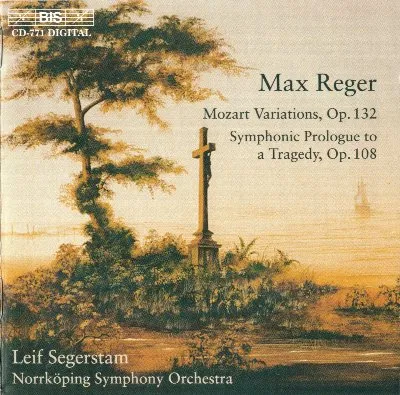
Mozart Variations, op. 132 / Symphonic Prologue to a Tragedy, op. 108
1998
Best starting point
This pairing offers a useful first contrast: the Mozart Variations make Reger’s complex writing easier to follow because the theme remains your point of reference, while the Symphonic Prologue reveals his darker orchestral character. It is a more inviting introduction than beginning with a large collection of solo piano pieces.
Its familiar theme gives you a clear thread to follow as Reger reshapes it with denser harmony and increasingly active counterpoint.
Not the album for you?
Try one of these instead.
Go deeper
Common questions
Where should I start with Max Reger?
Start with Mozart Variations, op. 132 / Symphonic Prologue to a Tragedy, op. 108 (1998). This pairing offers a useful first contrast: the Mozart Variations make Reger’s complex writing easier to follow because the theme remains your point of reference, while the Symphonic Prologue reveals his darker orchestral character. It is a more inviting introduction than beginning with a large collection of solo piano pieces.
What does Max Reger sound like?
Expect late-Romantic music with familiar forms, but unusually thick harmonies and many musical lines moving at once. Reger’s sound can feel intense and intricate rather than immediately spare or transparent. Rooted in classical.
Who is Max Reger for?
You’ll connect with Reger if you enjoy tracing themes as they change, or if you like richly layered orchestral writing. His music also suits listeners curious about the point where Romanticism starts to strain toward modernism.
What are the essential Max Reger albums?
The essential Max Reger albums include "Mozart Variations, op. 132 / Symphonic Prologue to a Tragedy, op. 108" (1998), "Variation & Fugue on a Theme by Ludwig van Beethoven / Ballet Suite / Four Böcklin Tone Pictures" (1993), "Psalm 100 / Variations and Fugue on a Theme of Mozart" (2002), "Clarinet Quintets and Other Chamber Music" (2006) and "Piano Concerto / Suite im alten Stil" (1995).
How many albums does Max Reger have?
Max Reger has 201 releases in their discography, including 201 albums.