

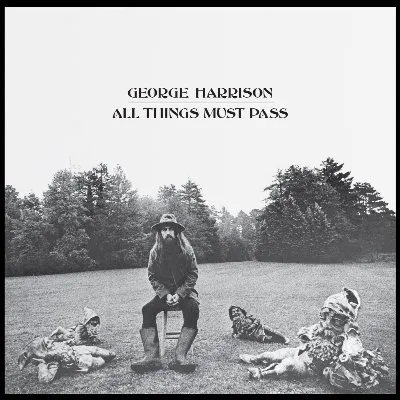
Released 56 years ago this November
All Things Must Pass
George Harrison · 1970
105 min · 23 tracks · folk rock
Slide guitars glow through a cathedral-sized haze as Harrison turns private prayers and hard-won release into expansive rock songs.
Top tracks — play these first
-
→
My Sweet Lord Start here — Harrison’s devotional lead vocal moves between Christian and Hindu expressions of praise, while layered guitars and backing voices turn the prayer into a pop chorus.
-
→
Wah‐Wah — Written during a fraught Beatles rehearsal period, this song turns frustration into a dense rush of guitars and horns, showing how vast Spector’s production could make Harrison’s rock sound.
-
→
Isn’t It a Pity (version one) — The first version stretches a meditation on mutual hurt across seven minutes, allowing its stately melody and massed backing vocals to gather force through repetition.
-
→
What Is Life — A sharp guitar riff and buoyant horns propel one of the album’s most immediate songs, balancing its spiritual questions with the momentum of a pop single.
-
→
All Things Must Pass — The title track sets images of changing weather against a restrained arrangement, giving the album’s sense of endings a quieter voice than its grandest productions.
Elevation
Our rating, out of 100 — and why.
AI-generated from five scored dimensions. An opinion, not a measurement.
The album showcases strong songwriting and diverse instrumentation, making it a significant solo debut.
What we noticed
- The album features a wide range of instrumentation, including strings, horns, and slide guitar, creating a rich sonic landscape.
- Several tracks incorporate Indian musical elements, such as the use of sitar and tabla, blending them with Western rock structures.
- The first half of the album maintains a consistent mid-tempo pace, while the second half introduces more varied tempos and dynamics.
- Composition 25% of the score
-
8/10
- Craft 20% of the score
-
9/10
- Durability 25% of the score
-
8/10
- Distinctiveness 18% of the score
-
8/10
- Sequencing 12% of the score
-
7/10
the writing — melody, harmony, structure, lyrics
production, performance, arrangement
whether it rewards returning to it
whether it sounds like itself
running order, pacing, length
Defined its genre or moment. Reported but not counted — how far a record travelled describes its reception rather than the record, and a newer release has had less time to travel than an older one.
Is this for you?
Good fit if you like
- sweeping emotional crescendos
- reflective moments of introspection
- dynamic journey with peaks
- late-night contemplation sessions
- spiritual themes and exploration
Maybe skip if you
- seeking instant gratification
- prefer short, standalone tracks
Where this album fits
- In the catalog
- Breakthrough — First solo release post-Beatles, showcasing Harrison's artistic depth and reaching number one.
- Themes
- spiritual longing· post-Beatles identity· philosophical questioning
- Career context
- Released in 1970 after the Beatles’ breakup, All Things Must Pass was Harrison’s first solo album of rock songs, following the experimental Wonderwall Music and Electronic Sound. Co-produced with Phil Spector, it gave him room for songs accumulated during his final years with the Beatles and added a third disc of loose studio jams.
- Stylistic neighbors
- John Lennon· Donovan· The Byrds
Tracklist
Disc 1
- 1 I’d Have You Anytime 2:58
- 2 My Sweet Lord Start here 4:41
- 3 Wah‐Wah 5:38
- 4 Isn’t It a Pity (version one) 7:10
- 5 What Is Life 4:19
- 6 If Not for You 3:33
- 7 Behind That Locked Door 3:08
- 8 Let It Down 4:57
- 9 Run of the Mill 2:52
- 10 Beware of Darkness 3:49
- 11 Apple Scruffs 3:08
- 12 Ballad of Sir Frankie Crisp (Let It Roll) 3:53
- 13 Awaiting on You All 2:50
- 14 All Things Must Pass 3:45
Disc 2
- 1 I Dig Love 4:58
- 2 Art of Dying 3:39
- 3 Isn’t It a Pity (version two) 4:47
- 4 Hear Me Lord 5:46
- 5 Out of the Blue 11:17
- 6 It’s Johnny’s Birthday 0:49
- 7 Plug Me In 3:22
- 8 I Remember Jeep 8:08
- 9 Thanks for the Pepperoni 5:32
What to play next
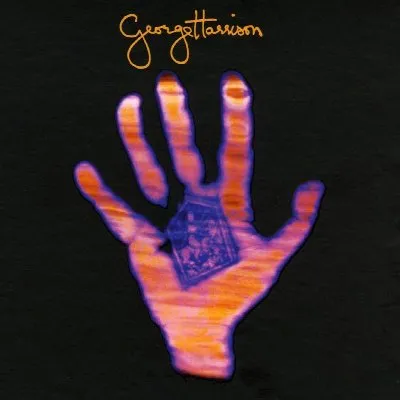
Living in the Material World
1973
Continues spiritual themes with rich melodies and introspective lyrics.
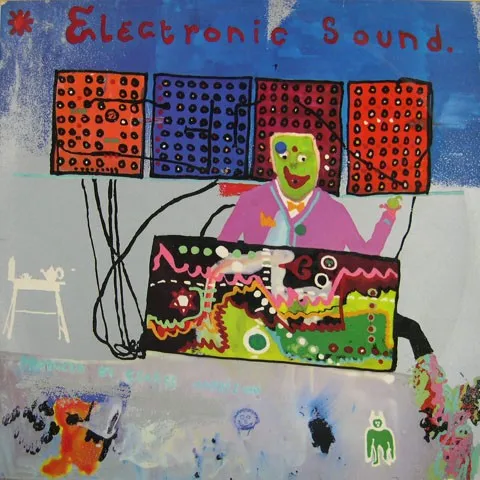
Electronic Sound
1969
If this landed
Records by other artists that run on the same instinct.
Reference: Wikipedia · MusicBrainz · Wikidata
Sync your library
Everything you track here works immediately — no account needed. Create one when you want to sync across devices.