

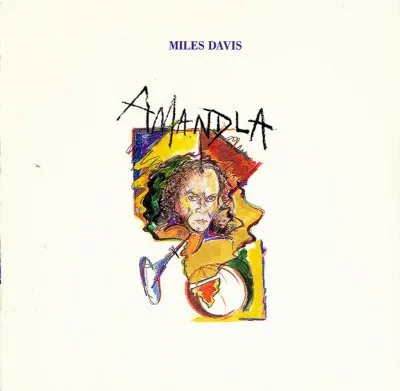
Amandla
Miles Davis · 1989
43 min · 8 tracks · jazz
Muted brass glides through polished electronic grooves while bass lines give the music its restless pulse.
Top tracks — play these first
-
→
Catémbe Start here — The opener sets Davis’s spare muted lead against a buoyant groove, establishing the contrast between intimate phrasing and expansive production.
-
→
Hannibal — A taut rhythmic foundation gives Davis room to stretch and bend short phrases rather than crowd the arrangement with notes.
-
→
Amandla — The title track brings the album’s layered percussion and electronic production into focus, with Davis’s clipped phrases cutting through the rhythmic activity.
-
→
Mr. Pastorius — This tribute to bassist Jaco Pastorius gives the bass a prominent melodic role, making it a fitting showcase for Miller’s contribution to the album.
Elevation
Our rating, out of 100 — and why.
AI-generated from five scored dimensions. An opinion, not a measurement.
InstrumentalAmandla showcases intricate rhythms and ambient textures, reflecting Davis's late-career fusion explorations.
What we noticed
- The album opens with a layered soundscape in 'Catémbe', establishing an ambient atmosphere that persists throughout.
- Tracks often feature complex polyrhythms, with multiple percussion instruments interplaying rather than a single dominant rhythm.
- Several pieces, like 'Amandla' and 'Mr. Pastorius', incorporate electronic elements, blending traditional jazz instrumentation with synthesized sounds.
- Composition 25% of the score
-
7/10
- Craft 20% of the score
-
8/10
- Durability 25% of the score
-
6/10
- Distinctiveness 18% of the score
-
7/10
- Sequencing 12% of the score
-
6/10
the writing — melody, harmony, structure, lyrics
production, performance, arrangement
whether it rewards returning to it
whether it sounds like itself
running order, pacing, length
Significant within its genre. Reported but not counted — how far a record travelled describes its reception rather than the record, and a newer release has had less time to travel than an older one.
Is this for you?
Good fit if you like
- intricate rhythms for attentive listeners
- textures for relaxed moments
- exploratory soundscapes for curious minds
- late-night contemplation with depth
Maybe skip if you
- seeking high-energy excitement
- prefer straightforward, catchy tunes
Where this album fits
- In the catalog
- Late Career Highlight — Showcases continued vitality and exploration in Davis's late career.
- Themes
- cultural unity· ambient textures· rhythmic complexity
- Career context
- Released in 1989, Amandla continued Miles Davis’s collaboration with bassist and producer Marcus Miller after their 1986 album Tutu. It was Davis’s final studio album released during his lifetime, preceding the posthumous Doo-Bop.
- Stylistic neighbors
- John Coltrane· Herbie Hancock· Wayne Shorter
Tracklist
- 1 Catémbe Start here 5:37
- 2 Cobra 5:16
- 3 Big Time 5:41
- 4 Hannibal 5:51
- 5 Jo‐Jo 4:51
- 6 Amandla 5:21
- 7 Jilli 5:06
- 8 Mr. Pastorius 5:42
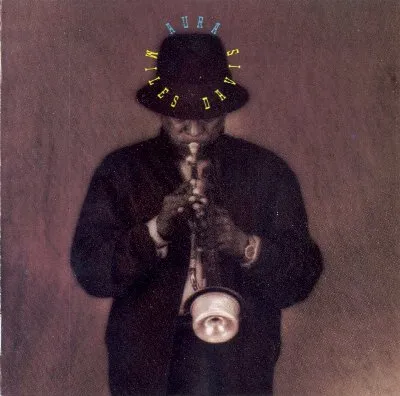
If this landed
Records by other artists that run on the same instinct.
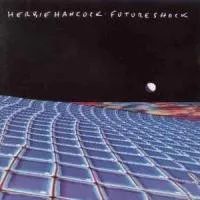
Future Shock
Herbie Hancock
Explores similar electronic textures and rhythmic complexity, merging jazz with funk and ambient influences.
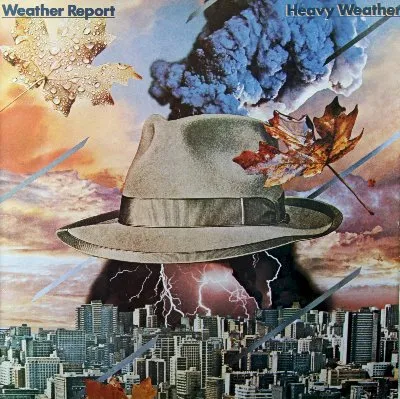
Heavy Weather
Weather Report
Shares intricate rhythms and global influences, blending jazz fusion with ambient soundscapes.
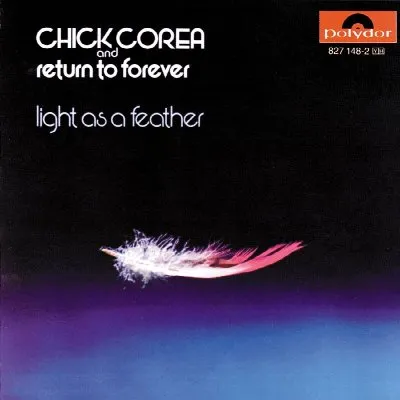
Light as a Feather
Chick Corea
Combines complex rhythms and ambient textures, reflecting a multicultural approach to jazz fusion.
Reference: Wikipedia · MusicBrainz · Wikidata
Sync your library
Everything you track here works immediately — no account needed. Create one when you want to sync across devices.