

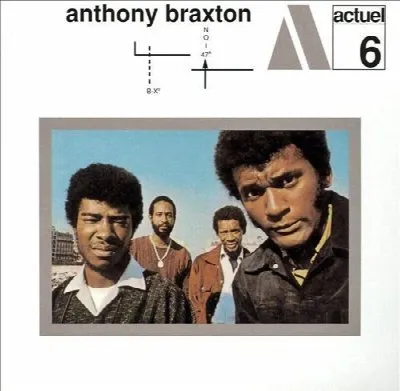
Anthony Braxton
Anthony Braxton · 1969
39 min · 3 tracks · jazz
Reedy saxophone lines and violin scrape against a restless rhythmic pulse as the music shifts between spare conversation and collective urgency.
Top tracks — play these first
-
→
The Light on the Dalta — The opening piece introduces the group through shifting exchanges rather than a fixed groove, making space for individual instrumental voices within a collective performance.
-
→
Simple Like — Its title suggests directness, but the performance invites attention to how the players respond to one another as textures and momentum change.
-
→
B-X° / NO-I-47ᴬ — At nearly 20 minutes, the closing piece gives the ensemble room to develop its improvisational ideas on a larger scale; its symbolic title also points toward Braxton’s distinctive approach to naming compositions.
Elevation
Our rating, out of 100 — and why.
AI-generated from five scored dimensions. An opinion, not a measurement.
InstrumentalThis debut showcases Braxton's innovative approach to jazz with intricate compositions and a unique sound palette.
What we noticed
- The album features three lengthy tracks, each exploring different textures and improvisational techniques without traditional song structures.
- Each track transitions seamlessly into the next, with thematic elements reappearing in varied contexts, enhancing the sense of continuity.
- Composition 25% of the score
-
8/10
- Craft 20% of the score
-
7/10
- Durability 25% of the score
-
6/10
- Distinctiveness 18% of the score
-
9/10
- Sequencing 12% of the score
-
8/10
the writing — melody, harmony, structure, lyrics
production, performance, arrangement
whether it rewards returning to it
whether it sounds like itself
running order, pacing, length
Significant within its genre. Reported but not counted — how far a record travelled describes its reception rather than the record, and a newer release has had less time to travel than an older one.
Where this album fits
- In the catalog
- Breakthrough — This debut album introduced Braxton's innovative sound, establishing his reputation in avant-garde jazz.
- Themes
- Chicago jazz avant-garde· experimental soundscapes· AACM influence
- Career context
- Released in 1969, Anthony Braxton followed his debut as a leader, 3 Compositions of New Jazz. It documents the saxophonist’s early work with fellow musicians associated with Chicago’s Association for the Advancement of Creative Musicians, or AACM.
- Stylistic neighbors
- Ornette Coleman· Sun Ra· Henry Threadgill
Tracklist
Best experienced from track one — press play and let it unfold.
- 1 The Light on the Dalta 10:06
- 2 Simple Like 9:26
- 3 B-X° / NO-I-47ᴬ 19:40
What to play next
For Alto
1969
Continues the avant-garde exploration with a focus on solo saxophone improvisation.
3 Compositions of New Jazz
1968
If this landed
Records by other artists that run on the same instinct.
The Heliocentric Worlds of Sun Ra, Volume Two
Sun Ra
Explores avant-garde jazz with cosmic themes and experimental textures, similar to Braxton's innovative approach.
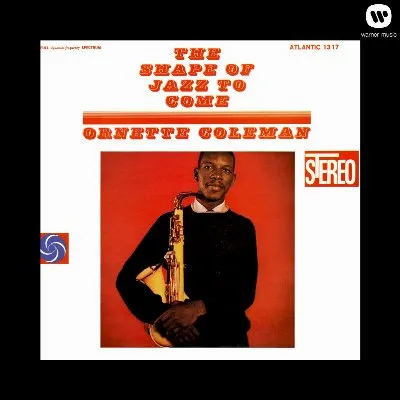
The Shape of Jazz to Come
Ornette Coleman
Shares a pioneering spirit in free jazz and complex structures that echo Braxton's avant-garde explorations.
Reference: Wikipedia · MusicBrainz · Wikidata
Sync your library
Everything you track here works immediately — no account needed. Create one when you want to sync across devices.