

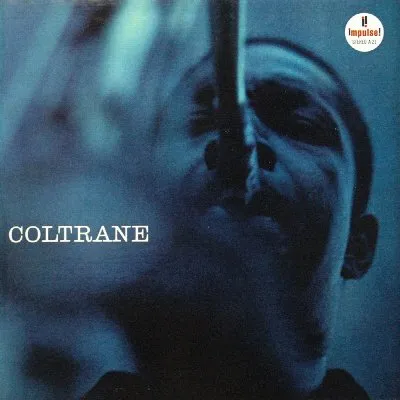
Coltrane
John Coltrane · 1962
47 min · 7 tracks · jazz
Coltrane’s tenor surges through spacious modal vamps and settles into ballads of searching intimacy.
Top tracks — play these first
-
→
Out of This World Start here — A standard becomes a fourteen-minute exploration, with Jones’s churning pulse supporting Coltrane’s increasingly insistent variations.
-
→
Soul Eyes — Coltrane’s patient reading of Mal Waldron’s ballad puts the warmth and fine control of his tenor sound in the foreground.
-
→
The Inch Worm — A children’s song becomes a vehicle for rhythmic and melodic exploration, its familiar theme giving the quartet a point of departure.
-
→
Tunji — The original moves on a persistent rhythmic foundation, leaving room for Coltrane and Tyner to build intensity without rushing the groove.
-
→
Miles' Mode — Its angular theme and urgent quartet interplay point toward the more open-ended music Coltrane would pursue later in the decade.
Elevation
Our rating, out of 100 — and why.
AI-generated from five scored dimensions. An opinion, not a measurement.
InstrumentalColtrane's intricate melodies and improvisation mark a significant evolution in jazz during this period.
What we noticed
- The album features extended improvisational sections, with several tracks exceeding six minutes in length, allowing for deep exploration of themes.
- Each track showcases a distinct melodic motif that Coltrane develops through variations and improvisation, creating a cohesive narrative across the album.
- The instrumentation primarily consists of saxophone, piano, bass, and drums, with the saxophone often taking the lead in complex melodic lines.
- Composition 25% of the score
-
8/10
- Craft 20% of the score
-
8/10
- Durability 25% of the score
-
7/10
- Distinctiveness 18% of the score
-
9/10
- Sequencing 12% of the score
-
8/10
the writing — melody, harmony, structure, lyrics
production, performance, arrangement
whether it rewards returning to it
whether it sounds like itself
running order, pacing, length
Significant within its genre. Reported but not counted — how far a record travelled describes its reception rather than the record, and a newer release has had less time to travel than an older one.
Is this for you?
Good fit if you like
- wave-like pacing with depth
- profound emotional expression throughout
- immersive improvisation and exploration
- gradual build to resolution
Maybe skip if you
- prefer quick, catchy tracks
- seek immediate gratification
Where this album fits
- In the catalog
- Experimental — Represents a departure in Coltrane's sound, pushing modal jazz boundaries.
- Themes
- spiritual exploration· modal jazz innovation· emotional improvisation
- Career context
- Released in 1962, Coltrane followed the orchestral experiments of Africa/Brass and featured the quartet of McCoy Tyner, Jimmy Garrison and Elvin Jones. The group would go on to make A Love Supreme in 1964.
- Stylistic neighbors
- Pharoah Sanders· Archie Shepp· Albert Ayler
Tracklist
- 1 Out of This World Start here 14:05
- 2 Soul Eyes 5:26
- 3 The Inch Worm 6:18
- 4 Tunji 6:35
- 5 Miles' Mode 7:34
- 6 Big Nick 4:07
- 7 Up 'Gainst the Wall 3:13
What to play next
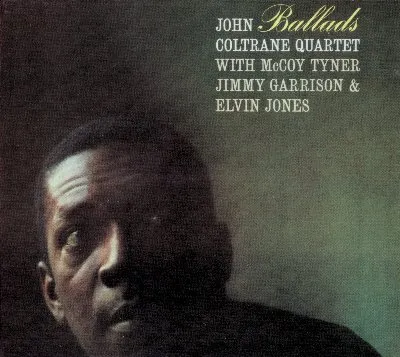
Ballads
1963
Continues the exploration of deep emotion and melodic sophistication.
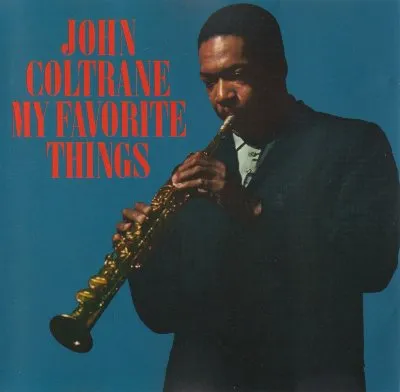
My Favorite Things
1961
Sets a foundation with rich modal jazz and spiritual themes.
If this landed
Records by other artists that run on the same instinct.
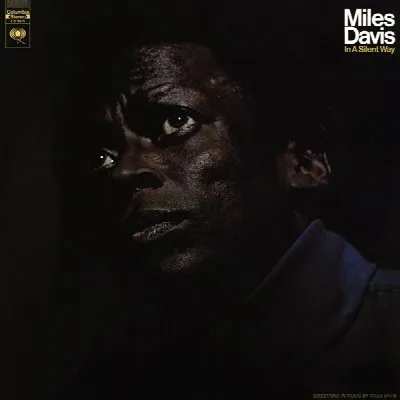
In a Silent Way
Miles Davis
Explores modal jazz with expansive improvisation and a spiritual, atmospheric soundscape.
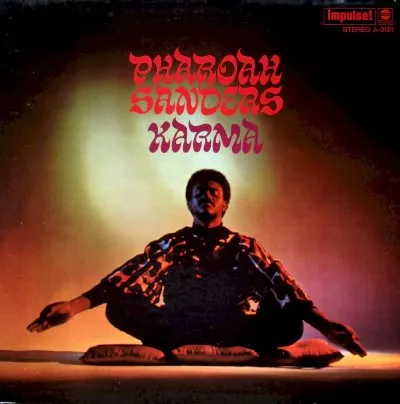
Karma
Pharoah Sanders
Shares deep spiritual themes and emotive free jazz improvisation, pushing boundaries of expression.
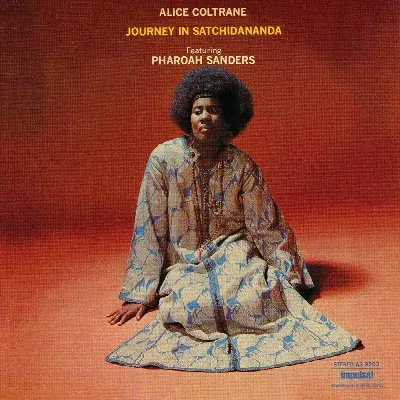
Journey in Satchidananda
Alice Coltrane
Merges modal jazz with spiritual motifs and ethereal sound, reflecting similar exploratory depth.
Reference: Wikipedia · MusicBrainz · Wikidata
Sync your library
Everything you track here works immediately — no account needed. Create one when you want to sync across devices.