

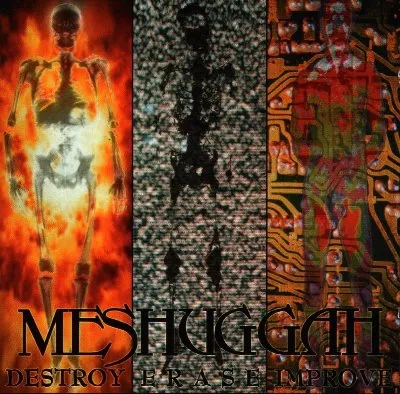
Destroy Erase Improve
Meshuggah · 1995
46 min · 10 tracks · progressive metal
Blistering rhythms and complex time signatures collide with haunting melodies, creating a relentless sonic assault that defines avant-garde metal.
Top tracks — play these first
-
→
Future Breed Machine Start here — This track showcases the band's signature polyrhythmic style, combining heavy riffs with intricate time changes that set the tone for the entire album.
-
→
Soul Burn — With its crushing intensity and dynamic shifts, this track exemplifies Meshuggah's ability to blend melody with aggression while maintaining a complex structure.
-
→
Suffer in Truth — The song's dark atmosphere and rhythmic complexity highlight the band's exploration of existential themes, representing a pivotal moment in their lyrical evolution.
Elevation
Our rating, out of 100 — and why.
AI-generated from five scored dimensions. An opinion, not a measurement.
The album's intricate compositions and unique sound have significantly influenced progressive metal and djent.
What we noticed
- Vocals alternate between guttural growls and clean singing, often within the same song, creating a stark contrast in dynamics.
- Each track typically builds to a climactic peak before abruptly shifting to a quieter or more chaotic section, maintaining tension.
- The use of dissonant chords and unconventional song structures challenges traditional metal forms, making it less predictable.
- Composition 25% of the score
-
8/10
- Craft 20% of the score
-
9/10
- Durability 25% of the score
-
7/10
- Distinctiveness 18% of the score
-
9/10
- Sequencing 12% of the score
-
6/10
the writing — melody, harmony, structure, lyrics
production, performance, arrangement
whether it rewards returning to it
whether it sounds like itself
running order, pacing, length
Defined its genre or moment. Reported but not counted — how far a record travelled describes its reception rather than the record, and a newer release has had less time to travel than an older one.
Is this for you?
Good fit if you like
- steady progression with resolution
- chaotic yet intricate listening experience
- intense focus on rhythmic complexity
- immersive journey through soundscapes
Maybe skip if you
- seeking instant gratification
- prefer standalone hit tracks
Where this album fits
- In the catalog
- Critical Peak — It's a seminal work influencing the djent scene and showcasing their innovative sound.
- Themes
- polyrhythmic chaos· mechanized aggression
- Career context
- Released in 1995, Destroy Erase Improve is Meshuggah's third studio album, following their self-titled debut and 1991's Contradictions Collapse. At this point in their career, the band was solidifying their unique sound, which would later influence the djent movement and reshape extreme metal.
- Stylistic neighbors
- Gojira· Tesseract· Between the Buried and Me
Moments worth listening for
Where the writing does something specific.
-
Suffer in Truth
The imagery evokes a struggle against internal demons, vividly illustrating despair and confrontation without directly naming them.
The choice to depict anguish through abstract imagery rather than straightforward narrative enhances the song’s emotional impact and thematic depth.
Tracklist
- 1 Future Breed Machine Start here 5:48
- 2 Beneath 5:38
- 3 Soul Burn 5:17
- 4 Transfixion 3:33
- 5 Vanished 5:04
- 6 Acrid Placidity 3:16
- 7 Inside What’s Within Behind 4:30
- 8 Terminal Illusions 3:47
- 9 Suffer in Truth 4:20
- 10 Sublevels 5:14


If this landed
Records by other artists that run on the same instinct.

From Mars to Sirius
Gojira
Shares complex rhythms and themes of nature's power with a similar relentless sonic intensity.

Calculating Infinity
The Dillinger Escape Plan
Combines chaotic time signatures and aggressive melodies, creating a similarly tumultuous listening experience.

Jane Doe
Converge
Offers intense emotional delivery and intricate musicianship, echoing themes of chaos and aggression.
Reference: Wikipedia · MusicBrainz · Wikidata
Sync your library
Everything you track here works immediately — no account needed. Create one when you want to sync across devices.