

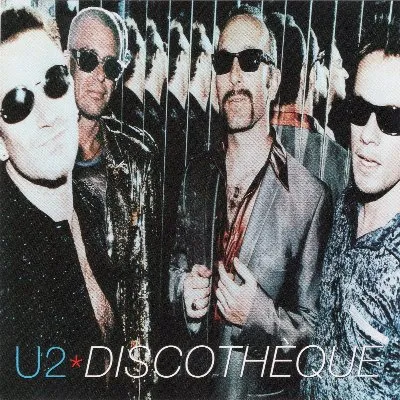
Discothèque
U2 · 1997
35 min · 5 tracks · alternative rock
A distorted guitar riff plunges into club rhythms while Bono turns desire into a knowingly extravagant dance-floor tease.
Top tracks — play these first
-
→
Discothèque (DM Deep extended club mix) Start here — accessible entry with immediate dance hook
-
→
Discothèque (5:18) — The central song sets Bono’s theatrical vocal against a distorted guitar hook and a dance beat, establishing the tension between rock weight and club motion that the remixes rework.
-
→
Discothèque (DM Deep extended club mix) (10:06) — At more than ten minutes, this extended version gives the song’s rhythmic material room to unfold beyond the compact single arrangement.
-
→
Holy Joe (Guilty mix) (5:09) — The non-album B-side offers a different U2 song amid the variations on Discothèque, with a guitar-driven attack that draws on the band’s abrasive 1990s sound.
-
→
Discothèque (Howie B, Hairy B mix) (7:40) — This remix connects the single to Howie B’s work on Pop, recasting its dance-rock source for a longer club setting.
Elevation
Our rating, out of 100 — and why.
AI-generated from five scored dimensions. An opinion, not a measurement.
The single explores U2's shift into dance music with varied remixes, but lacks strong cohesion as a standalone work.
What we noticed
- The first two tracks are extended mixes that emphasize the electronic elements and club-ready beats, while the original version follows as the third track.
- The inclusion of a remix of 'Holy Joe' adds a contrasting element to the primarily dance-focused content.
- Composition 25% of the score
-
6/10
- Craft 20% of the score
-
7/10
- Durability 25% of the score
-
5/10
- Distinctiveness 18% of the score
-
6/10
- Sequencing 12% of the score
-
4/10
the writing — melody, harmony, structure, lyrics
production, performance, arrangement
whether it rewards returning to it
whether it sounds like itself
running order, pacing, length
Significant within its genre. Reported but not counted — how far a record travelled describes its reception rather than the record, and a newer release has had less time to travel than an older one.
Is this for you?
Good fit if you like
- steady dance floor energy
- club-ready grooves for movement
- pulsating beats for late nights
- anthems for gatherings
Maybe skip if you
- prefer slower, reflective music
- want standalone single tracks
Where this album fits
- In the catalog
- Experimental — Marks U2's shift into dance music, showcasing their willingness to explore new genres.
- Themes
- late-night revelry· club culture collision· electronic reinvention
- Career context
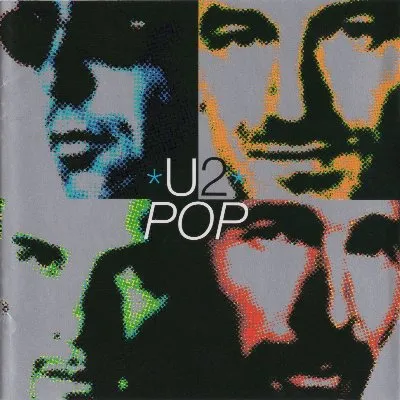
- Released in February 1997, this remix-heavy single introduced U2’s album Pop, which followed 1993’s Zooropa. It extended the band’s 1990s experiments with electronic dance music, with producer Howie B contributing to the album and a remix here.
- Stylistic neighbors
- Simple Minds· Echo & the Bunnymen· The Alarm
Tracklist
- 1 Discothèque (DM Deep extended club mix) Start here 10:06
- 2 Discothèque (Hexidecimal mix) 7:23
- 3 Discothèque 5:18
- 4 Holy Joe (Guilty mix) 5:09
- 5 Discothèque (Howie B, Hairy B mix) 7:40
If this landed
Records by other artists that run on the same instinct.
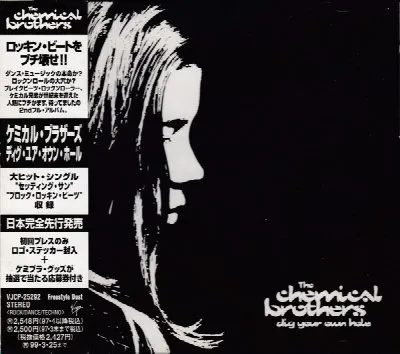
Dig Your Own Hole
The Chemical Brothers
Shares the same fusion of rock energy with electronic beats, for dance floor anthems.
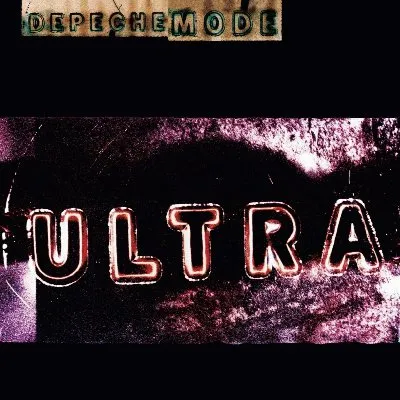
Ultra
Depeche Mode
Combines dark themes and electronic textures that resonate with late-night club atmospheres.
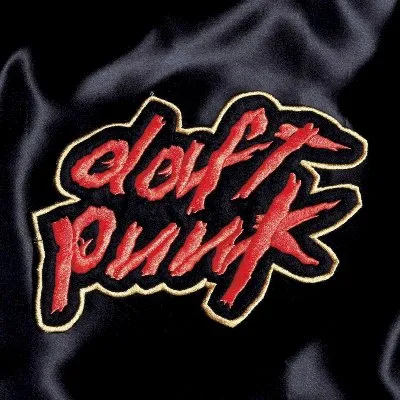
Homework
Daft Punk
Merges house rhythms with rock elements, creating a vibrant soundscape for revelry and reinvention.
Reference: Wikipedia · MusicBrainz · Wikidata
Sync your library
Everything you track here works immediately — no account needed. Create one when you want to sync across devices.