

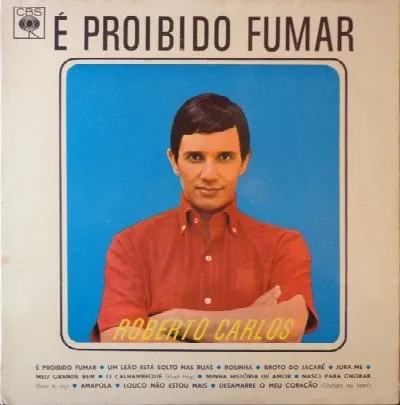
É Proibido Fumar
Roberto Carlos · 1964
28 min · 12 tracks · rock music
Teenage rock ’n’ roll meets sentimental balladry in brisk arrangements driven by electric guitar and Roberto Carlos’s easygoing voice.
Top tracks — play these first
-
→
É proibido fumar Start here — The title track turns a prohibition into a playful teenage predicament, setting its cheeky storytelling against a compact rock ’n’ roll arrangement.
-
→
O calhambeque (Road Hog) — An adaptation of John D. Loudermilk’s “Road Hog,” it turns an old car into the unlikely star of a comic adventure and became one of Carlos’s enduring early hits.
-
→
Um leão está solto nas ruas — Its runaway-lion scenario brings a sense of comic commotion to the album’s fast-moving youth-rock side.
-
→
Nasci para chorar (Born to Cry) — This adaptation of Dion’s song slows the pace and gives Carlos room for a more wounded vocal, showing the ballad style alongside the record’s rock numbers.
Elevation
Our rating, out of 100 — and why.
AI-generated from five scored dimensions. An opinion, not a measurement.
The album blends bossa nova and rock effectively, showcasing Roberto Carlos' melodic storytelling within the context of its era.
What we noticed
- The first track features a prominent bossa nova rhythm that sets a laid-back yet engaging tone for the album.
- Several tracks incorporate call-and-response vocal patterns, enhancing the communal feel typical of Brazilian music.
- The album includes both upbeat songs and slower ballads, with transitions that maintain listener interest without abrupt shifts.
- Composition 25% of the score
-
7/10
- Craft 20% of the score
-
6/10
- Durability 25% of the score
-
6/10
- Distinctiveness 18% of the score
-
7/10
- Sequencing 12% of the score
-
5/10
the writing — melody, harmony, structure, lyrics
production, performance, arrangement
whether it rewards returning to it
whether it sounds like itself
running order, pacing, length
Significant within its genre. Reported but not counted — how far a record travelled describes its reception rather than the record, and a newer release has had less time to travel than an older one.
Is this for you?
Good fit if you like
- short, lively listening sessions
- playful and romantic vibes
- energetic and upbeat moments
- nostalgic reflections and warmth
Where this album fits
- In the catalog
- Breakthrough — This album established Roberto Carlos as a household name in Brazil.
- Themes
- Brazilian romanticism· cultural norms· car culture nostalgia
- Career context
- É Proibido Fumar was Roberto Carlos’s third album, following 1963’s Splish Splash. Released before the television program Jovem Guarda began in 1965, it found him developing the youth-oriented rock repertoire that would make him a central figure in the movement.
- Stylistic neighbors
- Caetano Veloso· Gilberto Gil· Milton Nascimento
Tracklist
- 1 É proibido fumar Start here 2:31
- 2 Um leão está solto nas ruas 1:54
- 3 Rosinha 2:50
- 4 Broto do jacaré 2:12
- 5 Jura-me 2:07
- 6 Meu grande bem 2:21
- 7 O calhambeque (Road Hog) 2:21
- 8 Minha história de amor 2:20
- 9 Nasci para chorar (Born to Cry) 3:36
- 10 Amapola 1:52
- 11 Louco não estou mais 2:13
- 12 Desamarre o meu coração (Unchain My Heart) 2:07
What to play next
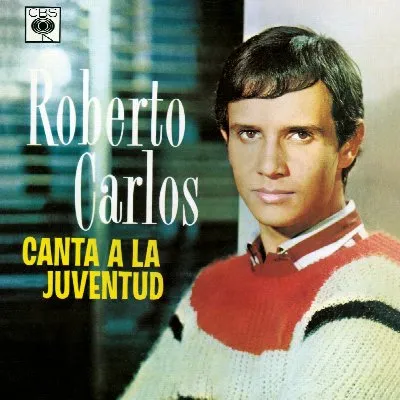
Canta a la Juventud
1965
Continues the vibrant themes and energy of youth, blending bossa nova and pop.
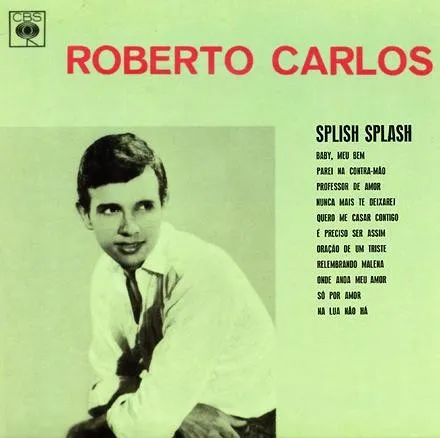
Splish Splash
1963
Sets the stage with earlier rock influences leading into the sound of É Proibido Fumar.
If this landed
Records by other artists that run on the same instinct.
Reference: Wikipedia · MusicBrainz · Wikidata
Sync your library
Everything you track here works immediately — no account needed. Create one when you want to sync across devices.