

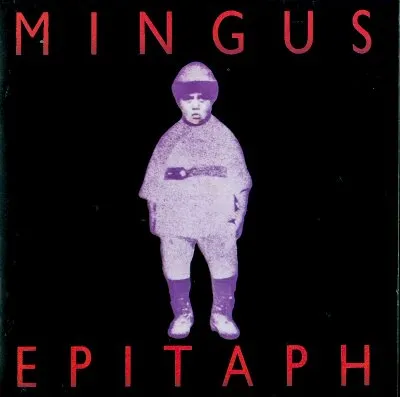
Epitaph
Charles Mingus · 1990
127 min · 19 tracks · jazz
Mingus’s orchestral jazz surges from blues-rooted cries into intricate ensemble passages and sudden eruptions of rhythm.
Top tracks — play these first
-
→
Main Score, Part 1 Start here — The opening establishes the work’s orchestral scale, with sharply articulated ensemble writing giving way to the looser energy of jazz improvisation.
-
→
Percussion Discussion — A piece Mingus had recorded earlier with drummer Max Roach returns in a setting that makes rhythmic conversation central to the larger score.
-
→
Better Get It in Your Soul — This large-ensemble treatment revisits one of Mingus’s best-known compositions, carrying its gospel-inflected fervor into the orchestral work.
-
→
Self Portrait - Chill of Death — Spoken text brings mortality directly into the performance, interrupting the instrumental sweep with an intimate, unnerving change of register.
Elevation
Our rating, out of 100 — and why.
AI-generated from five scored dimensions. An opinion, not a measurement.
InstrumentalAn ambitious, finely arranged suite whose many self-contained movements interrupt its larger arc, but whose recurring Main Score gives the sequence a frame.
What we noticed
- The Main Score opens in two parts, interrupted by “Percussion Discussion,” then returns as a reprise to close the sequence.
- Between those framing sections, short titled movements—including “O.P. (Oscar Pettiford),” “Wolverine Blues,” and “Freedom”—make the long-form score feel episodic rather than continuous.
- The writing is for a large jazz ensemble: tightly arranged passages sit alongside moments that foreground percussion and individual solo voices.
- Composition 25% of the score
-
8/10
- Craft 20% of the score
-
8/10
- Durability 25% of the score
-
7/10
- Distinctiveness 18% of the score
-
8/10
- Sequencing 12% of the score
-
7/10
the writing — melody, harmony, structure, lyrics
production, performance, arrangement
whether it rewards returning to it
whether it sounds like itself
running order, pacing, length
Known within its scene. Reported but not counted — how far a record travelled describes its reception rather than the record, and a newer release has had less time to travel than an older one.
Is this for you?
Good fit if you like
- a score framed by reprise
- brief interludes amid extended pieces
- contrasts between and death
- a two-hour sequence of shifting
Maybe skip if you
- want every track equally brief
- prefer albums built around singles
Where this album fits
- In the catalog
- Critical Peak — A posthumous performance of Mingus's expansive orchestral composition, revealing the large-scale scope of his writing.
- Themes
- Mingus's posthumous score· spoken-word mortality· gospel-rooted ensemble cries
- Career context
- Epitaph was released in 1990, more than a decade after Charles Mingus’s death in 1979. Its sprawling score had occupied him for years; Gunther Schuller conducted the posthumous premiere in 1989, bringing together material that Mingus had not heard performed complete.
- Stylistic neighbors
- Eric Dolphy· Thelonious Monk· Ornette Coleman
Tracklist
Disc 1
- 1 Main Score, Part 1 Start here 7:08
- 2 Percussion Discussion 8:37
- 3 Main Score, Part 2 5:08
- 4 Started Memory 11:54
- 5 Better Get It in Your Soul 9:07
- 6 The Soul 3:20
- 7 Moods in Mambo 4:15
- 8 Self Portrait - Chill of Death 11:27
- 9 O.P. (Oscar Pettiford) 2:04
- 10 Please Don't Come Back From the Moon 9:51
Disc 2
- 1 Monk, Bunk & Vice Versa (Osmotin') 3:05
- 2 Peggy's Blue Skylight 4:35
- 3 Wolverine Blues 6:12
- 4 The Children's Hour of Dream 9:08
- 5 Ballad (In Other Words, I Am Three) 9:42
- 6 Freedom 7:03
- 7 Interlude (The Underdog Rising) 5:25
- 8 Noon Night 4:26
- 9 Main Score (reprise) 4:48
What to play next
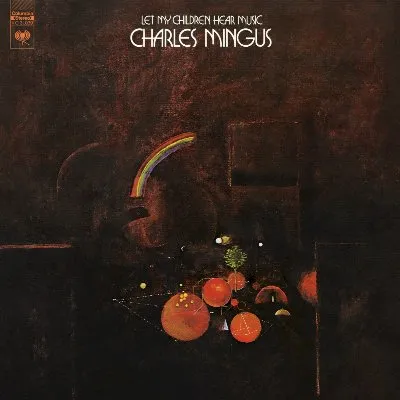
Let My Children Hear Music
1972
Its ambitious arrangements and large-scale compositions extend Epitaph’s orchestral, suite-like approach.
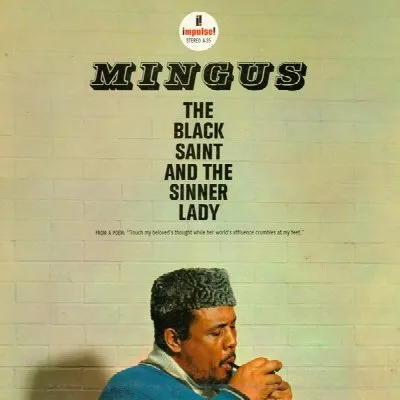
The Black Saint and the Sinner Lady
1963
Its dramatic, suite-length writing offers a natural stepping stone toward Epitaph’s broader orchestral scope.
If this landed
Records by other artists that run on the same instinct.
Reference: Wikipedia · MusicBrainz · Wikidata
Sync your library
Everything you track here works immediately — no account needed. Create one when you want to sync across devices.